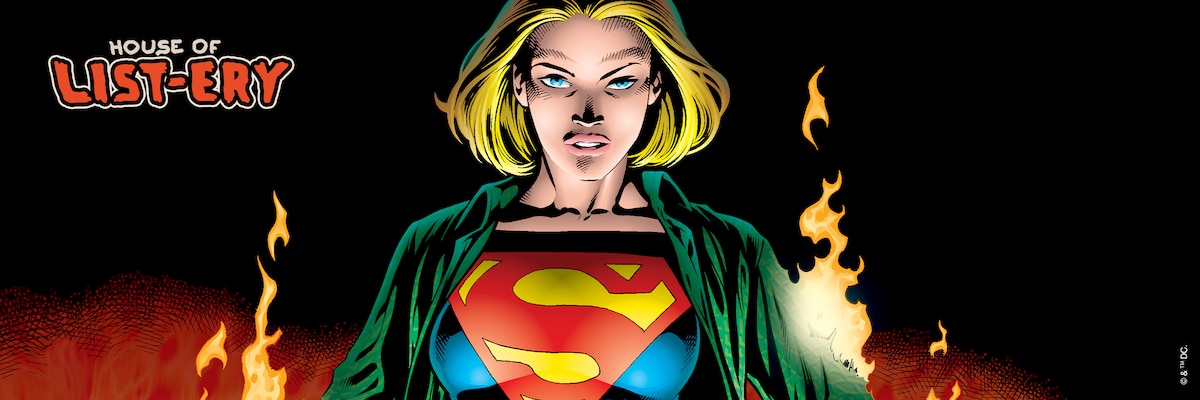
For the past 20+ years, explaining who Supergirl is has been as simple as saying “Superman’s cousin.” But that hasn’t always been the case. From before her introduction, Supergirl has suffered from the “Last Kryptonian” problem. Does it make Superman less special if there are other survivors of his doomed planet? The schools of thought have gone back and forth on that, but have ultimately settled in the pro-cousin camp. However, that hard-fought battle has left a long trail of bizarre, historical Supergirls with origins from every which way but Krypton. As we celebrate Kara Zor-El’s latest film, we present with honor these girls who have also been Super.
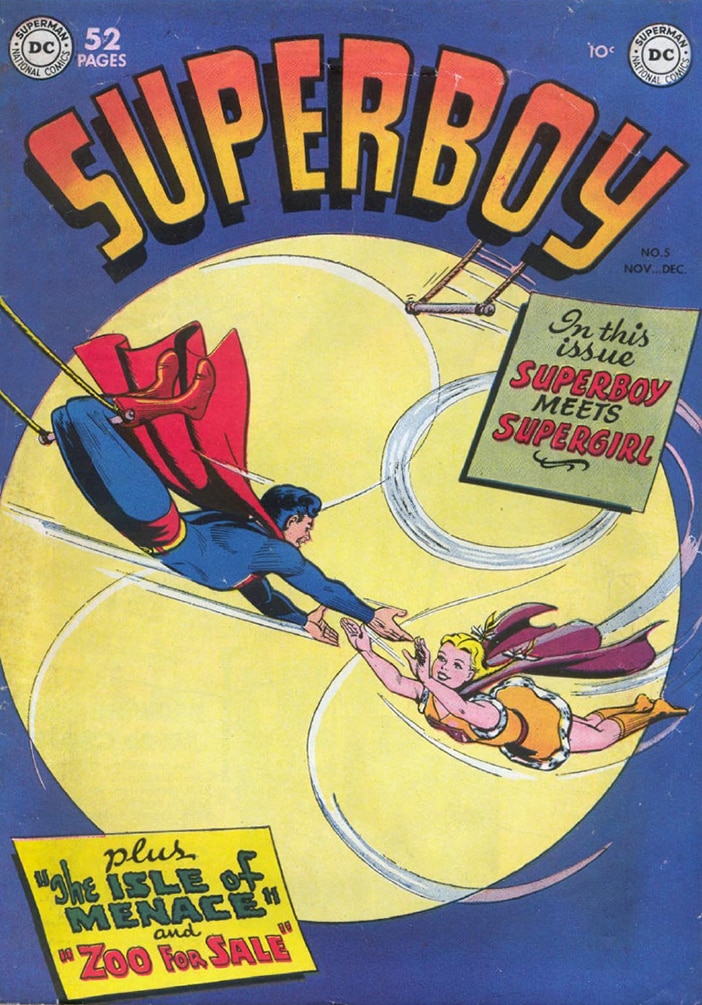
Borgonian Supergirl
Debuts In: Superboy #5 (1949)
The very first character to use the name “Supergirl” in a Superman story was “Lucy Regent,” the athletic young queen in exile from the fictional South American nation of Borgonia. In one of the earliest Superboy stories, Lucy found herself using her skills in acrobatics to fight crime alongside Smallville’s resident hero, with the press quickly bestowing her with the title of “Supergirl.” As Superboy befriends young Lucy, he eventually helps her liberate country from the usurper Count Norvello’s tyrannical regime. We have to assume that the original one-time Supergirl has been ruling there ever since.
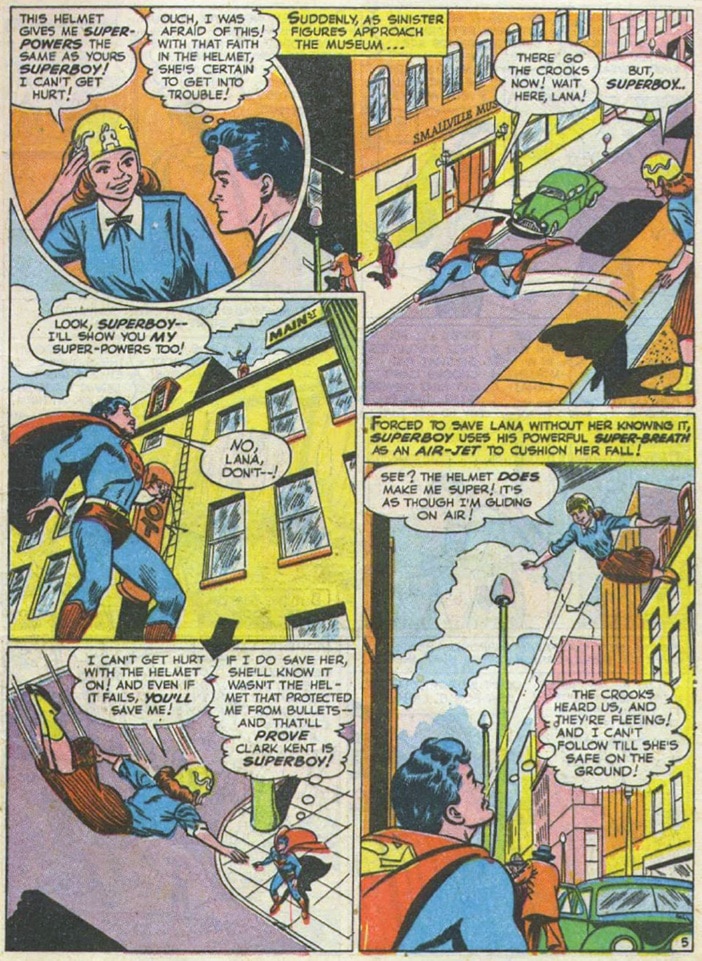
Lana Lang, Super-Girl
Debuts In: Adventure Comics #167 (1951)
Long before she would take up her modern role as Superwoman, Clark Kent’s Smallville sweetheart Lana Lang took a turn as “Super-Girl” thanks to an elaborate farce. After using his powers in front of Lana to save her from a lightning bolt, young Clark got out of the exposure by quickly adapting to Lana’s presumption that an Egyptian helmet discovered by her archaeologist father could bestow its wielder with superpowers. When Lana then decided to use the helmet to become a superhero in her own right, Clark had no choice but to keep up the ruse that it could give its wearer powers behind the scenes, until he could arrange for her to lose it. If you’ve never read a Silver Age Superman story before, this is really what they’re usually like.
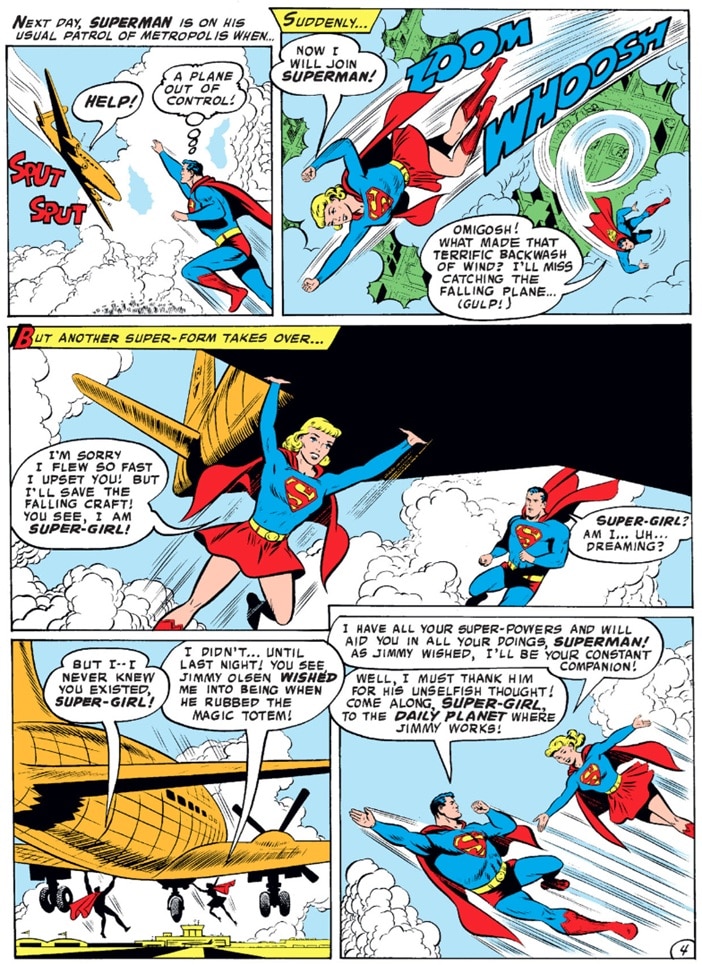
Jimmy Olsen’s Wish
Debuts In: Superman #123 (1958)
The dry run for the Supergirl we know today first came to pass thanks to an errant comment by Jimmy Olsen, after Superman quips to Lois that the only person who might keep up with him would be a Supergirl. Wishing that his pal Superman could have someone he could relate to on his own level, Jimmy’s proximity to a wishing totem instantaneously brought a Supergirl to life, bearing the same character design that would be used for Kara herself the following year. By the end of her first appearance, this Supergirl tragically sacrifices herself to save Superman from Kryptonite exposure, erasing herself from reality as she beseeches Jimmy to take back his wish…perhaps inadvertently foreshadowing the true Supergirl’s fate in the decades to come.
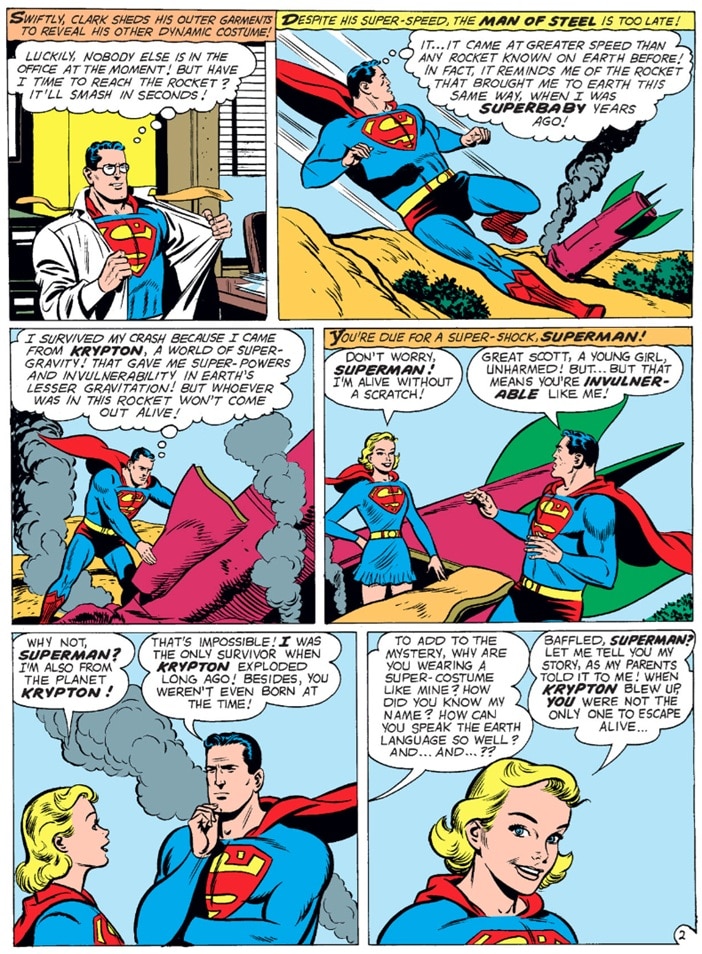
Superman’s Cousin
Debuts In: Action Comics #252 (1959)
So, we can’t talk about the other Supergirls without acknowledging the creative challenges that arose when Kara Zor-El made her debut. What followed her 1959 arrival was a fascinating 25 years where writers had to figure out what to do with Superman’s Kryptonian cousin without it changing every Superman story from here on out, as such a revelation logically would. Supergirl was hidden in an orphanage as “Superman’s secret weapon,” sent off to college, joined a soap opera and even went to the future to succeed Superboy as a member of the Legion of Super-Heroes. In 1985, part of the goal of Crisis on Infinite Earths was to streamline DC continuity, and the creatively problematic existence of a second living Kryptonian was solved by killing her off and erasing her from the memory of a reformed continuity. At least Barry Allen got to be remembered.
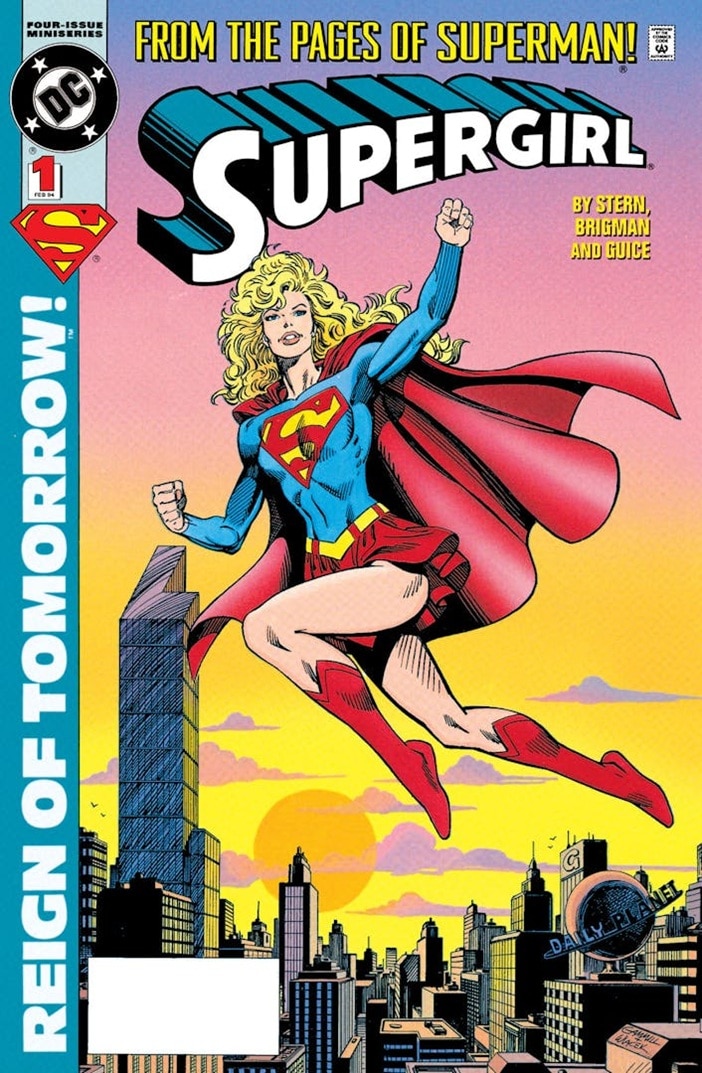
Enter the Matrix
Debuts In: Superman #16 (1988)
Just two years after Supergirl was abolished from the Superman titles and the concept of alternate universes from DC cosmology altogether, Superman writers found themselves reinventing Supergirl…in an alternate universe. This new Supergirl was a protoplasmic entity sometimes called “Matrix” (or “Mae” for short), created by an altruistic sub-universe Lex Luthor in a world without Superman in a futile effort to protect their lives from General Zod and his cronies. This Supergirl herself is a last survivor, only not of Krypton. Rather, Matrix is the last remnant of her entire universe, eradicated of all other life by General Zod.
Matrix went on to function as the main Supergirl of the ’90s, quickly falling for the villainous Luthor of Superman’s world before eventually learning of his true nature. If you’ve ever seen Supergirl hanging off Luthor’s arm in The Death and Return of Superman, this is the one you’re looking at.
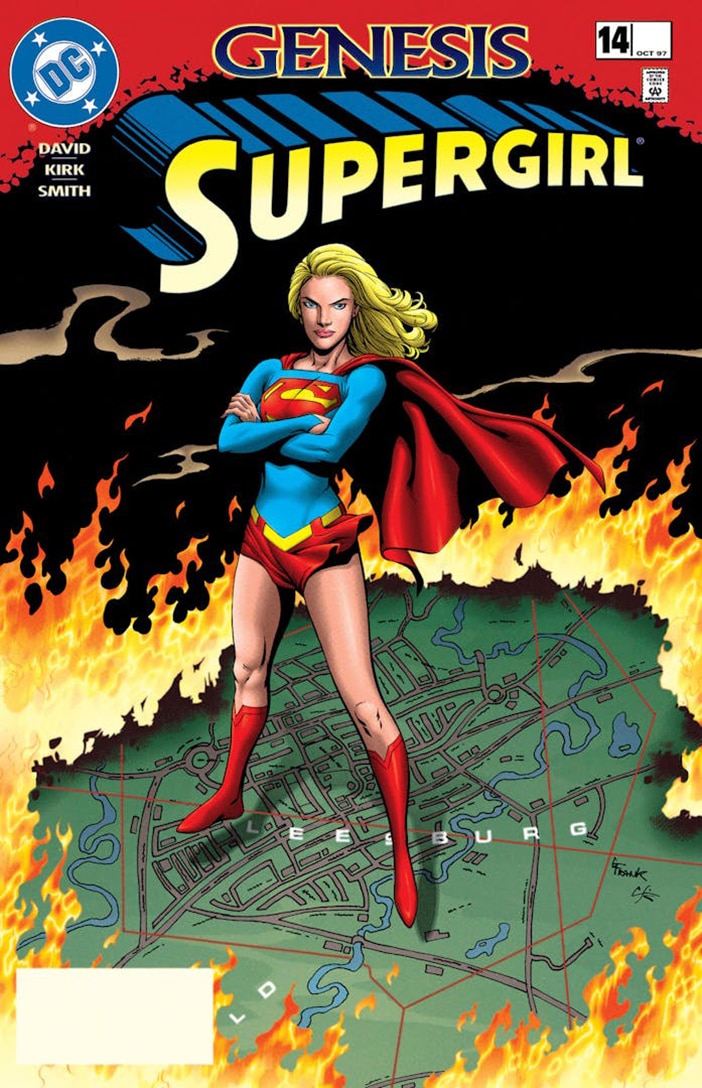
Earthborn Angel of Fire
Debuts In: Supergirl #1 (1996)
When writer Peter David was given the first ongoing Supergirl solo title since Crisis, he took the opportunity to once again completely reinvent the idea of Supergirl from the ground up. Merging with the shapeshifting Matrix was Linda Danvers, a very Laura Palmeresque girl from a small town who finds herself emerging from an occult near-death experience with superhuman powers. Over 80 issues, Linda’s true nature is revealed as the human incarnation of a cosmologically significant elemental entity, more mystic than alien. The last beat of this Supergirl’s story sent her to literal Hell, and there she has remained ever since.
Argonian Supergirl
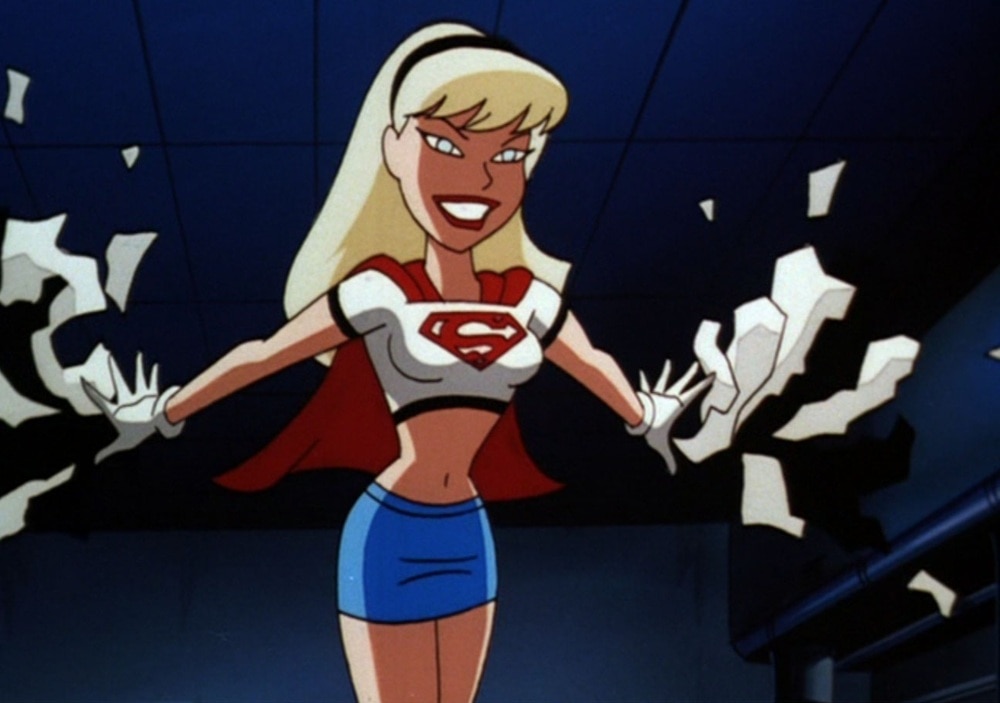
Debuts In: Superman: The Animated Series, “Little Girl Lost” (1998)
To kick off the second season of Superman: The Animated Series, series writers Paul Dini and Alan Burnett felt it was finally time to bring Supergirl into the fold. But with the “Last Kryptonian” mandate still in effect, they had to find a sneaky way to import a classic Supergirl in. Their solution was just about as elegant as they could manage.
This Supergirl, Kara In-Ze, was not Superman’s cousin, but the sole survivor of Argo, here reimagined as a sister planet to Krypton in the same solar system. With a similar biology to Superman, the Supergirl of The Animated Series was uncomplicated by laborious explanations of her origins any more difficult to grasp than “the planet next door.”
Futuregirls
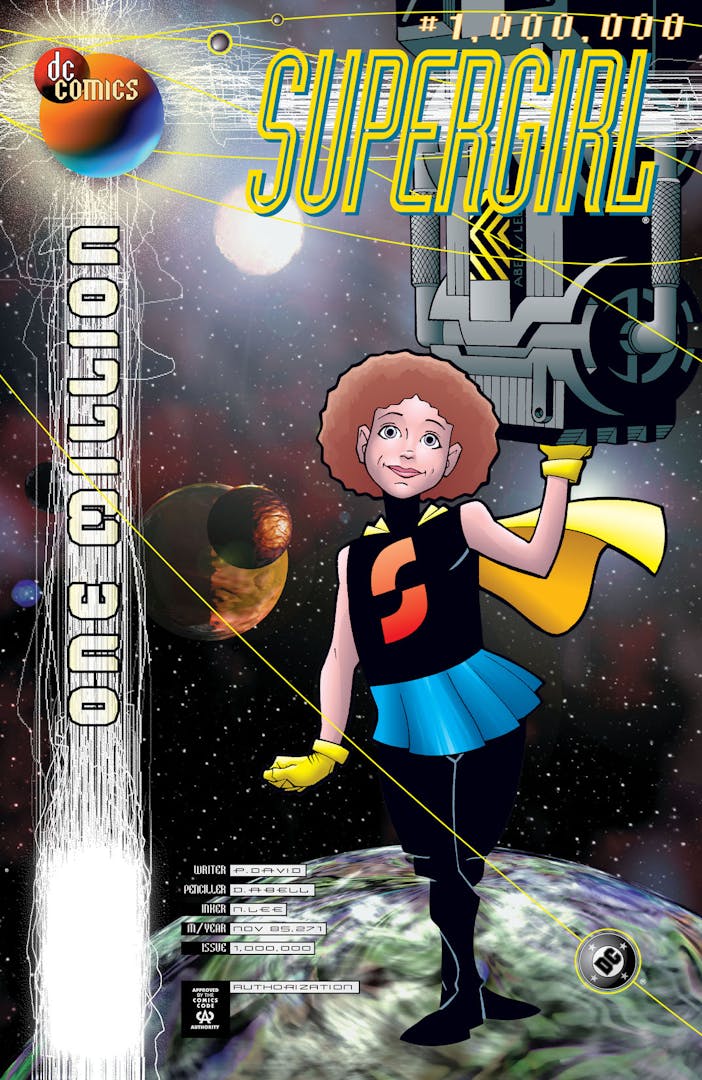
Debut In: Various titles from 1998-2003
As Linda Danvers’ continuing title took her further and further away from Superman, a small crop of Supergirls arose in various stories who finally were allowed to be Kryptonian, if only as Superman’s progeny. 1998 gave us Kara Ken, Superman’s direct descendent in the age of the Legion of Super-Heroes for Superman #136-138, and Ariella Kent, the 853rd century descendent of Superman in the DC One Million event. In 2002, Frank Miller’s The Dark Knight Strikes Again gave us Lara, the half-Kryptonian, half-Amazon product of a passion shared by his world’s Superman and Wonder Woman, and one of the central characters to his Dark Knight mythology in the stories following.
But perhaps the strangest case is that of Cir-El, a sort of antecedent to the modern Jon Kent as the self-declared child of Superman and Lois Lane from a potential future of her own. Introduced in 2003’s Superman: The 10 Cent Adventure, Cir-El was, like Superman himself in an early unpublished draft by Jerry Siegel, a refugee from the future sent back in time to before the destruction of the Earth. Soon, it was revealed that Cir-El was actually a product of Brainiac grafting human and Kryptonian DNA cells together and implanting false memories in her, after which point a shocked Cir-El sacrifices herself to undo the dystopian future from which she came. Cir-El remains a favorite to this day among about a half-dozen true sickos. If you’re reading this, you know who you are.
Supergirl Returns
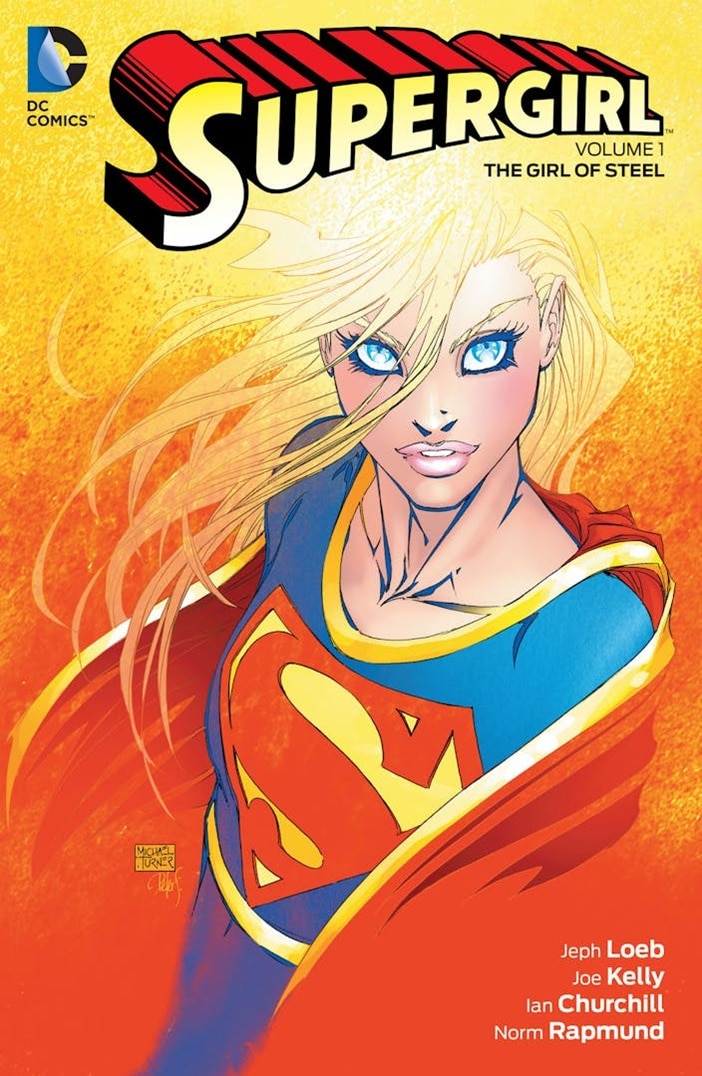
She’s Back In: Superman/Batman #8 (2004)
As the legend has it, DC publisher Dan DiDio was standing in line one day at the Six Flags theme park, reading the character bios they had in the queue for the Superman ride. It was the wall of brain-twisting text explaining Matrix and Linda Danvers’ entire deal that convinced him it was time to bring Supergirl back to her roots. And so, following Jeph Loeb and Ed McGuinness’s first smash hit arc on the team-up Superman/Batman title, the classic Supergirl was finally allowed to make her debut on Earth, with much the same Kryptonian backstory as she had 45 years earlier. Although this time, Kara would be established as having spent her childhood on Krypton. Unlike Superman, who never truly knew his homeworld, Supergirl would carry the memories of Krypton with her. This was truly the finishing touch Kara Zor-El needed to stand out from her famous cousin, making them both last survivors by different metrics: Superman, the last child born of his world, and Supergirl, the last bearer of Krypton’s memory.
…Discounting all the Phantom Zone supervillains, of course. And Kandor. And…look, maybe the “Last Kryptonian” issue isn’t quite solved yet. But one thing’s certain, no matter how much the idea is forced into a Brainiac bottle, the DC Universe abhors a Supergirl vacuum.
Supergirl, directed by Craig Gillespie and starring Milly Alcock and Jason Momoa, is now in theaters. Get your tickets today!
Alex Jaffe is the author of our monthly "Ask the Question" column and writes about TV, movies, comics and superhero history for DC.com. Follow him on Bluesky at @AlexJaffe and find him in the DC Official Discord server as HubCityQuestion.
NOTE: The views and opinions expressed in this feature are solely those of Alex Jaffe and do not necessarily reflect those of DC or Warner Bros. Discovery, nor should they be read as confirmation or denial of future DC plans.