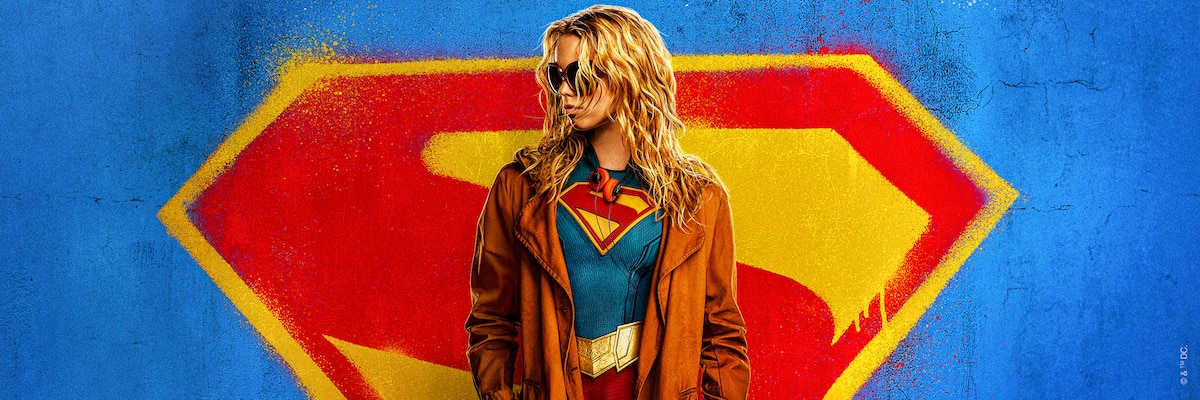
Unbelievable as it may sound, despite the decades of live-action DC superhero films to hit theaters, none of them have been scored by a female composer…until now.* British-American musician Claudia Sarne is responsible for the rousing score behind this summer’s Supergirl. A newcomer to the world of comic book films, Sarne began her career as a songwriter for her band 12 Rounds, in which she collaborated with her husband Atticus Ross. Since then, she’s composed music for numerous feature films, documentaries, and TV shows, including Shining Girls, Animal Kingdom and Black Mirror. We recently caught up with Sarne to find out what went into scoring the Girl of Steel’s long-awaited return to cinema screens and how it feels to be a pioneer in the DC Universe…
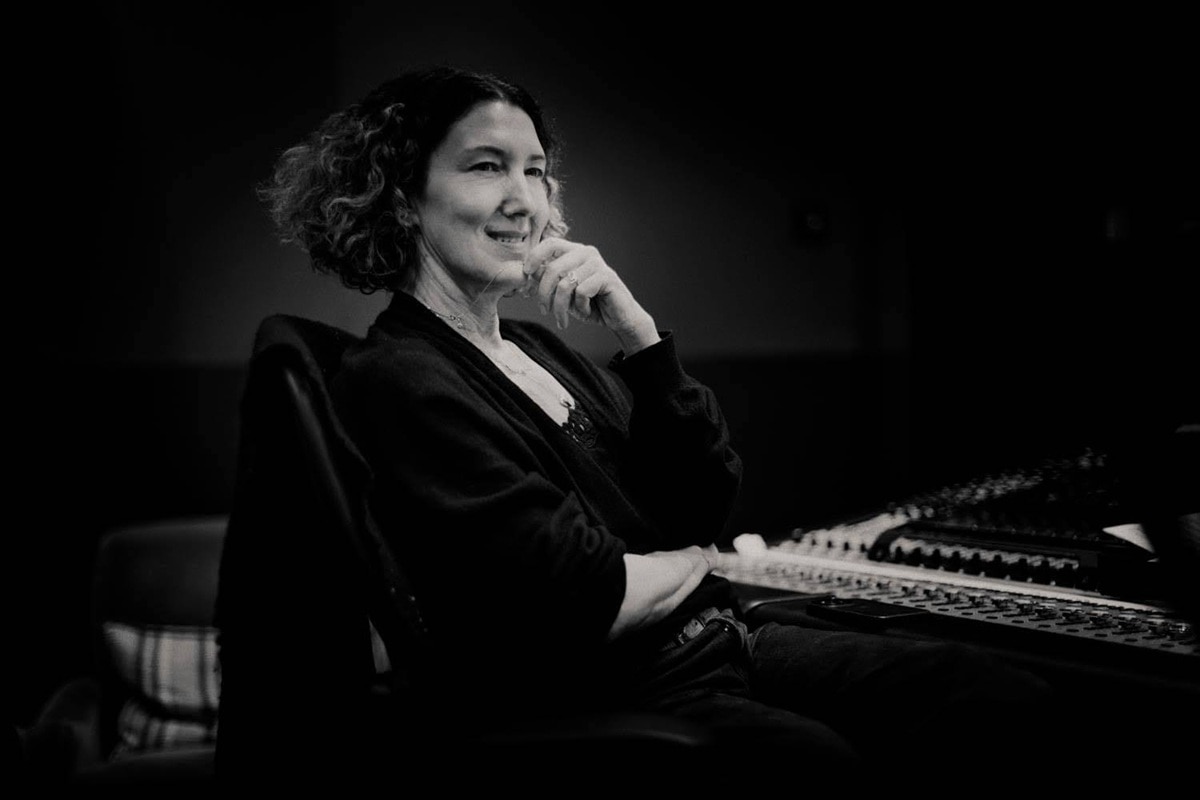
After discussing Supergirl with director Craig Gillespie and the film’s producers, what did you want to achieve with your score in terms of mood and tone?
That’s a long question. There were a lot of different characters, worlds and themes to navigate in the Supergirl universe. Primarily, we needed to establish a main theme for her that could encompass her entire story, from the devastation and heartbreak of her origin, to the furious avenger, and then down to a place of relative peacefulness and acceptance of who and how she is as we see her character evolve in the movie. That was aim number one. Craig and the team wanted a score that spoke to her emotions as much as to the "kick-ass" aspect. There was also a definite shift in tone to mark it as a darker world than that of Superman.
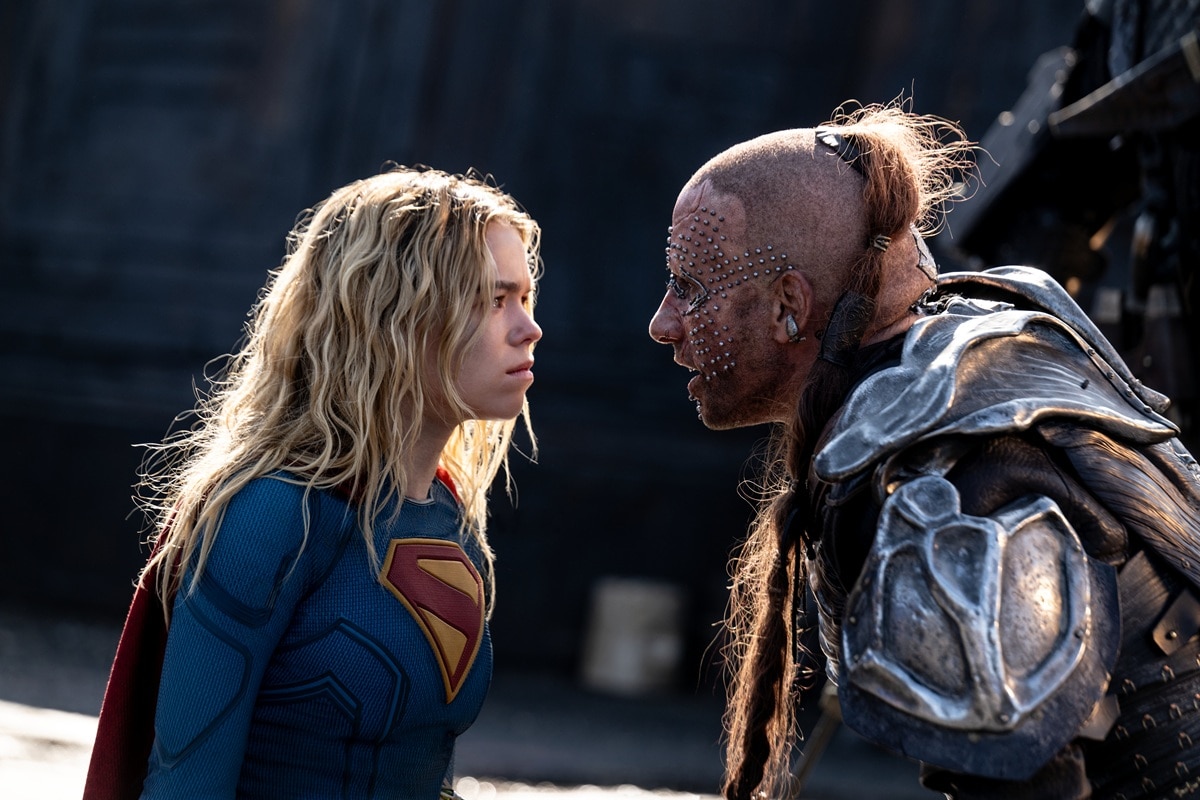
It was also important to illustrate her messiness, her very different character compared to Superman, and the more riotous and chaotic elements we see her in during much of the early parts of the film. There was a “road trip” aspect to the search for Krem, and that needed to feel distinct from the rest of the score. There were also the aliens, different planets, and other characters to fold into all of that, plus, obviously, the action and fight scenes.
What I played initially was hybrid—it went from a quiet piano to an action piece and ended up in a dirty synth world. It seemed to work, so we had a starting point. Given that we did not have the luxury of time to ponder, there wasn’t a lot of initial over-discussion. We really just had to dive in and not second-guess ourselves too much, which Craig was super encouraging about.
Your mix of electronic and traditional orchestral music nicely mirrors Kara Zor-El’s headspace and the two worlds she inhabits. How did you go about writing your Supergirl score?
At a panic-inducing pace! We had a lot of ground to cover to establish the different worlds. As soon as the theme was established, we had something to work from and reference. I prefer to have some sort of source track to draw from.
For instance, with Ruthye, I wrote a small piano theme that could inform scenes where she was central. For Krem, I wanted a sound palette and motifs that could be drawn from and incorporated into action scenes, creating a sound that helps us identify the character quickly and becomes synonymous with them. Nick Chuba, who works with me, would bring in different synths or guitar pedals and we would play around finding sounds that we thought helped the scene. It involved a lot of putting up sounds or ideas and tearing them down until we felt satisfied.
What was your approach to balancing the film’s quirky, lighthearted moments with its somber reflections on grief and trauma in your score?
A lot of it was trial and error. I actually find the darker aspects a lot easier to write, and they come faster. Getting the tone of the more lighthearted and comedic scenes took a minute! Balancing it sonically was also a process, finding the right sounds, scrapping them and doing it again. Sometimes it meant keeping a single sequence or sound that worked and approaching the rest of it from a completely fresh perspective from scratch.
Did you find yourself identifying with Kara on some level?
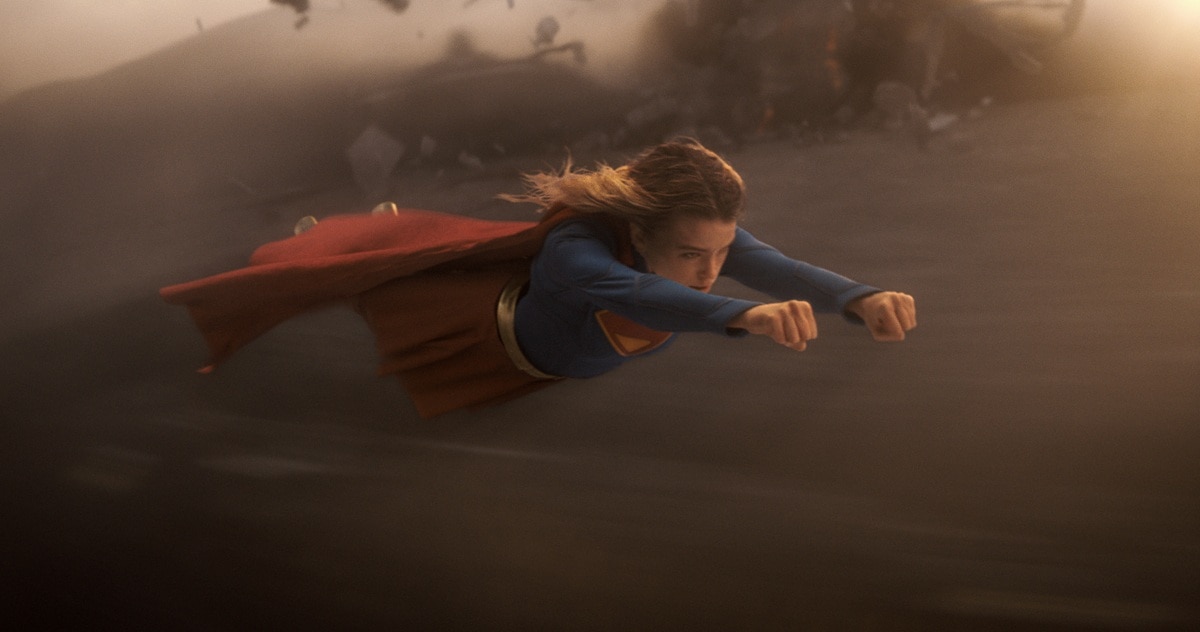
I think that, for me, when I take a project on, I need to have a certain amount of resonance with whatever I’m scoring, whether it’s a narrative feature or a documentary. I’m not someone who went and learned technique at school, so I feel my way through things, if that makes sense. It helps greatly if I am relating somewhat to, or feeling inspired by, what I’m seeing on the screen. I don’t think there is anyone who doesn’t relate to the loss and heartbreak that we see in Kara’s story, as well as the struggle of trying to find your meaning, purpose and where you belong in life. That’s pretty universal.
The soundtrack contains a number of pop songs. Did you craft your score to work in conjunction with them, or did you see your score functioning as a totally separate entity?
The pop songs were a separate entity. Most of the time, I tried to either segue into or out of them smoothly and ensure I was in a sympathetic key or register—for example, not placing a big guitar cue just before we hit a rock song. The songs are definitely standalone moments, and from my understanding, the film was cut to them.
Were there any prior film scores or other compositions that inspired your work on Supergirl?
I used to be in a band and wrote a lot of songs back in the day. There were a couple of those that I took inspiration from sonically—their mood and tone worked well with what I envisaged for some of the scenes. It was more from a production standpoint than anything else. I usually spend a long time making music and have the luxury of being able to really sit with sounds and musical ideas to see if they are working. Sometimes that stuff at 2:00 AM sounds like an awesome idea, but not so much in the cold light of day. I didn't have a lot of "processing" time with some of these cues, which was actually great because it forced me to be bold in my choices and not overthink things, which I tend to do.
Who are your favorite film composers and musicians? Are there any particular DC film scores that you appreciate?
Well, I run the gamut musically. Bernard Herrmann, Angelo Badalamenti, Nino Rota, Ennio Morricone and Michael Nyman spring to mind from older works. I love most composers who have a distinct voice of their own. Of course, I love anything by John Williams. The list of contemporary composers that I greatly admire, and whose work has inspired me in one way or another, is far too long to mention. I love electronic scores. Wendy Carlos was huge for me, as well as Cliff Martinez, Trent Reznor and Atticus Ross. Honestly, there is too much great work out there and I’ll be at this all day!
The original John Williams Superman score is embedded in my brain. I was a child of the '80s, so his music seeped into our collective musical consciousness and defined the genre for us all. Watchmen was a particularly stunning score, The Dark Knight is a total legend in my personal score world, and of course, Joker.
What’s next for you? Would you like to return to the DC Universe at some point?
I have a couple of projects that I’m in discussion on at the moment, and we’ll see which ones bear fruit. If there is a project that I’m right for, then of course I would love to score something with DC again. I had really phenomenal support from the team there and it was an exceptional experience.
*While Sarne is the first female composer to score a film starring a DC hero, we can’t overlook Hildur Guðnadóttir, who won an Academy Award for her score for Todd Phillips’ Joker. It’s a great film and amazing score, but the Joker isn’t technically a hero.
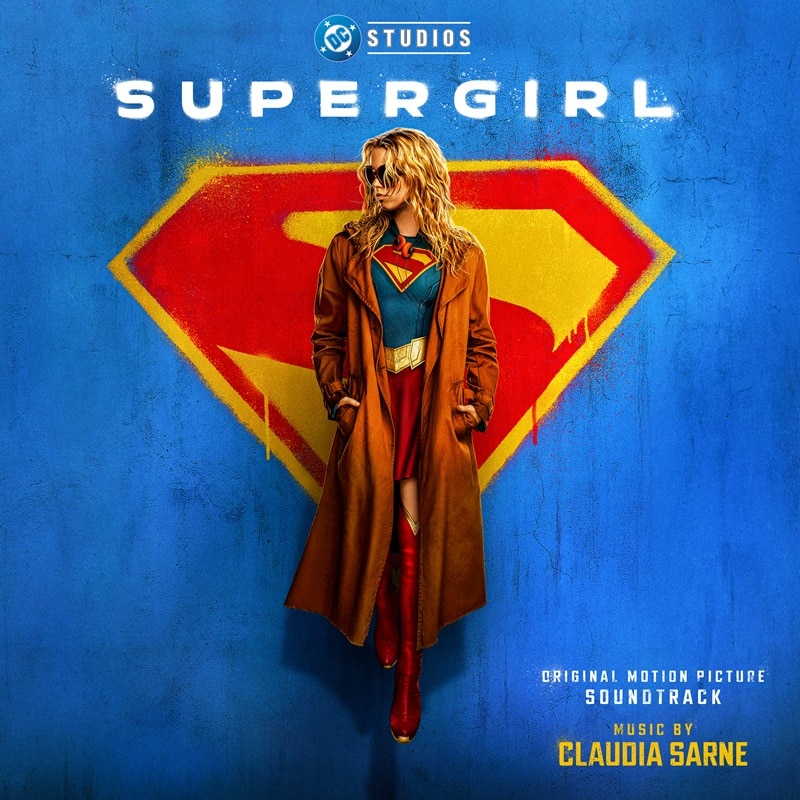
Supergirl Original Motion Picture Soundtrack featuring music by Claudia Sarne is now available for purchase and streaming.
Supergirl, directed by Craig Gillespie and starring Milly Alcock and Jason Momoa, is now in theaters. Get your tickets today!