As the author of some of the most widely read and highly acclaimed Batman comics of the 21st century, Scott Snyder has nothing left to prove when it comes to the Dark Knight. And yet, ever since its 2024 debut, his game-changing Absolute Batman has made it clear that Snyder has plenty more to say about the character. More impressive still, it’s done so while emerging as the most popular, propulsive Batman comic in years. We recently spoke with the writer about the current state of Absolute Batman and what we can expect from new characters like the Absolute Robins, Scarecrow and Deathstroke. Strap in, Bat-fans. Things are only getting wilder from here.
There have been so many alternate versions of Batman, particularly darker versions, that it’s amazing Absolute Batman works as well as it does. What’s the secret to writing it?
Oh, thank you so much. It's funny you say that because I really feel like I might have done more alternate versions of Batman than anyone, just because of the Metal events where we generated all kinds of amalgams of Batman. The fun of it was always doing this recombinant thing, where you would make things that Batman would never be, right? Batman would never be mixed with the Joker because he would never allow himself to make that mistake. Or Batman would never use violence the way that the Punisher does. But what if he did make that mistake? Then you get the Grim Knight. So I've done a lot of versions of Batman that would never exist.
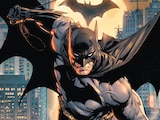
With this, the goal was to make one that felt the opposite, that was sort of burning the character down to his core and saying, “What is the only thing that matters?” and rebuilding everything else so it feels more immediate, more personal, more relevant, more urgent.
What I came up with was this idea that he is at heart just a boy who suffers this terrible trauma and decides he's going to use that to aggressively make the world better—and that's it. If you take away everything else but that, then the wealth doesn't matter, the gadgets don't matter, the vehicles, Alfred the butler.
So, you think, “How do I apply him to the world?” Well, the first thing is, in the main universe, he is sort of an agent of order and the Joker is chaos. But in today's world, it feels like the people who are masters of order and the system are not the best people, right? That's the way my kids feel. So, I'm writing Batman not for myself, but as a hero for them. These characters are supposed to make us feel brave. But at this point in my life, it’s less about making me brave and more about making them brave. He wouldn't be somebody who's at the top of the heap. He would be somebody who punches up and feels like the underdog.
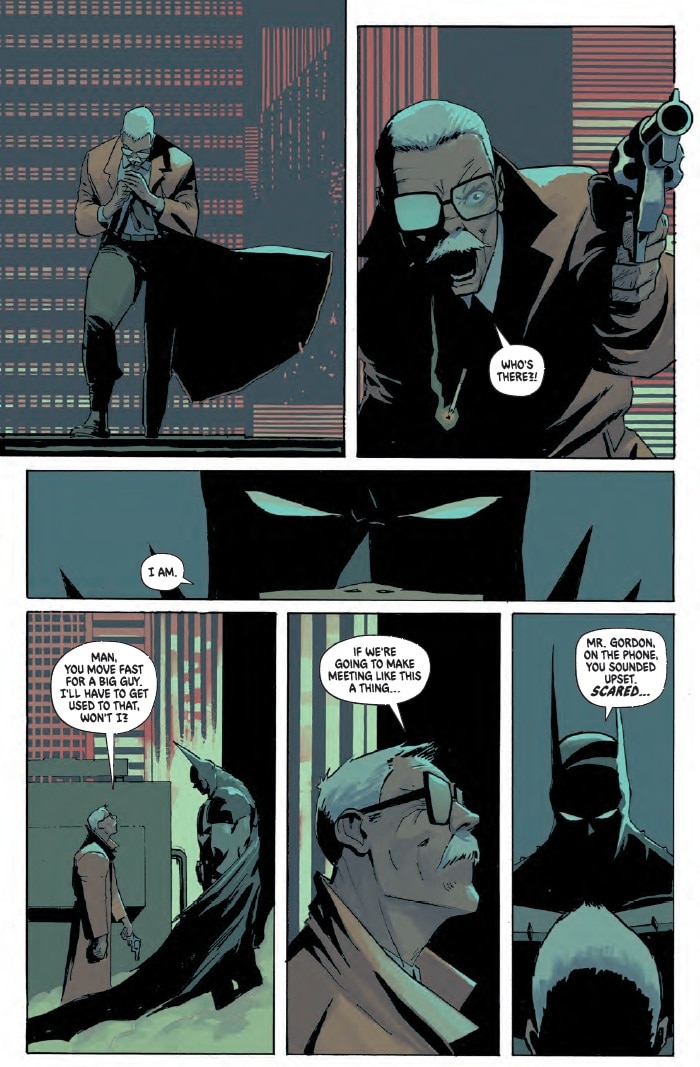
Suddenly, it became clear that if we invert that core aspect of the mythos, everything else will fall into place. It's not even that he's poor and Joker is rich. It's that he is the one without means. He is the chaos. He is the disruptor. In this world, the Joker is the billionaire. Joker is order. Joker is the system. Everything else became wondrous and new after that.
The second thing was really to take inspiration from my kids—two teenagers and a six-year-old. My 19-year-old son and his friends are very passionate about politics, and they're very unhappy with what's going on in the world. I often feel like, “I'm really sorry we left you this world, but it's very hard to change it.” They don't listen to that. They'd rather see a massive collapse of what there is now to get something new than they would keep it the way that it is. So, that's this Batman. This Batman says, “I refuse to accept the world such as you've left it to me. No matter what, I'm going to change it.”
It’s reassuring to know that with all the insanity going on in the world, Batman has found this new place of purity. How has Nick Dragotta contributed to that?
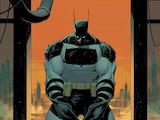
A lot of this book is Nick's brilliance. Nick's art is really grounded and really intimate and also super kinetic, elastic and manga-influenced. It has these two extremes where it's very emotional and very tender—it can do this kind of needle-point emotion—and then it can be the most bombastic, outsized, rubbery, elastic, crazy bonkers stuff. So, it leans right into the ethos of the book.
It's more personal than the Batman stuff I've done in the past. This Batman's formed in a mass shooting. Yet, at the same time, it's the most cartoonishly outsized, out-of-control Batman I've ever written. It has these two extremes at once. That weird combination is brought to life and elevated by Nick's art.
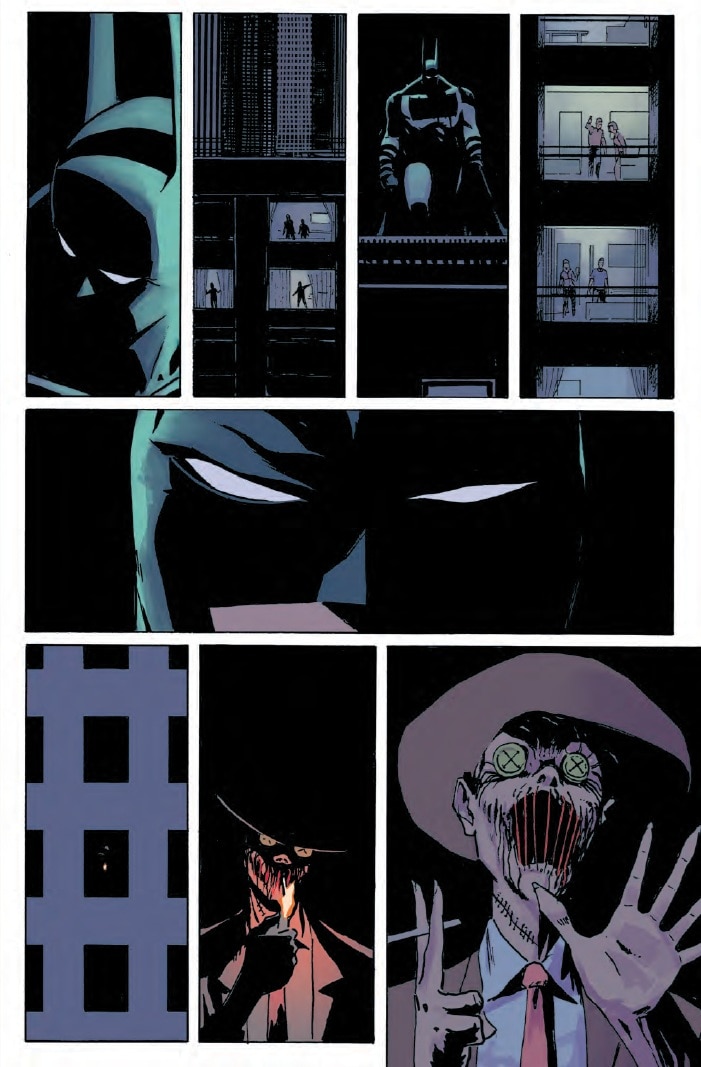
What can you tell us about Absolute Scarecrow and his arc that starts in Absolute Batman #19?
We did a lot of thinking about the idea of a straw man, and the idea of terror today. Scarecrow is this really frightening character who emerges in the first moments of the story out of a cornfield, and his face is all stitched up. He has these buttons for eyes and everything about the Scarecrow is uncertain. His belief is that once you destabilize someone's sense of truth or fact, everything else becomes terror and paranoia.
He revels in that, and he gets called in to topple governments and create all kinds of disinformation. But he's scarier on a personal level, even his face. You don't know if he's actually mutilated himself or if it's some kind of mask, and you'll never know. You're never going to see that truth because what's frightening about the character is just destabilizing any sense of certainty.
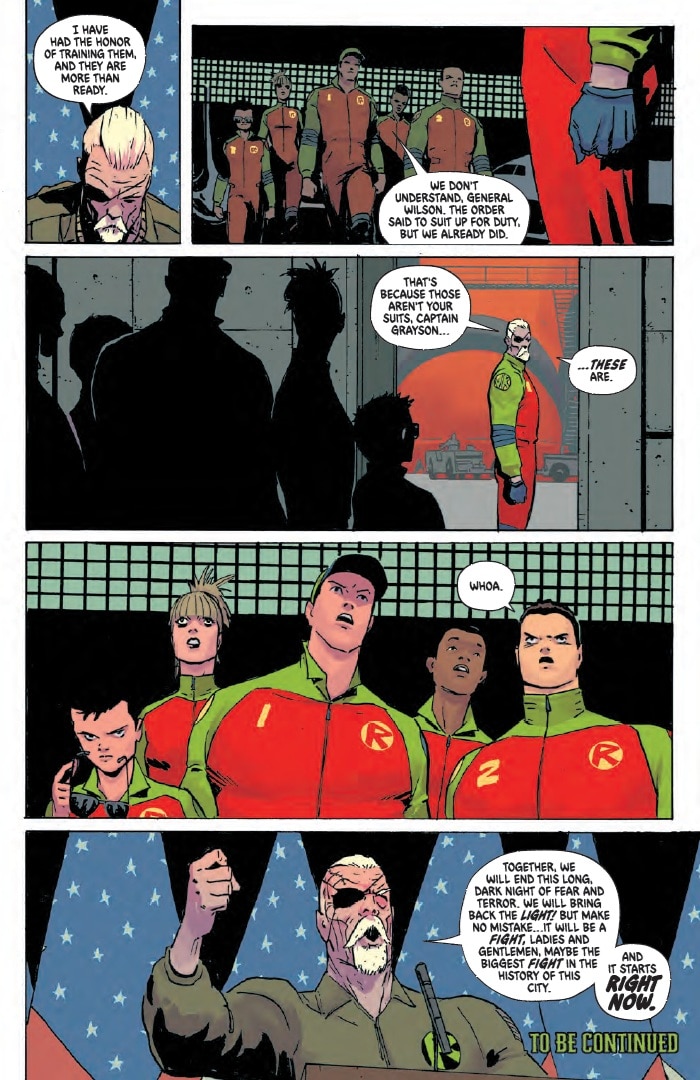
What he has planned for Bruce is really horrifying. It's definitely the cruelest arc that we've done, where he comes to town and Bruce starts to discover this conspiracy that Jim Gordon started uncovering in the end of issue #18. It’s about Bruce's history, and it starts to make Bruce feel like his whole life has just been one manipulation by the Joker. That everything he's ever done is what they've wanted and is meaningless, in the sense of the meaning he thought it was imbued with. So, it's a really dark arc. Then on the other hand, it's also the arc that brings in the Robins.
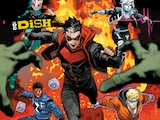
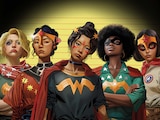
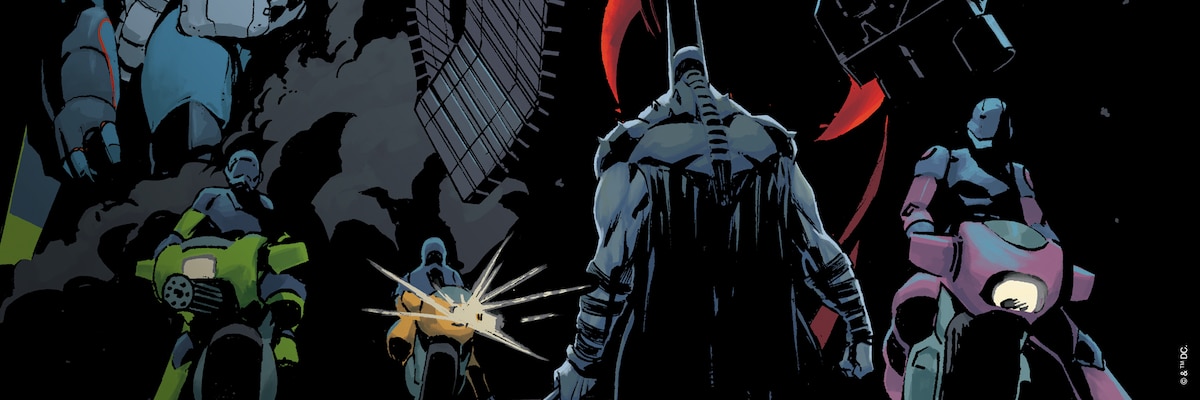
Publicly, our Joker is a really beloved figure. He's a philanthropist, he's a billionaire, he's a son of the city. Very much like Bruce Wayne in the main universe. He has a bunch of young people he's mentored, whose lives he's helped and changed. So, the Robins are very beholden to him because they think that he's a really good guy. It's a pretty heartbreaking arc in that way, but it has the most oversized epic action we've done to this point—I promise! There are huge Gundam-like mechs that the Robins pilot, and they go hunting for Batman. It’s the most incredible design work. I feel so bad because I'm like, “Nick, it's amazing. How are you going to draw those on every page?” But he's a beast. I feel like I could write the phone book at this point and it would look amazing. [laughs]
You’ve also introduced a new foil for Alfred in Deathstroke…
Absolute Batman is able to take a lot of things that I really loved to explore in the main run we did to a much further point and take them to their conclusion. There's no Source Wall to hit at the end of the universe that way.
In this arc, Deathstroke plays a big part because he's Darth Vader to Alfred's Obi-Wan. Alfred is the point-of-view character for me. That was how I found my way into the book. I don't know how to write young and idealistic, but I can write the guy that's, like, “Man, I'm sorry the world is the way it is because of us, but I will follow you and help as much as I can.” His protégé was Deathstroke. They had a terrible falling out back in the day, and he hates Alfred with a passion. That's going to be a fun matchup.
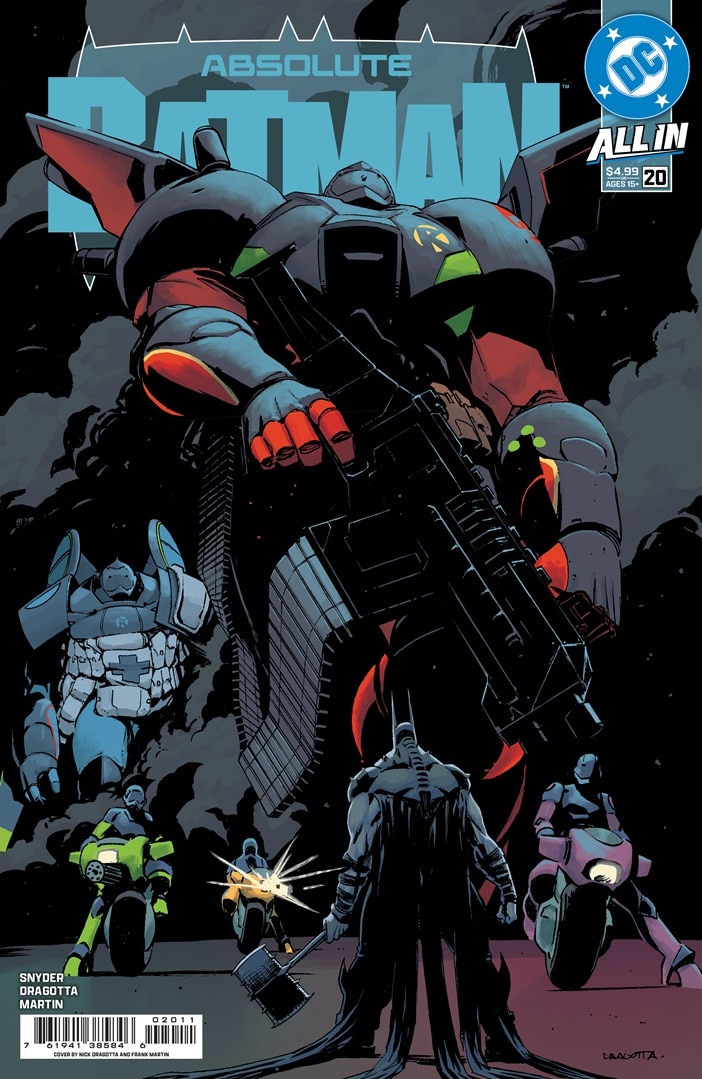
Absolute Batman #20 by Scott Snyder, Nick Dragotta and Frank Martin is now available in print and as a digital comic book.