No stranger to Gotham City, Mariko Tamaki has written about the Bat-Family in Future State: Dark Detective, Detective Comics and the acclaimed YA graphic novel Harley Quinn: Breaking Glass. But for her next act, she’s taking the original Batgirl out of her costume and locking her up in one of the most unique and eagerly anticipated series to come out of DC Next Level. We recently got the chance to chat with Tamaki about returning to Gotham City with her bare-knuckle new prison thriller, Barbara Gordon: Breakout…
How did Barbara Gordon: Breakout come to be?
I started talking with [editor] Rob Levin about doing a Barbara Gordon story and he had the idea of the prison and what it means to drop yourself into the lion's den. What does it mean for this character, who's been such a team player, who has been such an integral part of keeping the team together, to suddenly be lifted out of that world and put in a place where she has no allies? The idea that she would do that because she feels indebted to saving the people who are at risk in this space…
I've written characters in prison before. I obviously have no desire to go to prison, but I'm very fascinated by sealed ecosystems and what it means to be in a place that you can't get out of. What does it mean to be stripped of the weapons and the gadgetry and the tech and just to have to go on your instincts?
What’s the elevator pitch for this story?
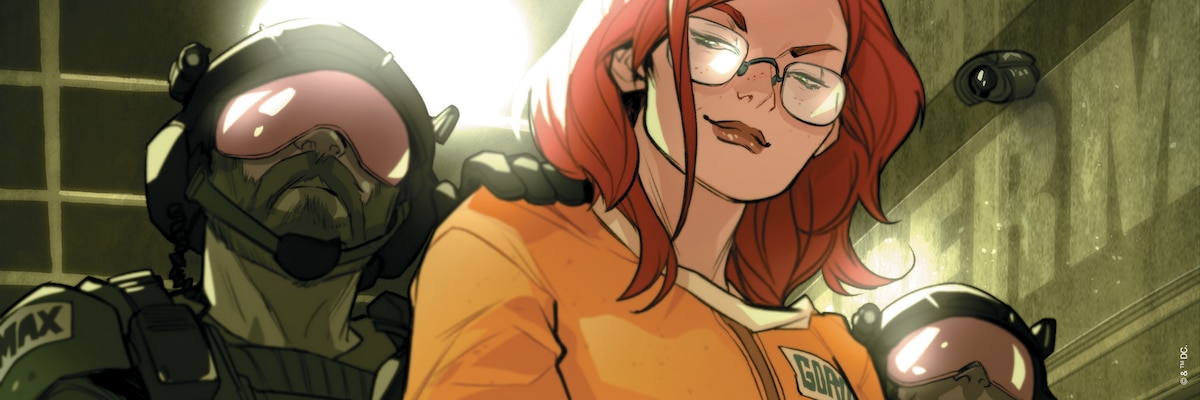
This prison has been on Barbara Gordon's radar. She knows that there are people who are being sent by [GCPD Commissioner] Vandal Savage into this prison as a kind of undue punishment. It's a repository for all his enemies, so that includes city officials and people who are not necessarily villains. He’s tossing the nerdy kids into the cafeteria lunchroom and they’re sitting ducks. Because Babs has been keeping an eye on this thing, she feels like it's her responsibility to go in and stand up for the people who are being victimized in that space, so she gets arrested and gets thrown in jail. She does this with the knowledge that this is her mission and she's doing it on her own.
The idea is to leave Barbara in a place that is setting up a new story and a new kind of thing—a new way forward for her that is unique to what she was doing as Batgirl.
Is there a chance we may see you write Batgirl after this series?
It's such a hard thing to say. When I worked on Future State: Dark Detective, you had a sense of where the story was going and how far you were supposed to go with that story. But I really love this team and love working with this team, and I love this character. So right now, I'm hoping it goes as long as possible.
Speaking of Dark Detective, you’ve written Bat-Family titles before. What keeps bringing you back to Gotham City?
I'm a really big fan of the urbanness of these comics. The thing I love about Gotham is that it is a really tough place to live in. There's like an awareness around these comics that this is not a fun place to live. It's not just a place with villains, but it is a place that has its own hardships, that has its own ecosystem of people who are struggling to get by, who are impacted by things and not just the villain/hero stuff that's happening. There's an awareness of the struggle of life in the city that I think permeates all these comics that I'm really fascinated by.
I really love how lived-in Gotham feels, especially as these comics have gone on. It's a city with a mayor, it's a city with police, it's a city with streets and alleys. All of these things. I love the topography every time I see Gotham in a comic and how it’s drawn. I love how Bruce Wayne lives outside of the city limits, but is the gardener of this broken place. I love that part of it.
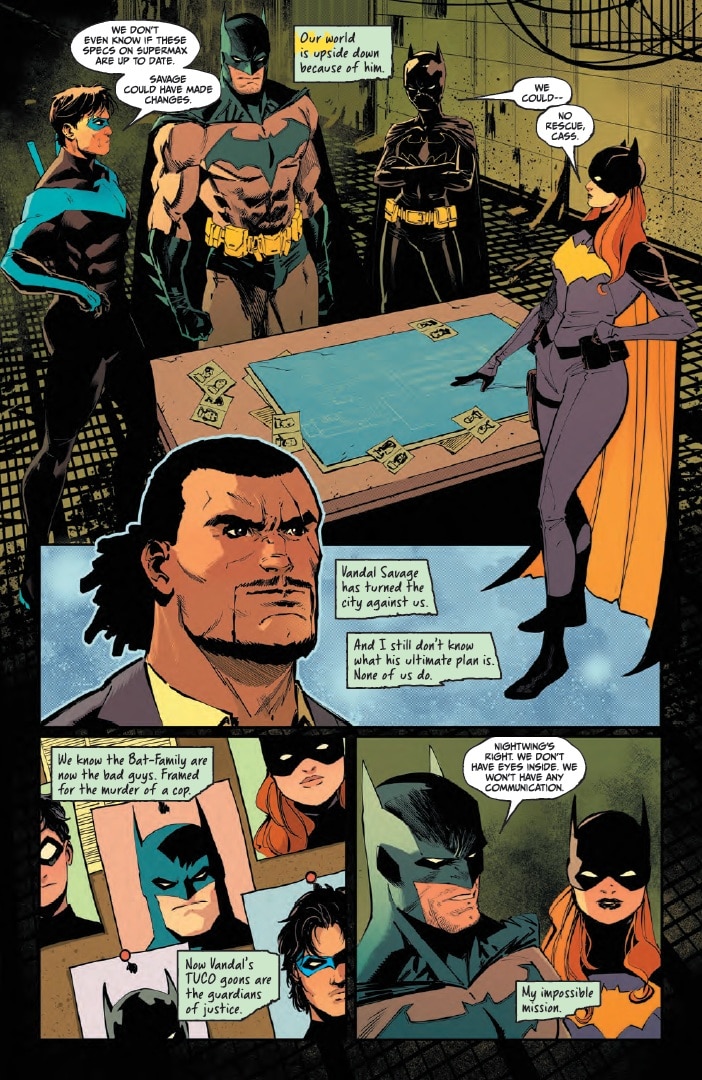
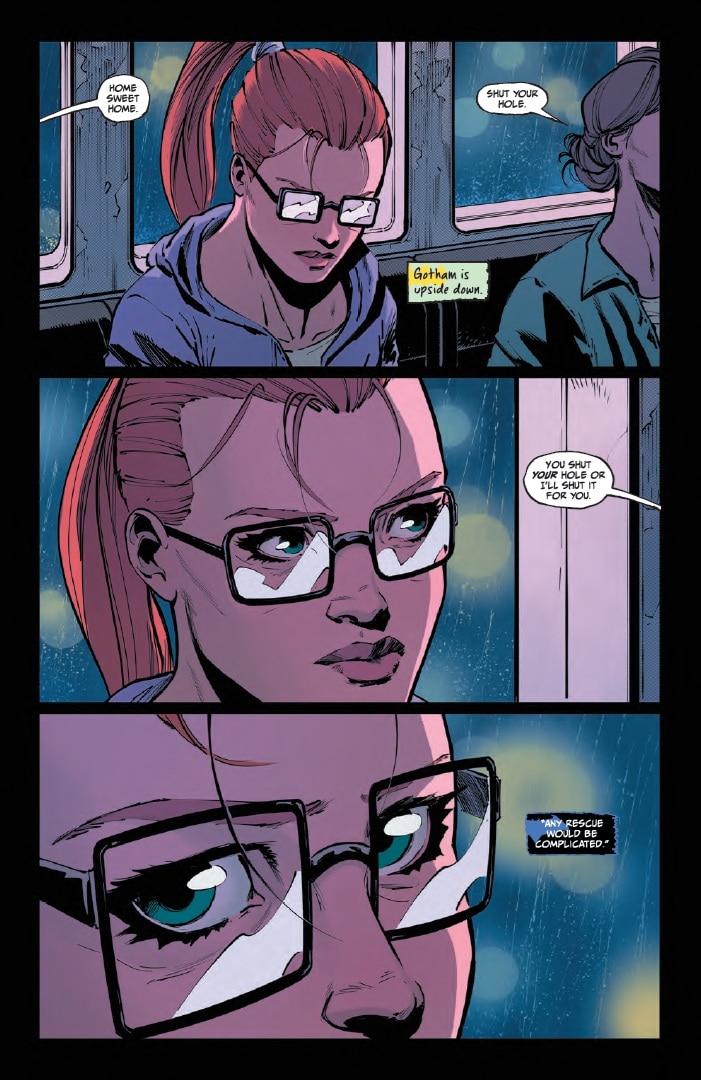
What can you tell us about Barbara Gordon: Breakout’s art?
Amancay Nahuelpan and I are teamed up again. We previously worked on Crush & Lobo, so this is our chance to work together again. I've never been a heavy-handed describer. As a writer, my job is to be consistent and clear, and to pay attention to plot and to character, and to make sure that I'm never crowding an artist to where they can't do what I'm asking them to do on the page. The best part of comics is when you one hundred percent trust that the person you're working with has got all of that stuff figured out and you really just have to give them all the information they need to do their job.
I've worked with so many people with whom that's true. Amancay has questions sometimes, and we are figuring out the world and the nature of the world, but as soon as he drew this prison, it was like, “Oh, we're good. He one hundred percent gets this.” I always toss out some movie references and TV references, so we're on the same page.
Were you inspired by any classic prison stories?
I'm a big fan of Oz, so I had watched that, and I was looking at Birdman of Alcatraz, and Stalag 17 was also a big influence. I love the kind of resourcefulness that's in those movies, especially any kind of World War II prisoner of war movie, like Bridge on the River Kwai. All those movies that are so much about making a world out of what you have. The economy of those things. That's definitely a huge part of the inspiration.
It's a challenge writing this kind of story because you're trying to not have everything set against a set of bars. You know what I mean? You have to move people around, but you have characters who can't move freely, right? So, you have to be kind of aware of those things. There are a lot of challenges, but the best decisions come out of challenges. True resourcefulness comes out of a lack of options.
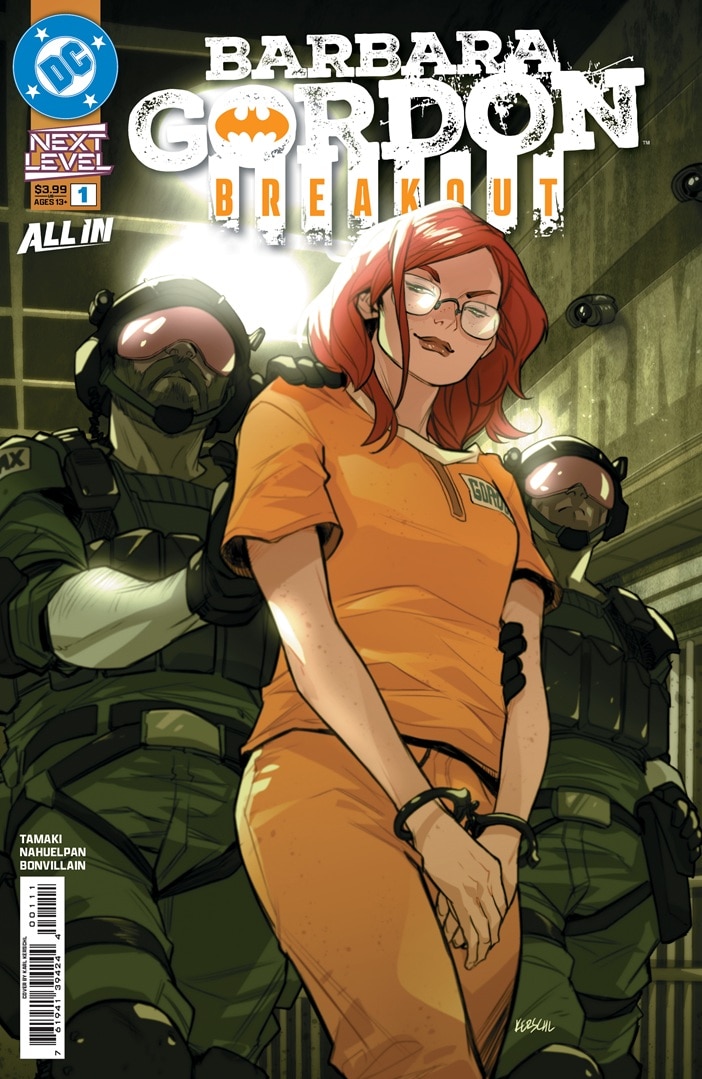
Barbara Gordon: Breakout #1 by Mariko Tamaki, Amancay Nahuelpan and Tamra Bonvillain is available this week in print and as a digital comic book.