One of the most celebrated writers in comics today, G. Willow Wilson has won the World Fantasy Award for her novel Alif the Unseen and the Hugo and American Book Awards for Ms. Marvel (for which she co-created Kamala Khan). She’s also written DC’s Vixen: Return of the Lion, Wonder Woman and The Dreaming: Waking Hours, but DC fans these days likely know her as the mastermind behind one of the publisher’s most surprising titles, Poison Ivy, which is about to enter its fourth year. We recently got a chance to sit down with Wilson to discuss where Ivy is heading as the character’s first ongoing solo title approaches its landmark 50th issue.
Why do you think Poison Ivy is the icon she is?
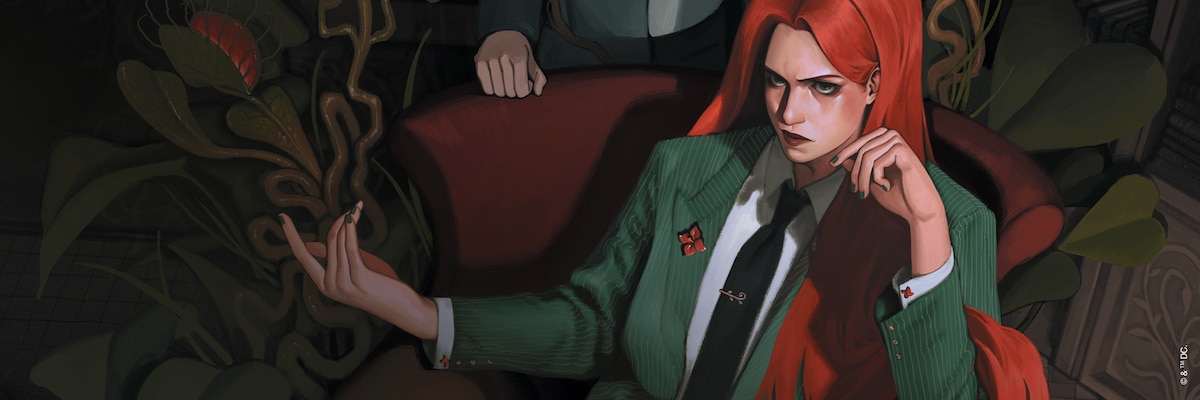
Ivy is one of those characters that, even though she's a Super-Villain, we are able to understand her motivations. She wants to protect the Earth. She knows that because of human intervention and greed, the Earth is kind of collapsing. She's trying to fight back to really protect life on this planet. She just uses very evil and manipulative means to get there. That's what makes her so interesting. In one sense, we want to root for her, but we also know that the methods she uses to enact her plans are evil. That makes for a really compelling read.
Do you notice more fans responding to her as climate change in our world accelerates?
One hundred percent. The looming threat of climate change has really cast this character in a new light. The urgency with which she acts resonates with people, because we feel like we are reaching a tipping point. Even though she's a villain, she's the only character in the Gotham universe that is acting with any urgency when it comes to protecting life on this planet.
Yeah, the moment we live in has really shaped how people relate to this character, and it has created more interest than there might have been a decade or two ago.
You’ve had some stunning art on this series…
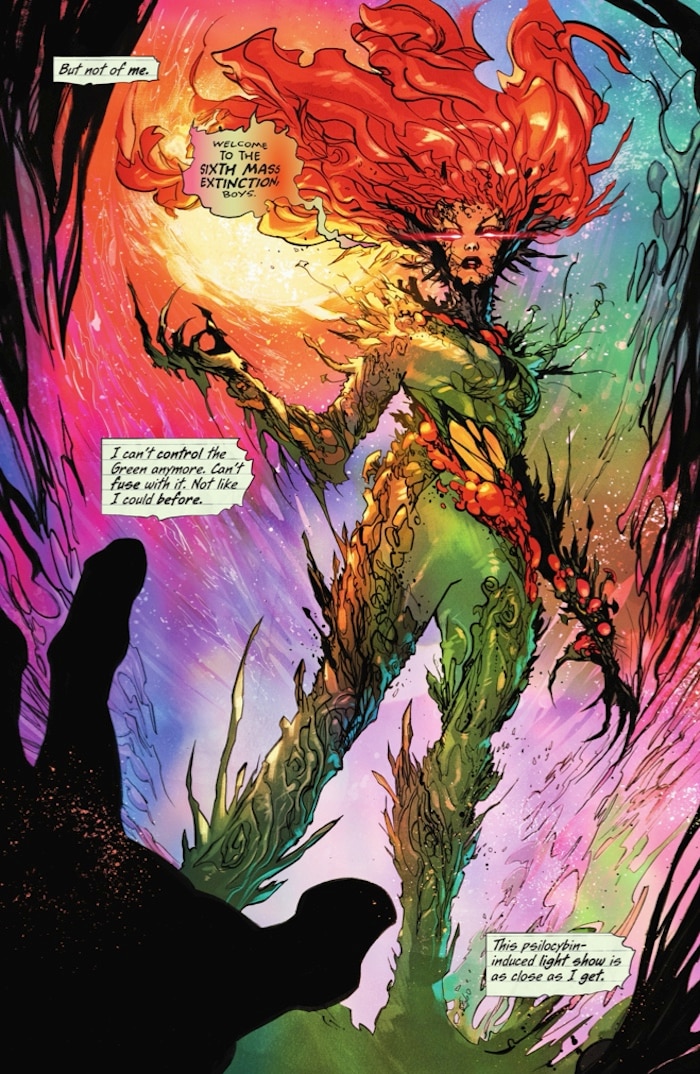
Marcio Takara has been the series artist on this story from the very beginning, and I think a lot of the visual storytelling was his genius, his really incredible point of view and his characterization. The way he draws everything, it's very organic and inky. A lot of the heavy lifting in this series comes from his art. With Arif Prianto on colors, it’s the same thing, that kind of really rich, organic, saturated feel that the story has. Same with Hassan Otsmane-Elhaou on letters. These are the little things that can make a story feel complete that might not pop out to the reader as they're reading, but create a cohesive feeling story.
We recently celebrated Earth Day. What’s the perfect Earth Day for Poison Ivy?
A perfect Earth Day celebration for Poison Ivy would be that we all stop driving that day. Then everybody switches to electric cars and nobody eats any beef anymore. Just think of your most annoying vegan friend. [laughs]
Fifty issues is a long run for a comic these days. What do you think people have responded to in your work on Poison Ivy?
What we've tried to do in this run of Poison Ivy is really bring together all of the separate story threads about her that have accumulated over the decades. She's really one of those characters that has changed a lot decade to decade. Her backstory, her power set, her costume, even her personality changes depending on who's writing Batman and what Gotham City is like. What we've tried to do is tie all of those threads together into a story that feels very cohesive, very compelling. You really get to ride around in Ivy's mind and see the world through her eyes. That's something that we haven't been able to do as readers, in a long form anyway, in the history of this character.
She has staying power because of her charisma. In this series, we just try to do justice to that—do a deep dive into her motives and her passions. It makes for a very dark, propulsive, sexy story.
Ivy has also reached a new milestone in her career. She recently became Mayor of Gotham City…
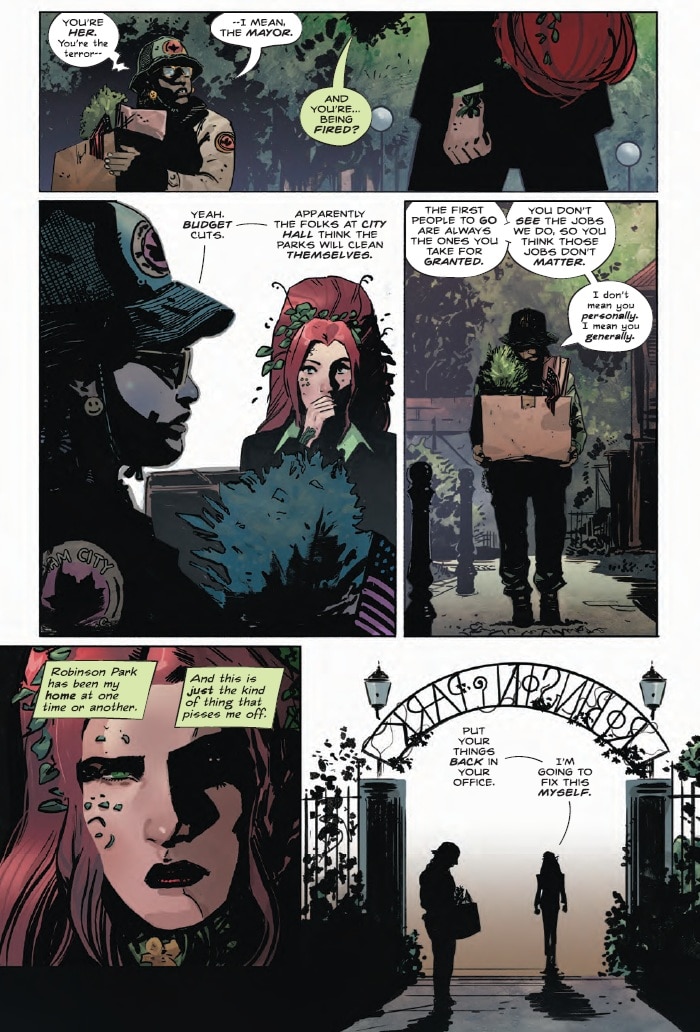
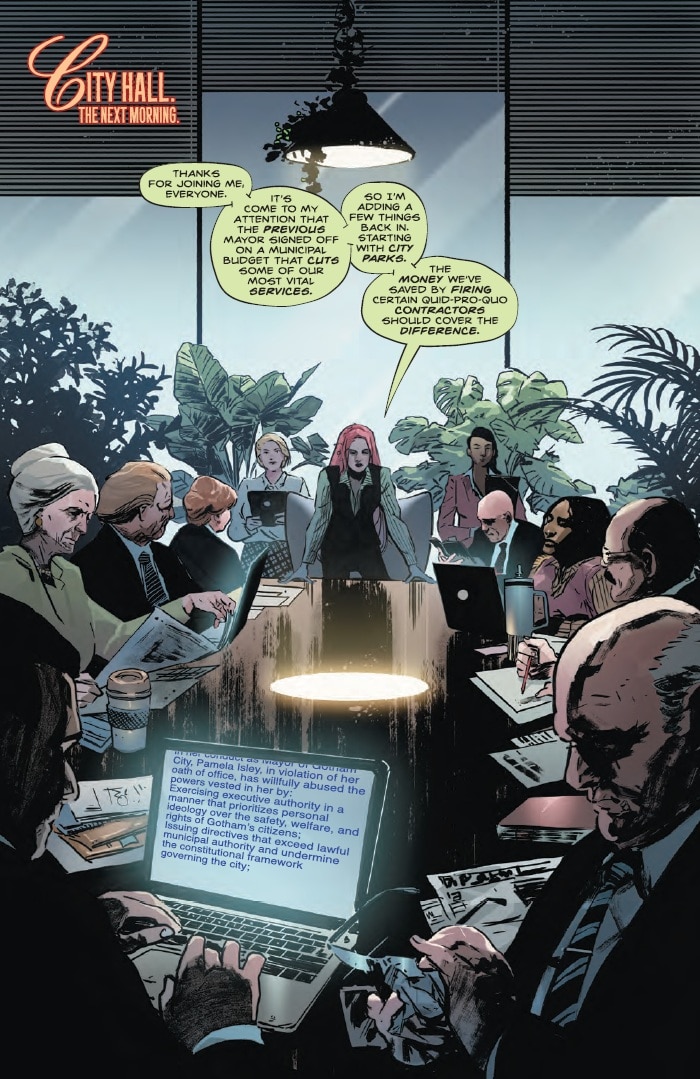
Yeah, as we move towards issue #50, Ivy has seized power as Mayor of Gotham. Shockingly, she's done a terrible job. In one last desperate attempt to maintain power as her popularity tanks, she unleashes a bunch of prehistoric plants across Gotham, plunging it into darkness. So, as we come out of that event, there's a lot that's being reset in her life. She's lost a lot of her allies, she's been injured, and she has to really take stock of her life.
In issue #50, we're really kind of resetting the board, and people who've been invested in Ivy long term will get to see the fallout of the past couple of years of story. There are some consequences, and she's going to end up with a lot less power and influence at her disposal and have to figure out how she's going to claw it back. She's really back at the beginning and has to decide who she wants to be going forward and what role she wants to play in Gotham, and who she is as a person. There's a lot of really meaty story because she's going to have to use her botany degree and her real-world science knowledge to get herself out of this trap that she's put herself in. It's going to be a lot of fun.
Gotham-wide, we have some fun events coming up and Ivy’s right smack in the middle of everything.
How much inspiration do you take from the real world in telling Ivy’s story?
Unfortunately, there's a ton of material when it comes to the destruction of habitat, global warming—all kinds of stuff. There's plenty of motivation in the real world for a character like her. I'm always running some background research about plant toxins, interactions between different plants and fungi, and how those things weave together in the real world. When I can bring in real science, real issues, things that make it feel like you're reading something meaty—whenever I can do that, I do. Because it leaves you with something that you can take with you into real life.
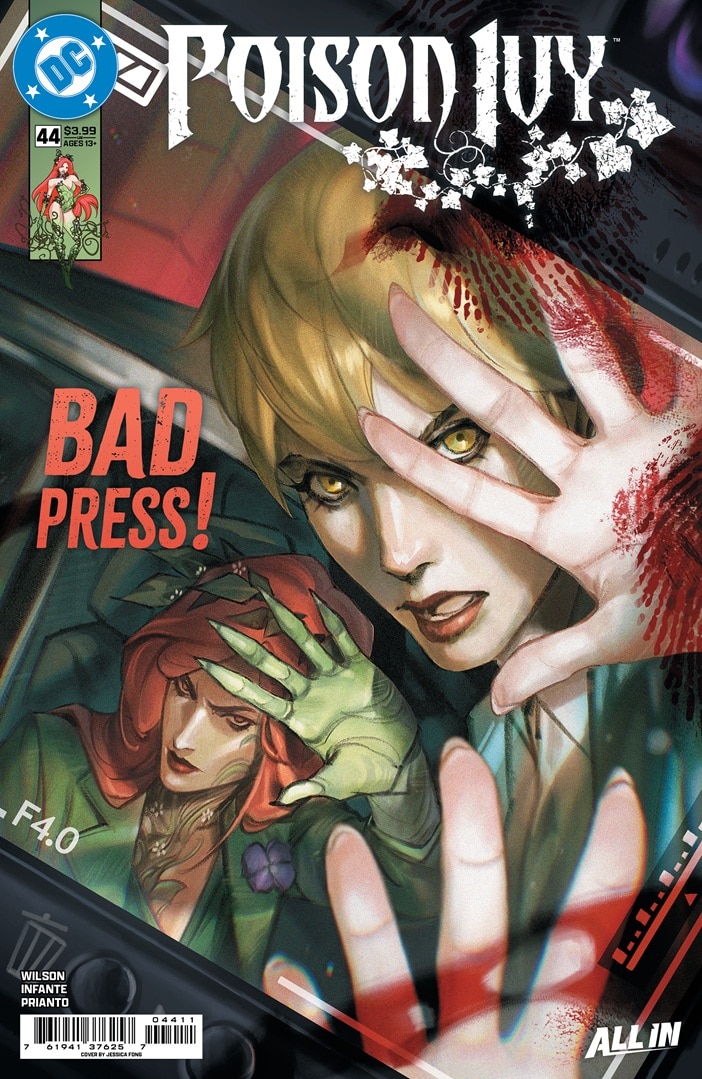
Poison Ivy #44 by G. Willow Wilson, Jaime Infante and Arif Prianto is now available in print and as a digital comic book.