It’s that time again! I’m Alex Jaffe, better known within our Official DC Discord Community as HubCityQuestion and I’m here to untangle all your questions about the complicated universe our DC heroes and villains (and everyone in between) share. I field hundreds of questions each month, and in this column, I bring some of my favorites to you here on DC.com. But if you’d like to talk to me yourself, discord.gg/dcofficial is where you can find the #ask-the-question channel. For now, here are some of this month’s burning questions.
DorisZuel asks:
Does Kryptonite still affect Kryptonians when they’re under a red sun?
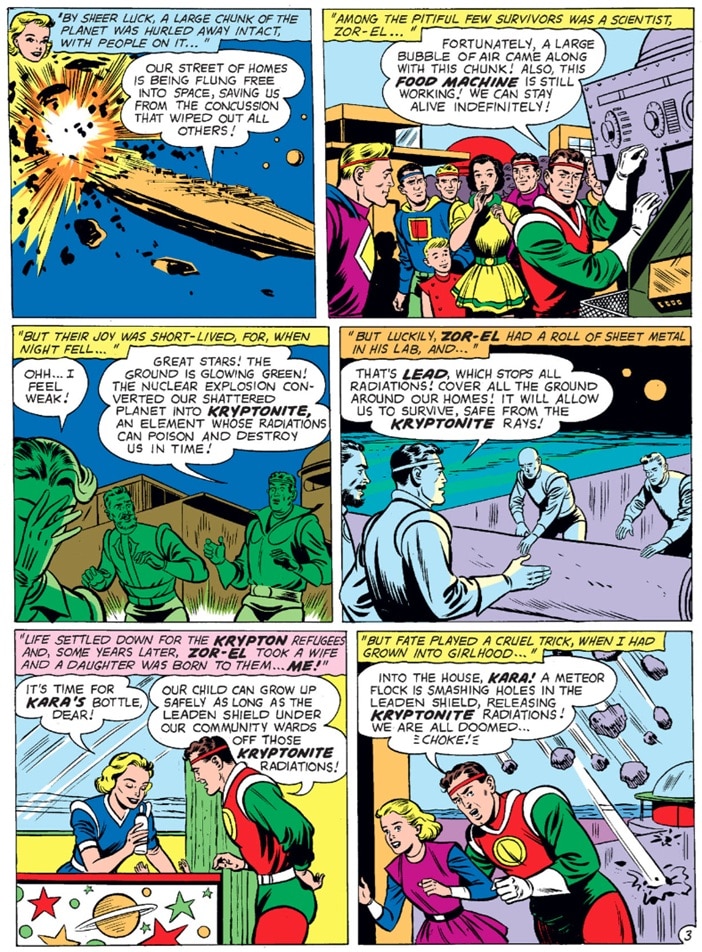
This is a pretty good question to start us off this month. You might think that, when deprived of their yellow solar energy, Kryptonians would lose the attributes of their weaknesses as well as their strengths. But as we know from Supergirl’s origin story in Action Comics #252, that isn’t the case. Growing up in Argo City, the splintered fragment of Krypton hurtling through space after the planet’s destruction, Kara and her family did not experience exposure to a yellow sun. But as the ground beneath them gradually irradiated into Kryptonite, the populace of Argo City was still affected—which was why Kara had to be sent away in a rocket of her own, to spare her from the same fate. From this, we know that a Kryptonian’s vulnerability to Kryptonite is entirely separate from their empowerment by the sun.
Agent of A.F.K. asks:
In Action Comics, it is said that Mr. Mxyzptlk is the same character across all universes. Is that statement true? If so, does that apply to all 5D imps or just him?
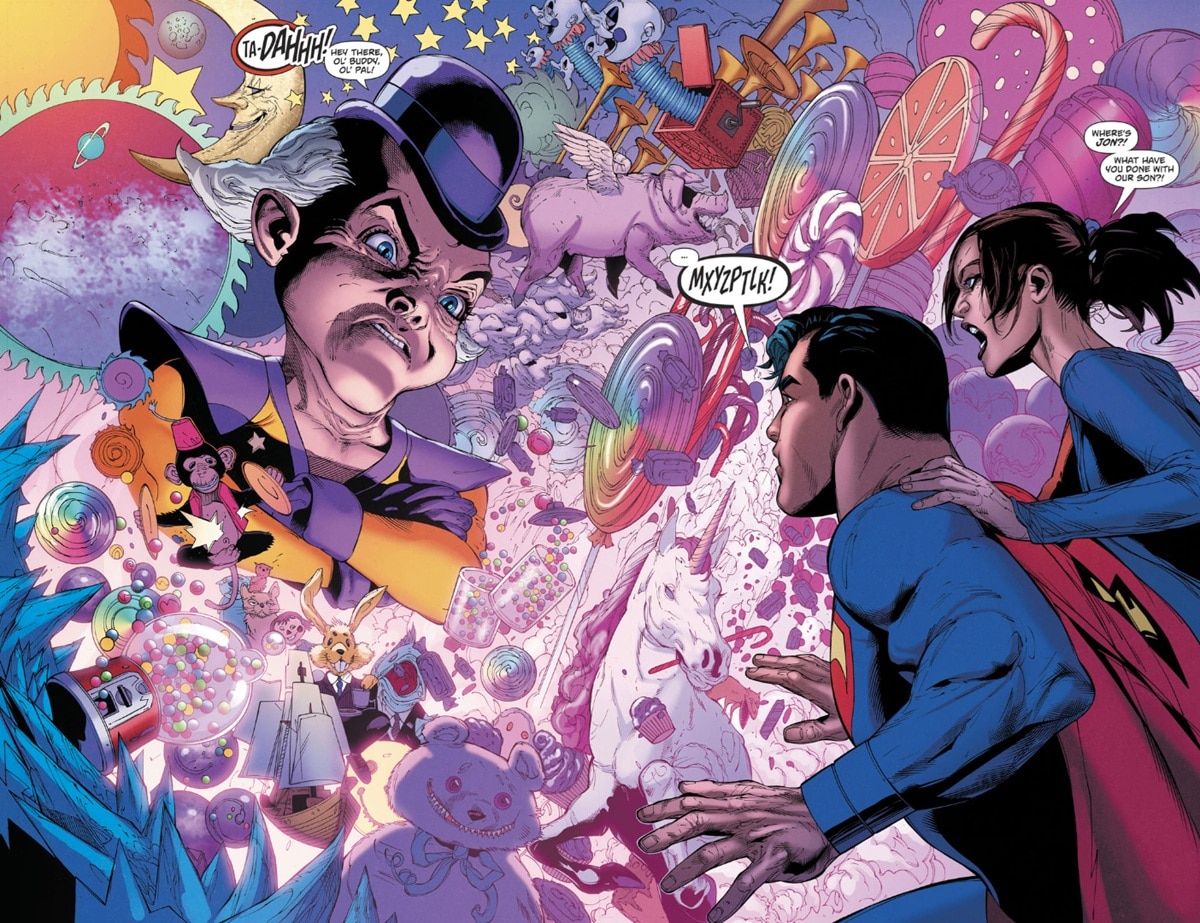
Believe it or not, this is one of the most frequently asked questions I receive. The basis of the idea is a widely shared panel from Action Comics #975, part of a Paul Dini-written backup story about Mr. Mxyzptlk in the early Rebirth era “Superman Reborn” crossover storyline. In this backup, Mxyzptlk shares this frequently quoted factoid with Jon Kent—that in every conceivable permutation of every version of every story where he appears, Mr. Mxyzptlk is the same guy, with the same consciousness, and the same awareness.
(He also states, as you can see, that he’s the only one who “sees the big picture.” So, if we take him at his word, then that wouldn’t apply to any other entities.)
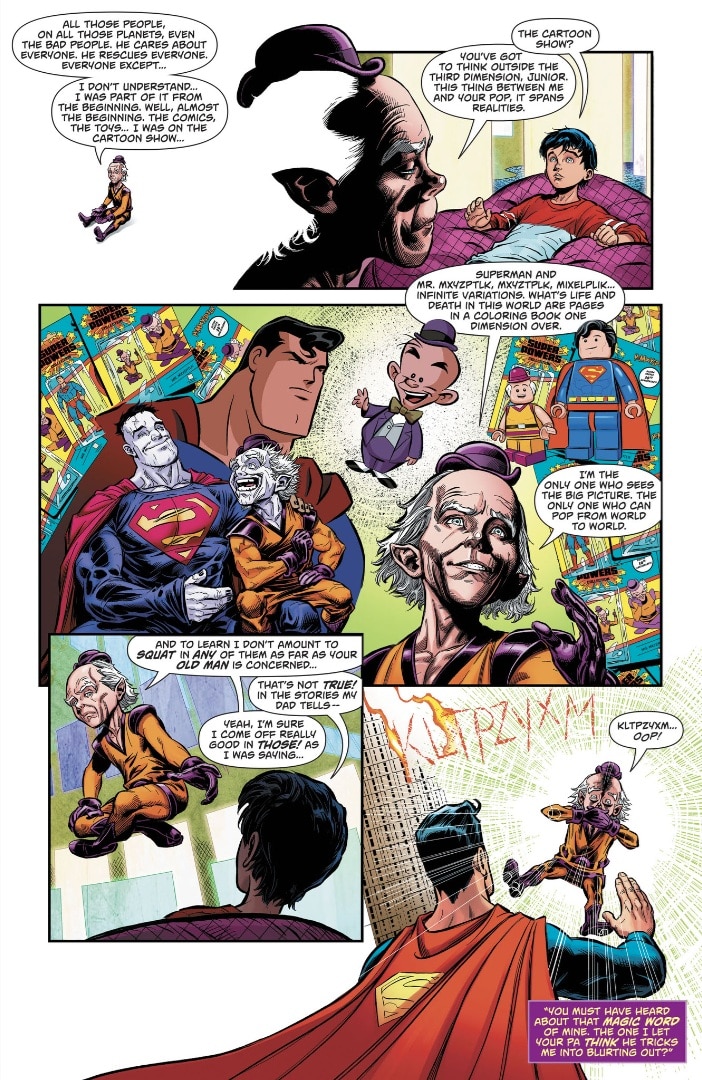
Is it true? Well, this backup story in the middle of this larger crossover is the only time the idea has ever been posited. So, if it is, we don’t have any other points of reference to go on. If it is, there’s nothing to suggest such a view of the character has ever been taken into account by any writer of Mr. Mxyzptlk before that issue, or even since. It’s ultimately the same problem you run into when you try to put into practice the oft-repeated idea that there’s only one Darkseid in the multiverse: it simply can’t account for the many, many stories where Darkseid is doing or being something completely unrelated to his status in the main universe.
The way I see it, we are presented with two possible interpretations of Mxyzptlk’s statement here. Either he’s lying to Jon in this scene, or he’s lying by omission every single other time we see Mxyzptlk meeting Superman in every other Mxyzptlk story ever told “for the first time.” Which of those is true? Well, why not both? Or neither? After all, they say the 5th dimension is the dimension of imagination. The answer is whatever you want it to be.
Ultimately, all I can do in confirmation or denial of the omnipresent nature of Mr. Mxyzptlk is quote the great Alan Moore. “This is an imaginary story. Aren’t they all?”
Xxgre3gxx asks:
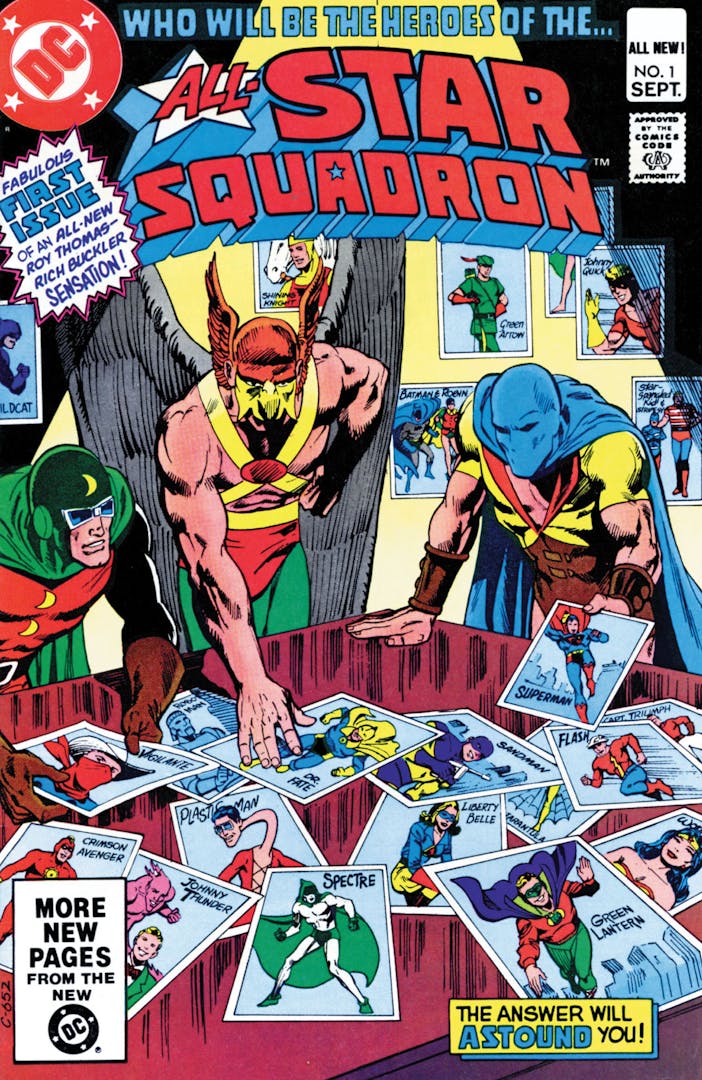
Could you explain to me the difference between the All-Star Squadron, Justice Society, Freedom Fighters and the Seven Soldiers of Victory? Like who’s on what team?
The Justice Society of America began as a sort of social club of the most prominent heroes of the Golden Age, who have since taken stewardship of a great deal of legacy heroes. Its core membership is typically Jay Garrick, Alan Scott, Wildcat, Hawkman, Al Pratt, Wesley Dodds, the Spectre and Johnny Thunder, but other members like Black Canary, Doctor Mid-Nite and Wonder Woman have been members from time to time, with more drifting in and out over the years—much like the Justice League.
The Freedom Fighters are a group of Nazi-fighting heroes who all once belonged to Quality Comics, but were acquired by DC in the 1950s. They’re led by Uncle Sam, but also include Doll Man, Phantom Lady, the Ray, Black Condor and the Human Bomb.
The Seven Soldiers of Victory were an entirely different team in the Golden Age composed of Green Arrow, Speedy, Crimson Avenger, Vigilante, Shining Knight, Stripesy and the Star-Spangled Kid. Like most other teams, there have been minor to major roster changes over time.
Lastly and most largely, the All-Star Squadron, established retroactively by Roy Thomas in the 1980s, is a collective, catch-all term for all the heroes active during World War II who all teamed up for the war effort. It had hundreds of members, like a Justice League Unlimited of its time. If you can think of a hero active during that time, they were probably part of it. For example, everyone I just listed in all those other teams above could also be considered part of the All-Star Squadron. You see, it was the “All-Star Squadron” because all the stars were in the squadron. Get it?
Jurisdiction asks:
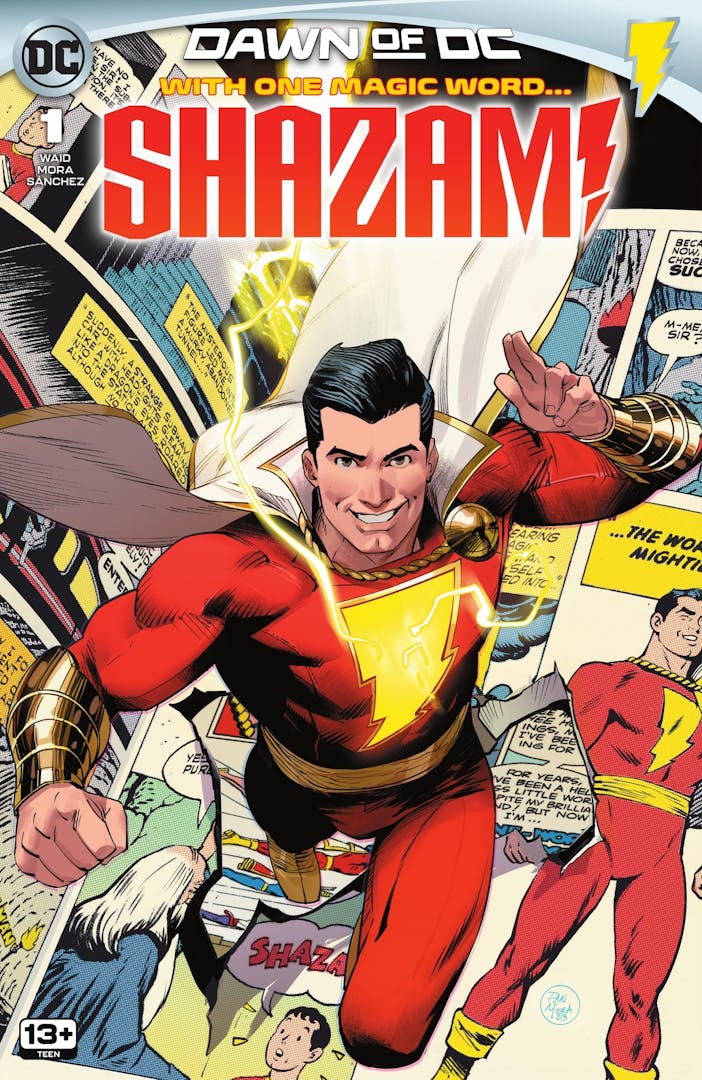
I'm reading War of the Gods right now and the Roman gods just said Shazam is their champion. How is that possible? Isn't Shazam powered by Greek gods? How could the Roman gods deify him?
What you're seeing here is a bit of a rough patch in DC continuity where, in the years following Crisis on Infinite Earths and up through the early 1990s, nobody was really quite sure how to incorporate Shazam into the main DC Universe. Before the Crisis, they had kept Billy Batson and his family of heroes on their own separate Earth—Earth S.
With the fall of the multiverse, DC started trying a few different things to see what his role might be in a world where all these other heroes coexisted alongside him. One idea was to set him up as a counterpart to Wonder Woman, during this brief period in Wonder Woman lore where the Greek and Roman gods were considered separate entities. (They would later be combined into one pantheon again, following the 1997 Genesis event.) Outside the context of this specific event, that didn't really stick. Although others gave it their best shot, we wouldn't get a definitive status quo for a DC Universe Shazam until the mid-’90s and Jerry Ordway's Power of Shazam!
Souron1 asks:
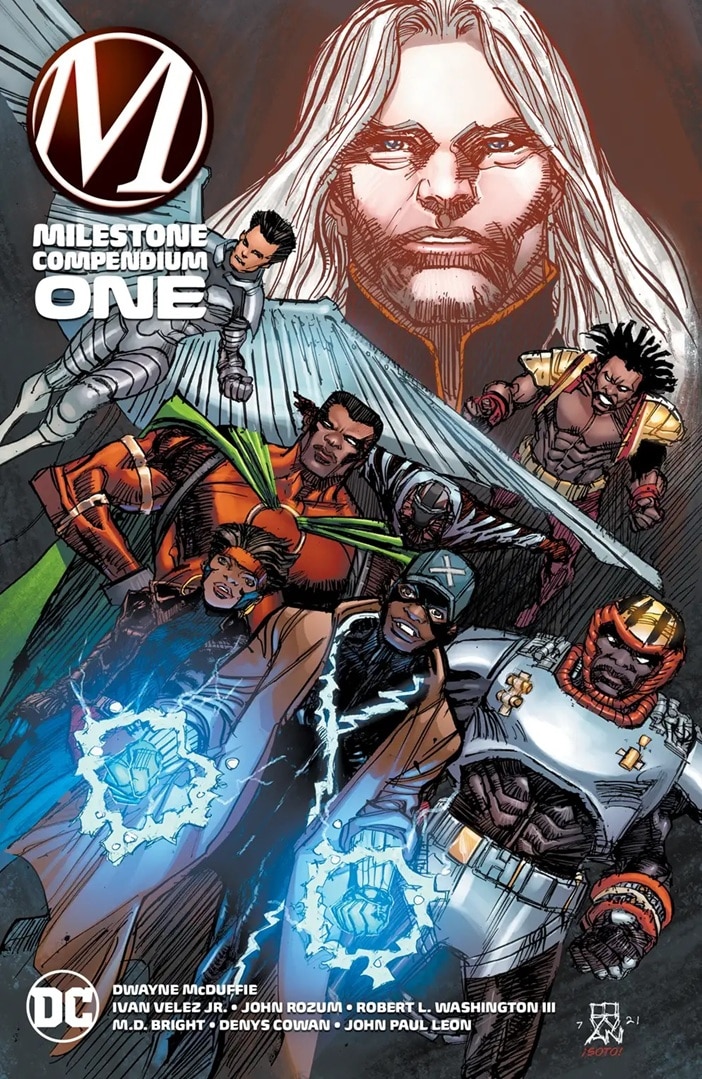
I know the Milestone imprint featured mostly African-American creators, but were the comics aimed at an African-American audience?
This is a pretty nuanced question, and it deserves a nuanced answer. So rather than give my best personal assessment, I decided to ask someone who was there: Joseph P. Illidge, whose comics career started at Milestone Media, and who recently co-wrote the hotly demanded New History of the DC Universe: The Dakota Incident. Here’s what he had to say:
Milestone Media, Inc, which started publishing in 1993, was a separate company from DC Comics, not an imprint of DC Comics like Vertigo. Milestone featured creators who were Black, Latino, Asian and White, at the very least. The comics were aimed at a global, multicultural audience, not exclusively a Black audience, and ongoing series such as Xombi, Shadow Cabinet and Kobalt featured many characters from different nationalities.
Literally could not have said it better myself! Take it from me, even in the cases where I don’t have the answers, I’ll always try and do what it takes to get them from someone who does. All you need to do is ASK…THE QUESTION.
Alex Jaffe is the author of our monthly "Ask the Question" column and writes about TV, movies, comics and superhero history for DC.com. Follow him on Bluesky at @AlexJaffe and find him in the DC Official Discord server as HubCityQuestion.
NOTE: The views and opinions expressed in this feature are solely those of Alex Jaffe and do not necessarily reflect those of DC or Warner Bros. Discovery, nor should they be read as confirmation or denial of future DC plans.