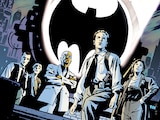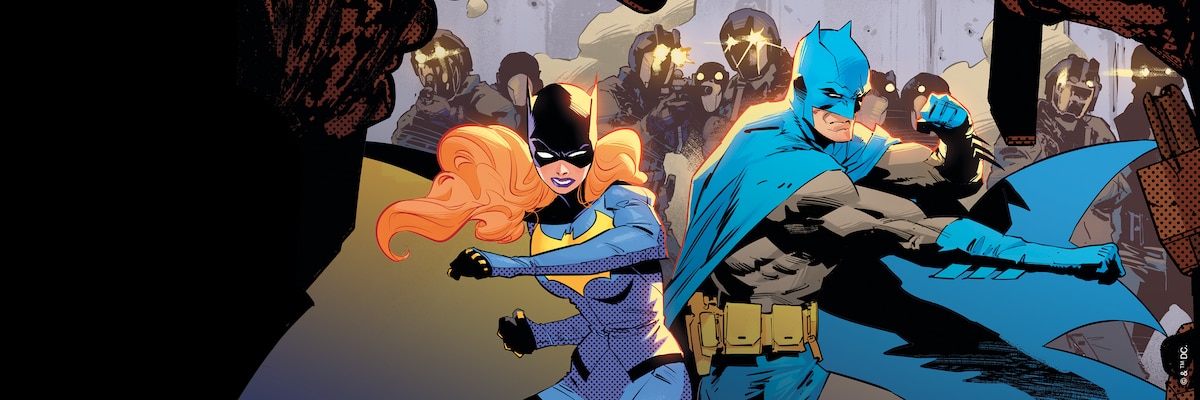
Matt Fraction has spent his illustrious comic book career crafting both critically acclaimed creator-owned titles like Sex Criminals and unique takes on popular superheroes like Hawkeye. He last brought that experience to DC with gusto in 2019’s wildly entertaining Superman’s Pal Jimmy Olsen. Now he’s tackling the company’s most popular character in a new Batman series with artist Jorge Jimenez that’s brought the book back to its basics while still managing to offer up plenty of big swings. (GCPD Commissioner Vandal Savage, anyone?) We recently caught up with Fraction to find out what he has in store for the Dark Knight as we head into summer and how it all ties into the next big Bat-Family event…
Batman has some commonalities with other characters you’ve worked on. Like Tony Stark, he’s a wealthy playboy who channels his money into his crimefighting. Like Hawkeye, he’s an urban avenger. Do you see him as a continuation or culmination of your work?
Ooh, I'm bad at that. I don't know. I'll let other people speculate about that. But I certainly saw things that I was curious about and I saw a kind of lens that made sense to me. So if it works, I think it's maybe because of that. But there are certainly things about the character that attracted me the same way that there were things about Tony Stark or Clint Barton that attracted me, so it makes sense that it would carry over.
How would you describe that lens you just mentioned?
Oh, I wouldn't. I would never undress my metaphors. [laughs]
Part of the magic of this character and part of his endless appeal is that he means so many different things to so many different people for so many different reasons, right? You know the bit of grit that turns into the pearl? I just had my bit of grit and I was like, “Let's see what happens.” But I hope everybody finds something in it and responds to it, and that one day the kid who takes this job found their way into the world of Batman through this book.
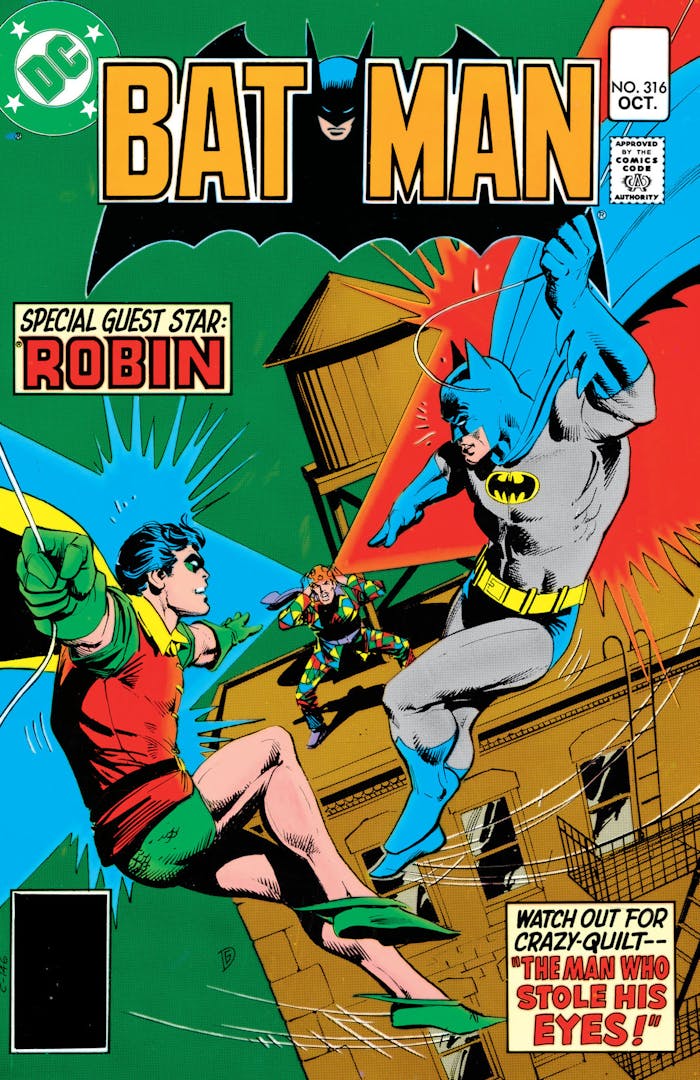
It's amazing meeting kids who are into it. What it means to me isn't the same thing it's going to mean to an eight-year-old, but it means something to an eight-year-old, and that's awesome. Batman was the first comic I ever read—at two and a half years old—Batman #316. [Writer] Len Wein and [artist] Irv Novick. It's a Crazy Quilt issue. It's not a particularly strong issue, other than it has my entire inspiration and origin in it. But it's magic to me. It's deeply weird and it's great.
I'm sure it's just a matter of time before James Gunn gives us a live action version of Crazy Quilt.
Look, man, he's into Bat-Mite. I would not count Crazy Quilt out. [laughs]
On the flip side, you recently introduced Batman’s most famous Super-Villain, The Joker, to your storyline…
Issue #7 was the midway point through the first year and it was our first chance to spend time with The Joker. It was one of the things that excited me as a creator, trying to figure out, “How do you come to Batman and do something with The Joker that was different from the way we had seen before?”
It sort of sets things in motion for the back half of our first year, and then the start of our second. We've got Ryan Sook coming in for issues #8 and #9, one of which is a very downbeat moment, where we spend the night in Gotham with three different people in three different scenarios, one of which is Alan Scott. So, I got a little chance to write Alan Scott, which was really cool. Then the shit hits the fan in issue #10 and doesn't stop until year four, basically. So we are off to the races and all of our evil chickens are coming home to roost.
How did the amazing foldout sequence with The Joker in Batman #7 come about? Artist Jorge Jimenez did a great job with it.
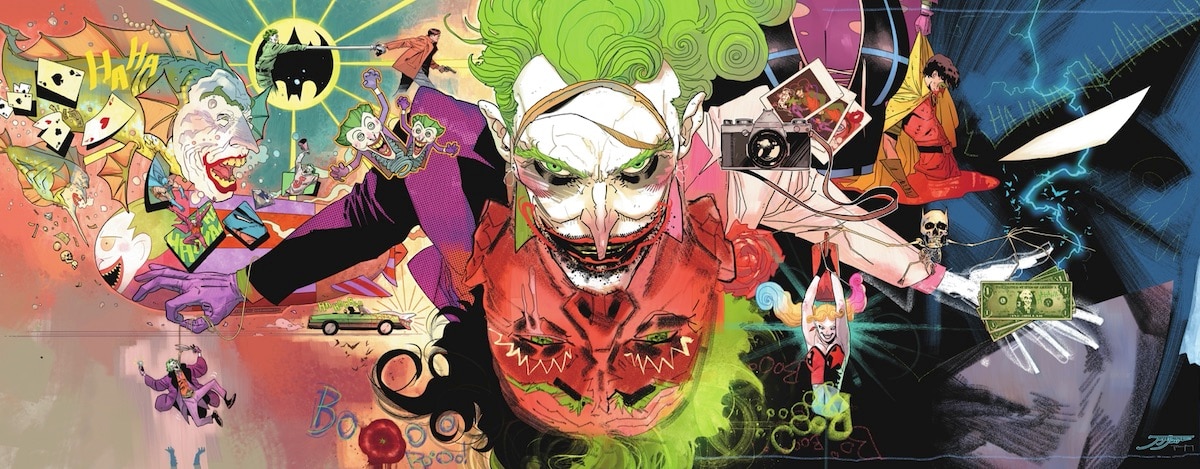
I had this idea for what I thought we could try with the character, and it also gave me a chance to write something for Jorge to draw that I'd never seen before and to really give him this big showcase moment. I was like, “Jorge, I have this idea for how we can make The Joker special…” It's this literal look inside his mind. The Crown of Storms is capable of regulating the wild electrical storm in his brain, and he's got control of his faculties and he has his memories. It's “What does The Joker's memory look like to The Joker if you've been all these different things as Joker has been?”
It looks incredible, and it's Jorge working in a style I've never seen him work in before. It's incredibly expressionistic and comes organically in this moment of the Joker at least purporting to be in control of everything that's going on. He is trapped in his own head. He's been medically paralyzed. He can't move. He can't speak. He's locked in with the memory of all the terrible things he's done.
We get to see what that looks like to him. To be able to look back at this history of psychosis and see the psychosis from a non-psychotic point of view is horrifying. I love Jorge so much. I just wanted Jorge to do something awesome, and Rob Levin and everybody went above and beyond to make it work.
You’re also working on your first crossover event at DC…
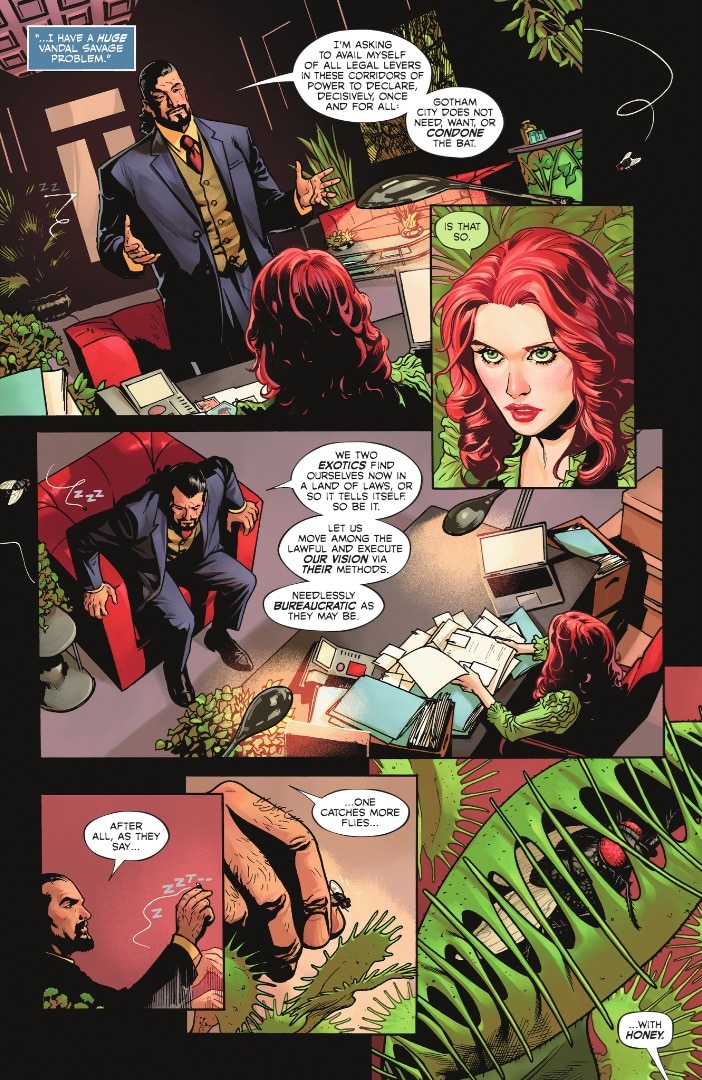
We're doing this thing called “Bad Seeds.” It's about what happens when Poison Ivy becomes mayor of Gotham City. When that goes wrong, it goes very, very wrong. It was a chance for us to design an event with the same kind of micro-line strategy that informs Absolute and Vertigo. Here's the thing. Everybody [working on the Bat comics] has to tie in, but it has an intense, short window. It's a long night. The day has to be saved by the time the sun comes up. It happens in Gotham City. It is immediate, and it affects everybody in the city in different ways and gives all of the amazing creators in the whole Bat-line a chance to do something. It’s a tight two months.
At the end of “Bad Seeds,” Poison Ivy #50 comes out. Poison Ivy is such an incredible book, and I—just as a fan—was like, “How can I help? I love it so much.” They said, “You need to work with Willow to do this thing that will pay off these six years of stories she has done.”
There's a murderer's row of talent and the idea of doing something that’s less an event and more like a micro-line, like if there were a Bat-Family summer blockbuster… Every week there's a thing and I think it's going to be a lot of fun and really cool. It changes things so profoundly on the other side that the only thing crazier than how “Bad Seeds” ends is how Batman #15 ends, which is the first issue on the other side of the event. But we'll talk about that when it's Batman #15 time.
I can't get into what Ivy gets up to, but it's real bad. It is a bad, hard, difficult time to be in the Bat-Family. And the moment when the city needs them the most, they do what they do. They're heroes, so we put these characters in these brutal crucibles that test their abilities and their faith in themselves and their talents and their strength—not just as heroes, but as a family unit—and see what happens. We've stacked the deck so high against everybody. I hope it's as much fun to read as it's been to write.
These days, DC seems to be embracing the aspirational side of its heroes to a greater degree.
Yeah, it certainly seems to be finding a resonance. I went into Superman last summer like everybody else, going to see a Superman movie… We had a couple of issues done at that point. I think the first thing I ever said to Rob [Levin] and Marie [Javins] was, “Listen, if no one likes this, you're going to know right away. In a worst case, I'm out of your hair in nine months.”
But I came out of that movie, like, “Yup. We all got on the same page of the book at the same time.” There's a reason why my first line in the book is “No rain.” Like, just give me a minute of blue sky. It doesn't mean it's not bad. It doesn't mean that bad stuff doesn't happen. But like, “You know what? Look up.”
Batman's in the blue and the gray. They're all good people that do the right thing against impossible odds. Normal people and superheroes, we have all come to this moment culturally and creatively. Even Absolute Batman, as over-the-top insane and big as it is, it's about a guy that cares too much. We're all just in a place where we need good guys being good. It started with Superman and it feels like everyone's hungry for it. That's why we're still here. That's why it's been going on since 1937.
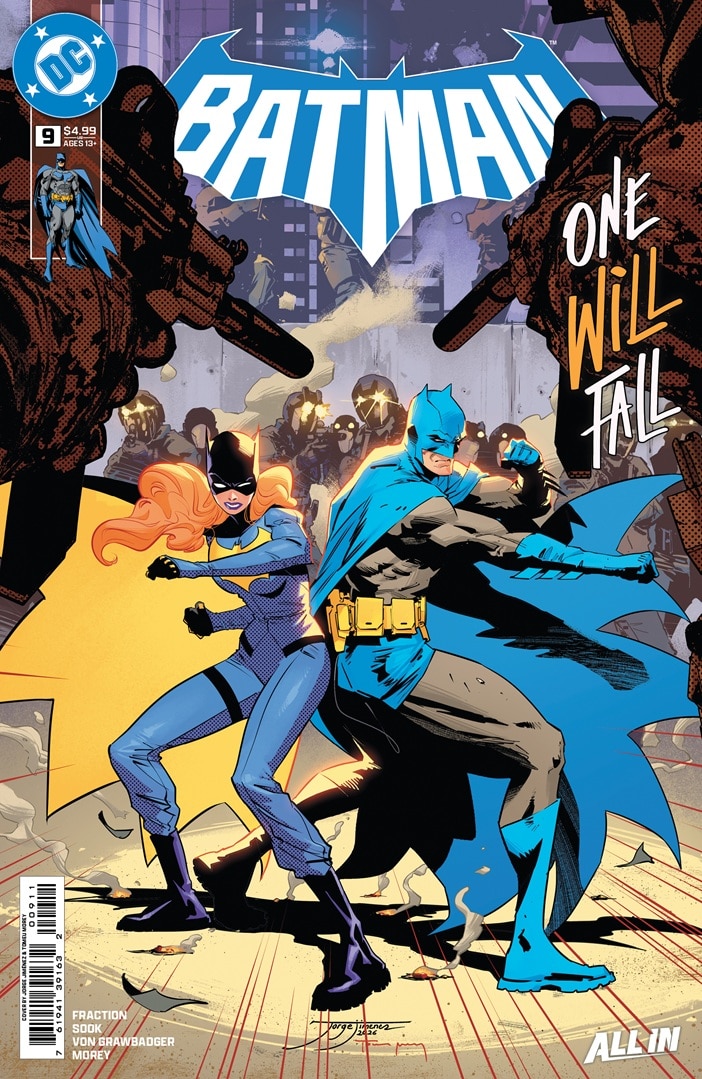
Batman #9 by Matt Fraction, Ryan Sook, Wade Von Grawbadger and Tomeu Morey is now available in print and as a digital comic book.