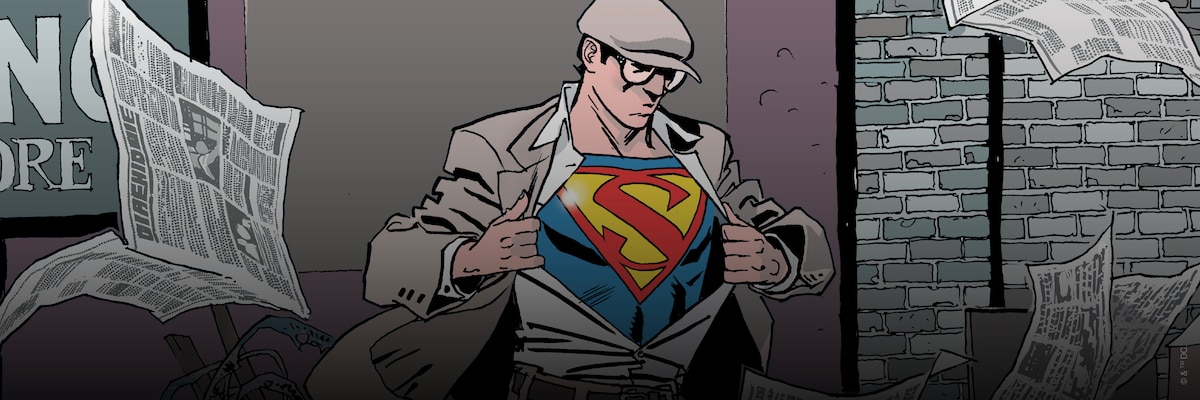
If you’re only familiar with modern Superman, Wes Craig’s Superman: The Stranger, a six-issue DC Black Label series, may be a little jarring.
Craig takes Superman back to the Golden Age of comics, which kicked off with Superman’s debut in Action Comics #1 in June of 1938, the same year The Stranger takes place.
We meet Clark Kent in Daily Planet editor Perry White’s office. A solid writer, but not yet a seasoned reporter, Clark is begging Perry for a job—any job. Perry can only offer him a role as a janitor, blaming the economy (this is the Great Depression, after all) and a recent acquisition that will surely result in layoffs. Boy, things sure do stay the same, don’t they?
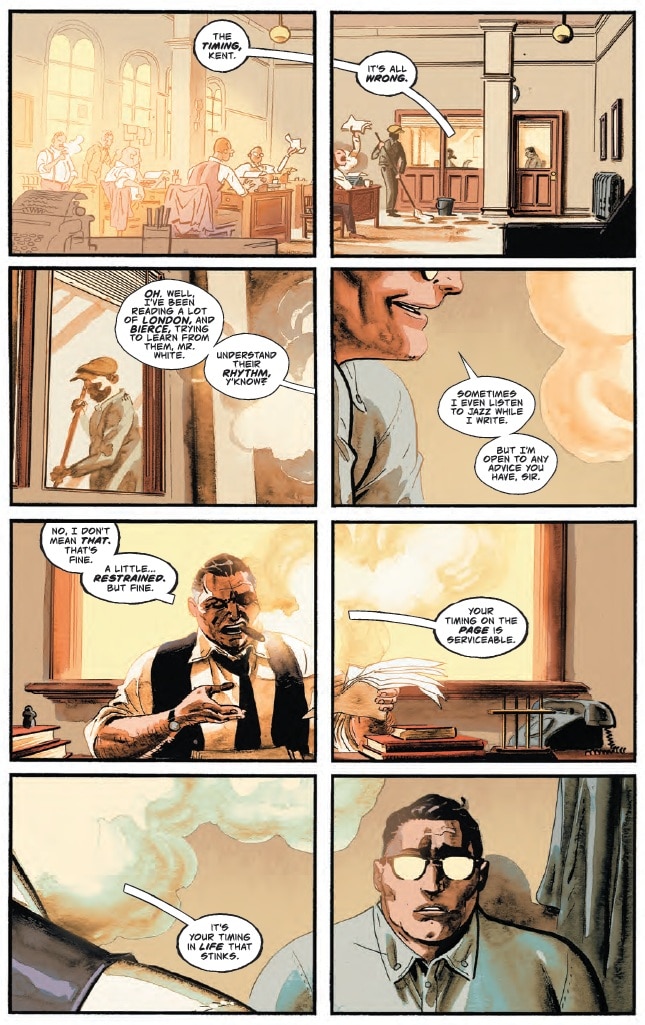
Clark walks home to his cramped apartment, where he reveals several details of his life as a part-time hero to his diary. He also doesn’t have godlike powers. Not yet, at least. What abilities he does possess have come in slowly, making him tougher, stronger and able to jump really high (perhaps over a building in a single bound?). There’s no mention of flight, X-ray vision or heat vision—none of which he had when Jerry Siegel and Joe Shuster first introduced him to the world.
Superman will also never bond with Batman over their mothers both being named Martha because this Clark was never adopted by Ma and Pa Kent. He grew up in an orphanage, then on the streets.
While there are numerous unique spins on heroes and their origins, that’s not what The Stranger is doing. It’s actually giving us Clark’s original backstory. In Action Comics #1, an alien from a dying planet sends his infant son to Earth, where he’s found on the side of the road by a passing motorist and taken to an orphanage. Clark’s story was later retconned to feature the Kents as his Earth family.
Yet, this Clark also faces one hurdle his predecessor didn’t: he’s poor. He lives in a crappy apartment and eats PB&Js for dinner. He wants to expose corruption as a journalist, so much so that we learn he left a steady job working in construction to try for the Planet’s newsroom. But his leap of faith in himself left him pushing a mop around for much less money than he was making on the construction site.
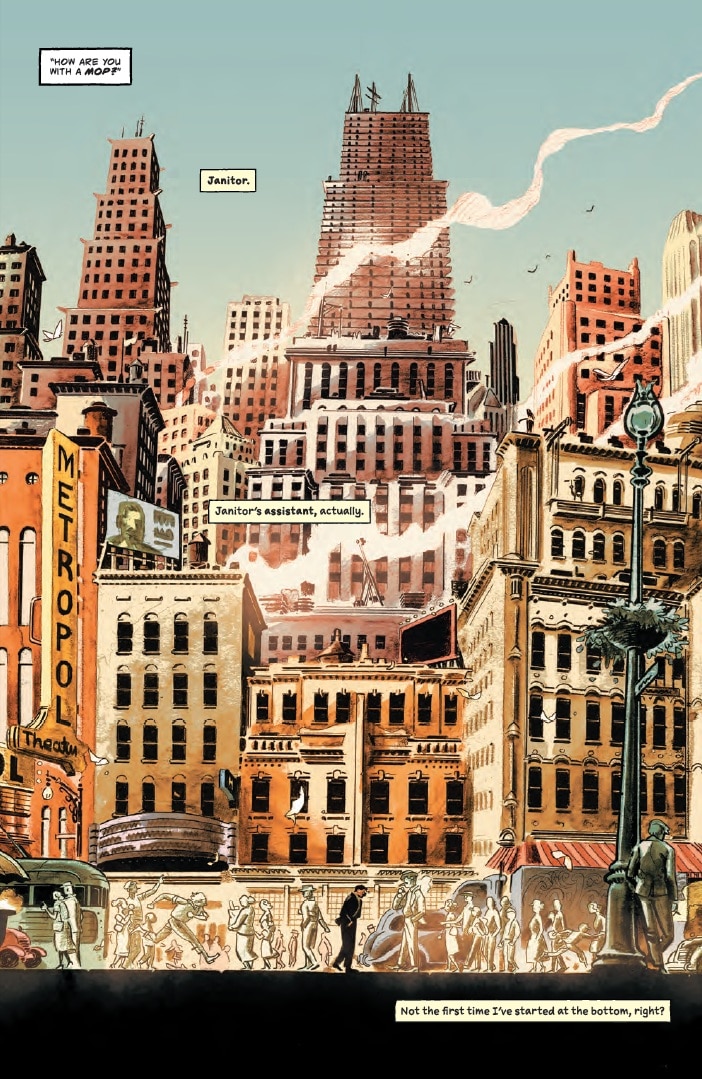
Siegel and Shuster’s origin story has been modernized in other intriguing ways as well. As Superman, Clark can see a more complicated world than “that’s the law.” He is informed by the cruelty of a childhood spent in an orphanage, then later, on the streets. When he interrupts a robbery, there’s empathy for the young would-be thief.
This should make it interesting when we see how Clark’s story intersects with Lex Luthor, who arrives at the end of this debut chapter and appears to hint at a political scheme he’s hatching that sounds suspiciously anti-immigration—and who better to fight him than an immigrant from a totally different planet?
It’s all lining up to be an interesting exploration into a familiar, yet different Clark Kent, in a time period that’s nearly a century passed, yet still relevant to today’s politics and social justice issues.
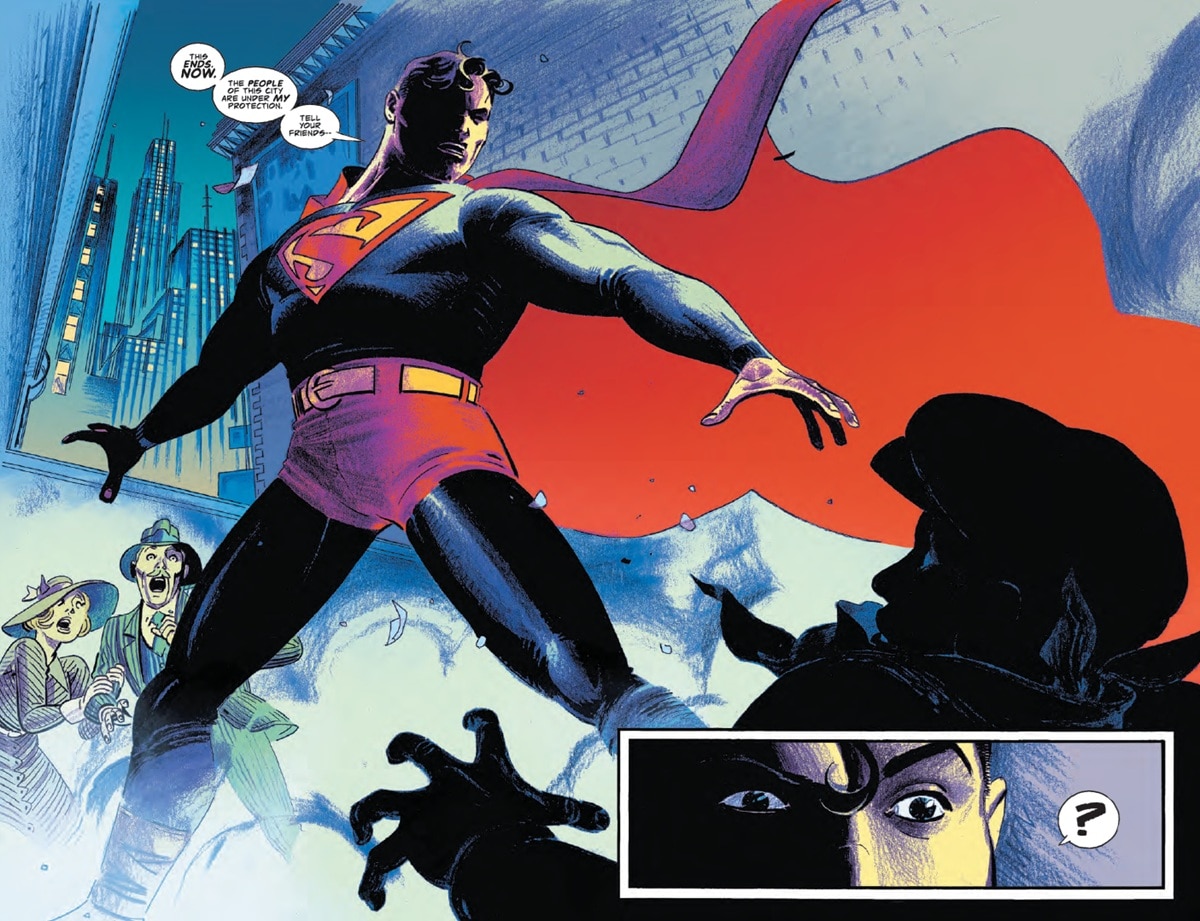
If that doesn’t hook you, perhaps the art will. The Stranger’s Depression-era Metropolis looks great. There’s also something so timeless about Superman in his original, bold costume, pinned against a sprawling city of seemingly endless skyscrapers. You can almost feel the oppressive heat of the summer sun on concrete, or the isolation Clark feels when he’s sitting atop a roof, sandwiched between a Metropolis that doesn’t yet care about him and the stars that hint at, but never reveal, his fantastic origins.
Superman: The Stranger #1 by Wes Craig and Jason Wordie is now available in print and as a digital comic book.
Juliet Bennett Rylah writes about horror, Vertigo and the dark side of superheroes for DC.com. Follow her on Bluesky at @JBRylah.
NOTE: The views and opinions expressed in this feature are solely those of Juliet Bennett Rylah and do not necessarily reflect those of DC or Warner Bros. Discovery, nor should they be read as confirmation or denial of future DC plans.