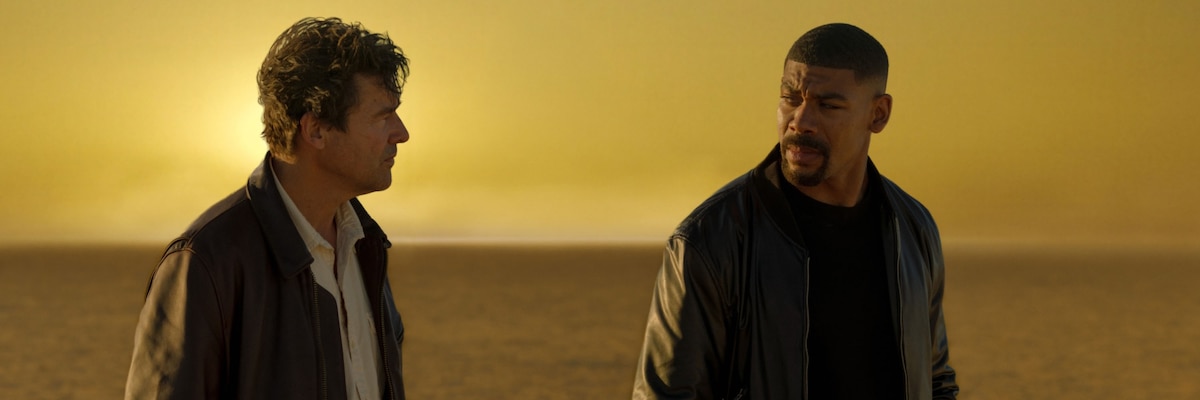
SPOILER ALERT: The following feature contains spoilers from the Lanterns season finale.
The eighth and final episode of HBO Max’s Lanterns has arrived, and Earth has a new Green Lantern in John Stewart. John’s journey to his power ring was by no means an easy one, but its resolution proved as well-earned as it was emotionally satisfying. Much of the credit for that goes to the show’s creators Chris Mundy, Tom King and Damon Lindelof—all three of whom co-wrote “Dirt and Stars”—and the men who play the titular Lanterns: Kyle Chandler (as Hal Jordan) and Aaron Pierre (as John Stewart).
Unlike so many screen superhero origin tales, Lanterns didn’t climax in a blaze of action, but remained the thoughtful character study that has compelled viewers all season.
“This story was about these two guys,” says Mundy. “So, we knew that if we landed it emotionally with them, we would have done our job… What I love about the huge fist fight those guys have [in episode 5] is it’s an emotional scene even though they’re beating the hell out of each other. The ending had to be an even quieter connection of these two people. If we were going to ask people from the very first second of the pilot to invest in the relationship with these two guys, we had to land it in their relationship or we wouldn’t have done our jobs.”
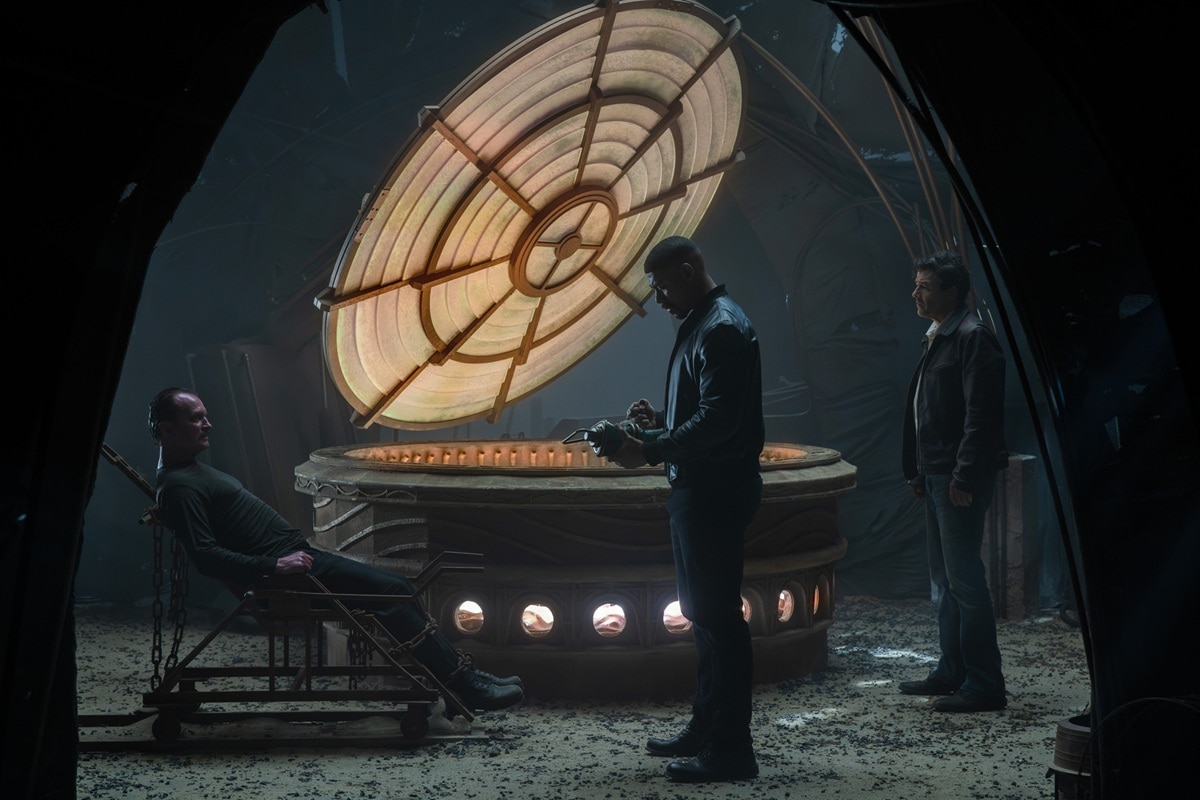
“If we had to make a two-hour Lanterns movie about this meeting of John and Hal,” says Lindelof, “[we] would have to have the third-act bombastic, amazing, action set-piece. Then you get two or three minutes of coda after that to do everything that Chris just said.
“We got to that almost over the course of three episodes—everything from the moment the Halogram first appears for John to process Hal’s death while solving his murder to where both characters need to get to in order to move on. You can only do that in TV. If you don’t have to do the big bombastic action set-piece, you have to ask yourself, ‘What is it in service of for a show that was always about these two guys?’ It was just very liberating to know that we could do something like this instead.”
“One of our sticking points from day one,” adds King, “was ‘No cliches. Avoid cliches like they’re the plague.’ As someone who consumes a lot of superhero content, that can leak into that content and make it boring and can give you the superhero exhaustion that we’ve seen a thousand pieces about.”
Among its many emotional beats, the finale also revealed the mystery behind Hal’s murder, and the person responsible for it.
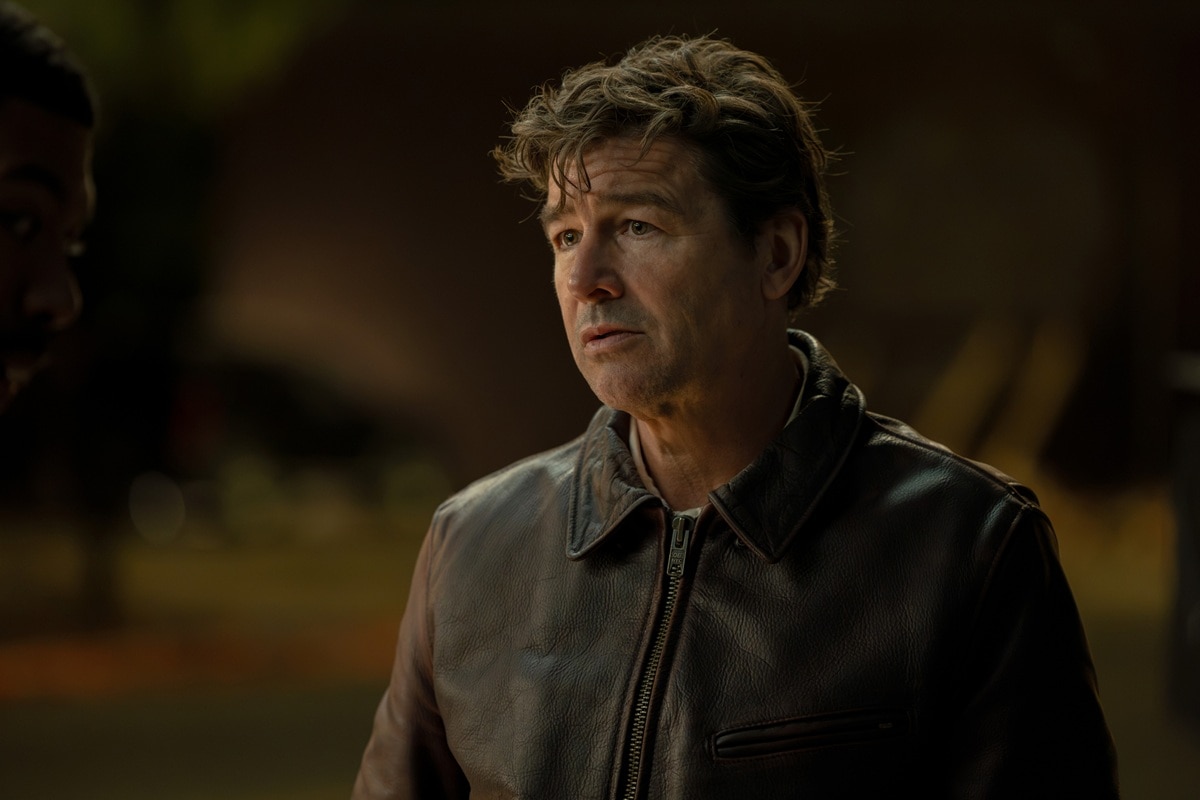
“We knew we didn’t want it to be a fake-out, in order for all of the emotional progression to feel real and earned,” explains Lindelof. “We meant it when we said, ‘There’s one ring and two guys, and one of these guys is going to be wearing it at the end. There’s going to be a fight, and there’s going to be a resolution from that fight.’ But when it came to who killed Hal and why, Chris from very early on was like, ‘I think it’s Kerry.’
“We wrestled with the idea of not wanting her to feel duplicitous, like was there a way for her to love him and also kill him? And as three married men, we were like, ‘Absolutely! One thousand percent!’ That the show starts to become less of a whodunnit and more of a ‘why-done-it,’ became a very natural progression. That organically started to happen as we were casting the show without it having been written yet, knowing who we were writing for and what they were capable of. You can design more intricate plays when you know you have that kind of talent on the field.”
Chief among that talent is Pierre, who mines a reservoir of empathy beneath John Stewart’s cool exterior. In the end, it’s that empathy that compels him to wear the ring.
“Not having a lot of those qualities extended to him—empathy or understanding or consideration or thoughtfulness—he tries to put out there what he was always yearning for,” says Pierre. “Of course, these characters are flawed, they’re not always successful in their attempts. But I think that’s what makes them so beloved. That’s what makes them endearing. It’s not about getting it right. It’s about best endeavours to get it right. Sometimes you fall short and sometimes you get it right.”
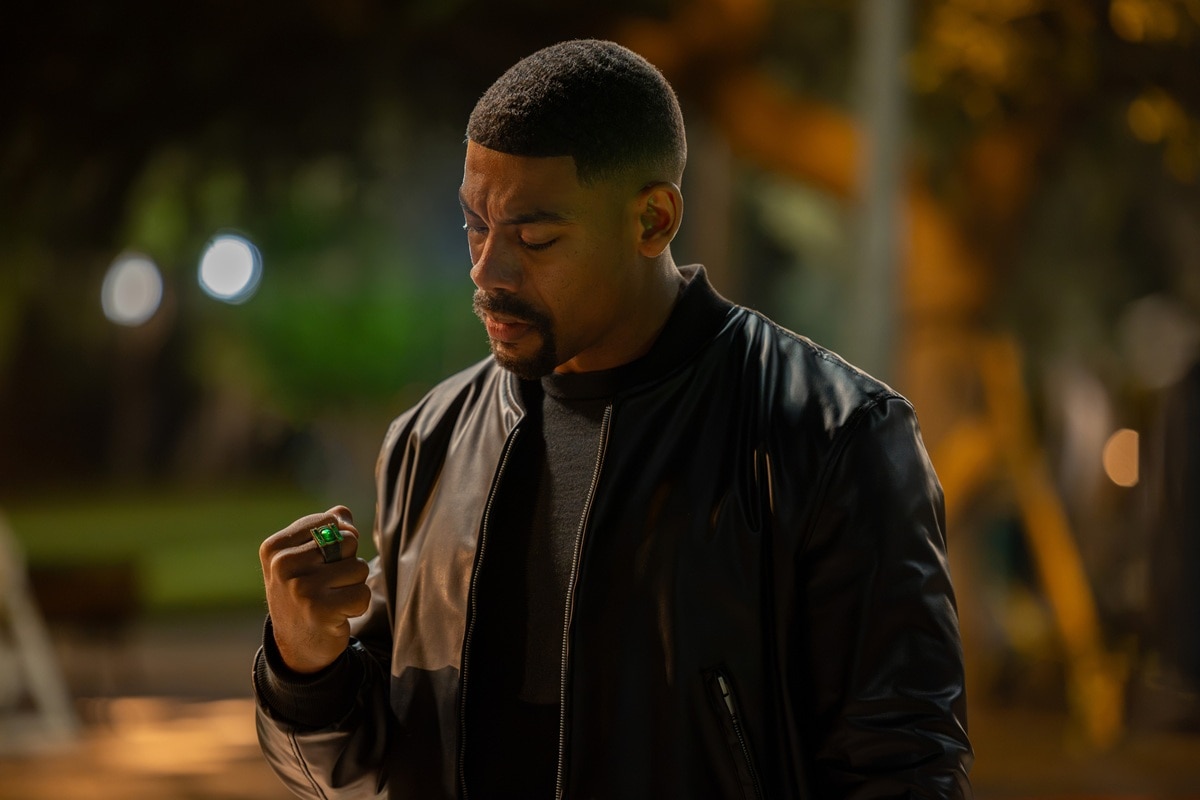
John’s aspirations are reflected in the new Green Lantern oath he creates in the episode’s final scene—an oath that embraces the fear the Green Lantern Corps have long denied.
“Sinestro says it in the finale,” says Mundy. “Fear is just emotional intelligence: ‘Show me a species without fear and I’ll show you something on the extinction list.’ We wanted to talk about these very real, flawed, complicated people who get to do these heroic things. What would it actually mean? It was really important to embrace that and treat that question seriously.”
King speaks to the rationale behind John’s oath.
“There’s an Alan Moore, Bill Willingham story [“In Blackest Night,” from Tales of the Green Lantern Corps Annual #3, collected in DC Universe by Alan Moore] where a Lantern has to make an oath,” he elaborates. “And for more modern readers, Geoff Johns has done this thing with the spectrum of Lanterns—each color of Lantern had its own oath. What we see at the end is that John is not a hundred percent a Green Lantern—he has a lantern that has a bit of yellow in it, a bit of fear in it. It’s an unsanctioned Lantern, as Guy says. So, he’s not saying the same oath as every other Green Lantern because he’s not like every other Green Lantern. That seemed to line up very much with the lore and where we’re going from here.”
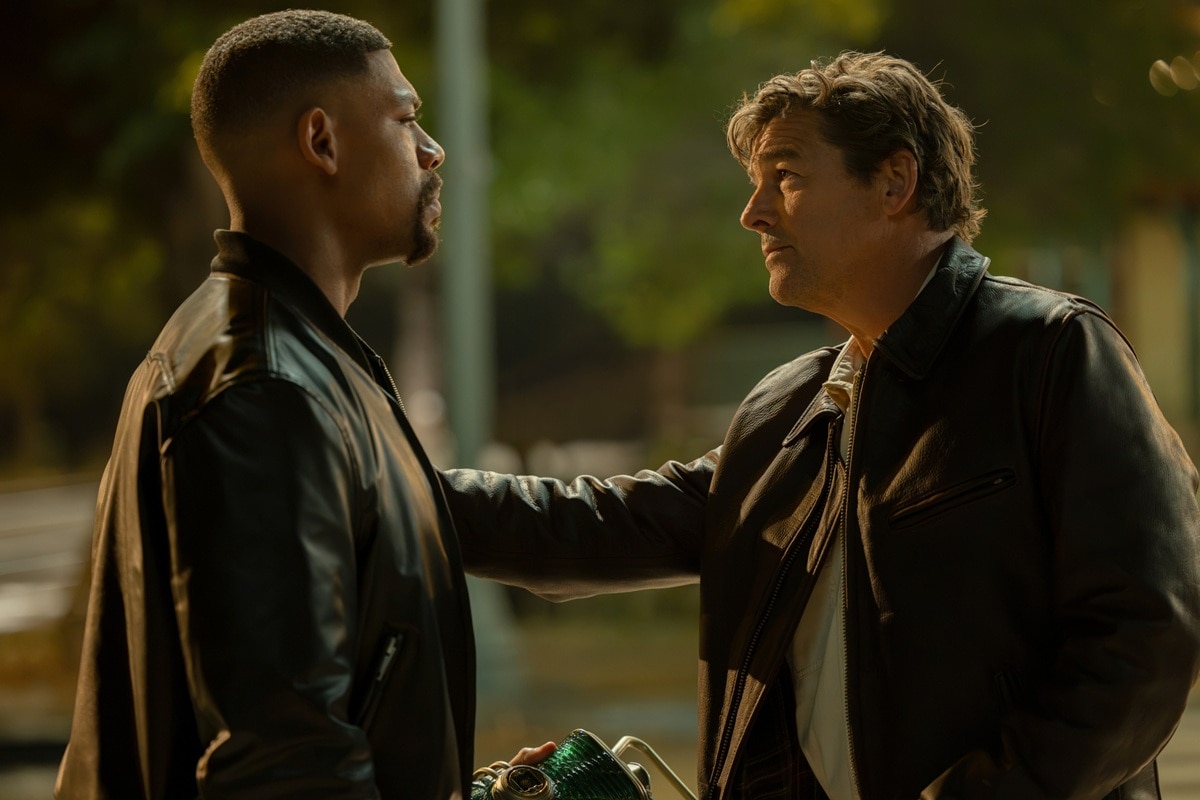
On filming John and the Halogram’s final, emotional scene together, Chandler remarks, “A film from the ‘50s or ‘60s, where you’ve got [John Wayne] standing there, he’s just not going to say, ‘Well, I love you, kid.’ It just didn’t happen that way back then. But it was really nice to be able to do that. It’s a human experience, and it was a purely honest, open moment for an actor to express themself, and it was a joyous thing to be able to do on screen… It was easy to do with Aaron because—although I really don’t like him very much—I knew I was getting paid.”
Pierre laughs, and it's clear the two men share a far easier friendship than Hal and John.
“I want to relive it all again,” says Pierre of shooting Lanterns. “It was such a beautiful experience, season one. Of course we didn’t shoot in chronological order the whole time, but certain beats like that beat where Kyle and I are standing opposite each other, just before he gives me his final words of advice before John becomes Green Lantern… We had filmed a lot by that point, so Kyle and I on the day, we’re thinking of all the months that we filmed prior to that, and it’s all going into the moment. It’s all very loaded, and it feels earned, and it feels deserved. Hopefully the audience is open and receptive to that and allows it to resonate with them.”
All eight episodes of Lanterns, starring Kyle Chandler and Aaron Pierre, are now streaming on HBO Max.
Joseph McCabe writes about comics, film and superhero history for DC.com. Follow him on Instagram at @joe_mccabe_editor.