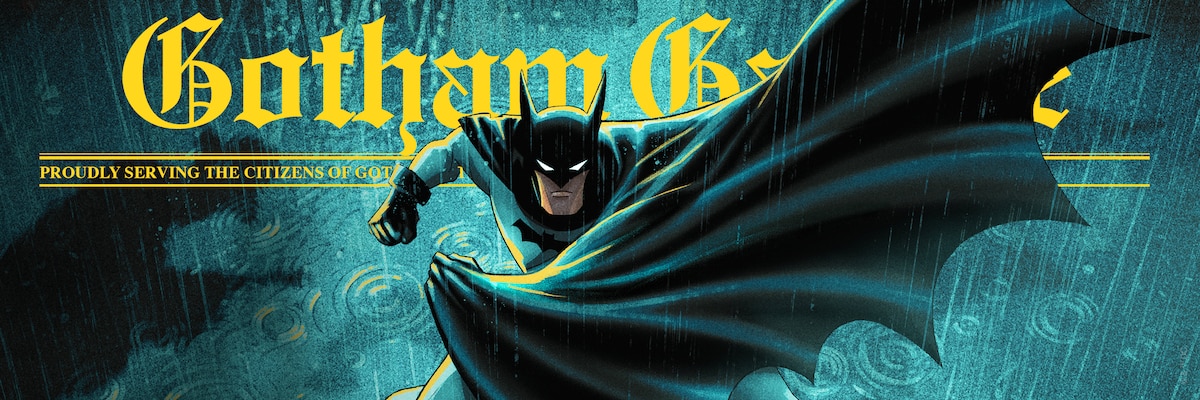
Gotham City is a busy place, with a lot going down each and every week. In this monthly column, Joshua Lapin-Bertone helps you stay on top of it all by letting you know what you should be paying attention to within the Bat-Family…and why.
SPOILER ALERT: The following column contains spoilers from season two of Batman: Caped Crusader.
Batman is a loner.
Except when he works with one of the many Robins he’s had over the years. Or when he teams up with Superman once a month. Or when he works with the Justice League. Or the Outsiders. Oh, and sometimes Scooby-Doo. But aside from being on multiple teams and having enough sidekicks to fill a zip code, Batman has a reputation for not playing well with others.
One of the central themes of Batman: Caped Crusader season two is the Dark Knight learning to be a better ally. The Prime Video animated series puts Batman in a world where he’s the only costumed hero, so there’s no Superman or Justice League to teach him how to be a better team player. As I noted when I wrote about season one, this version of Batman is even cold and distant to Alfred. And I’m not the only person who noticed. Lucius Fox chastises him for not treating the butler like a person in one memorable scene.
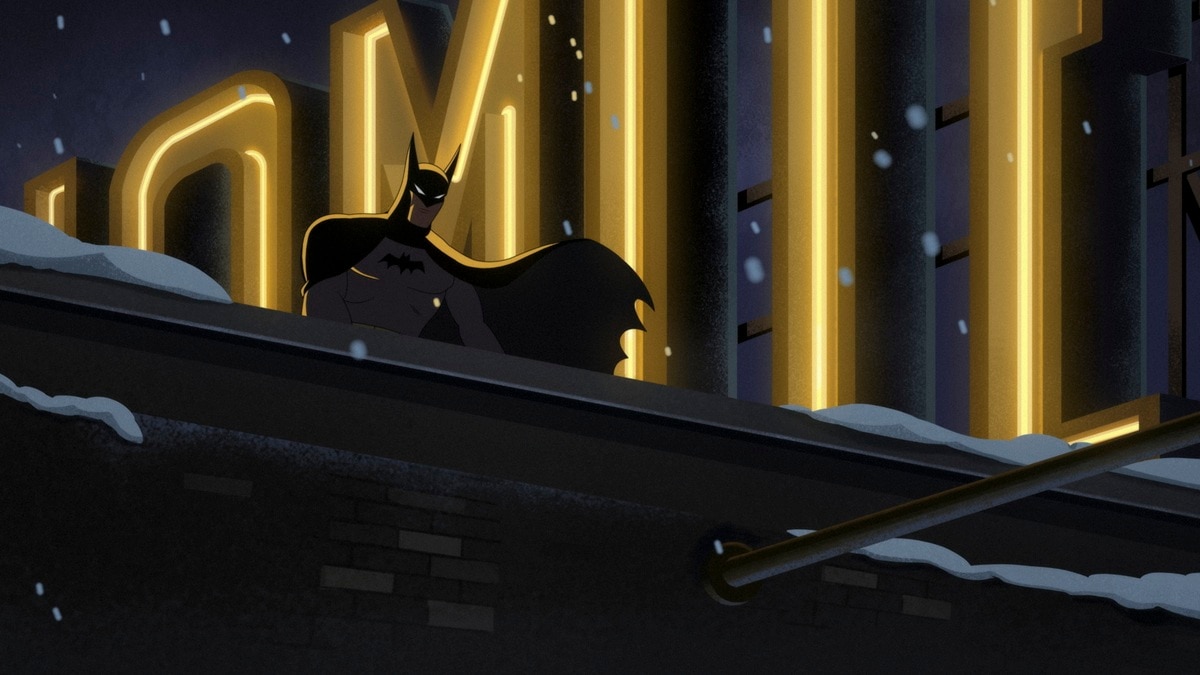
Batman gets a bit warmer by the end of the season, but change doesn’t happen overnight, and season two shows us that this is a version of Batman who still struggles with teamwork and companionship. In many ways, the season can almost be considered a team-up show, as multiple episodes put Batman with a different partner.
The season premiere “Brute Force” focuses on Batman’s partnership with Barbara Gordon and her father Jim. The Dark Knight is reluctant to bring Jim into the fold, but eventually relents when he realizes he needs him. It’s a leap of faith for someone who doesn’t trust easily. That’s progress.
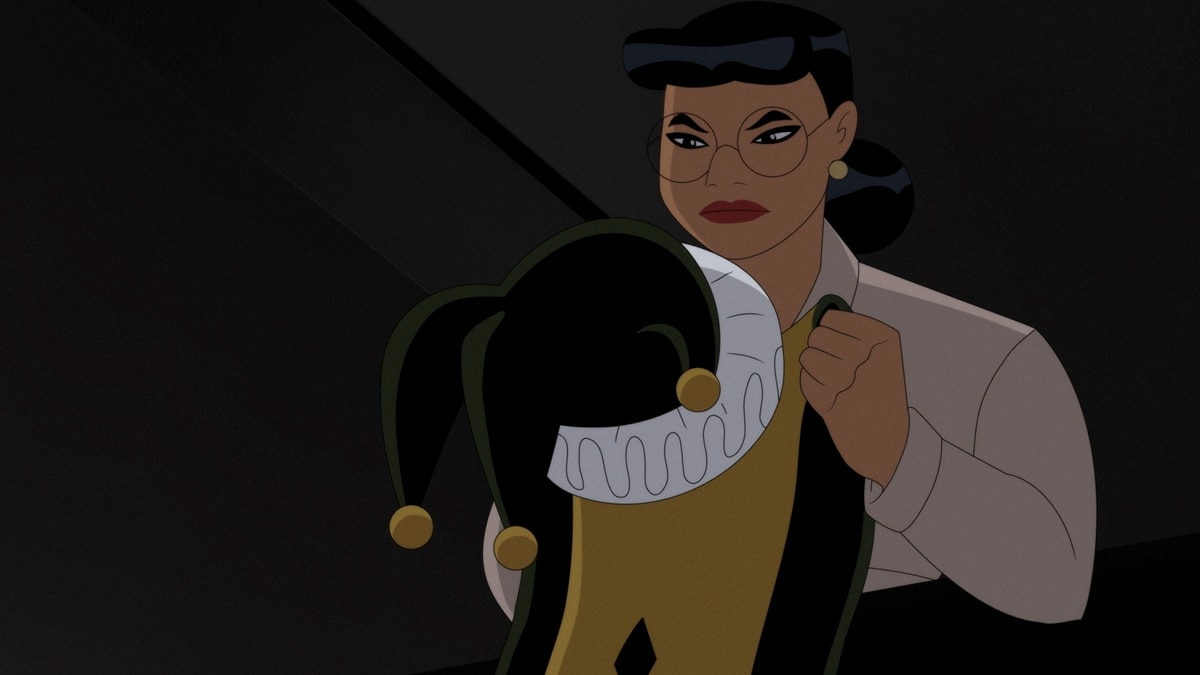
“Sudden Fear” partners Batman with Harley Quinn, the cold-hearted psychiatrist who tried to kill him in season one. His partnership with Quinn is one of necessity, as he needs her expertise to track down a killer on a college campus. There’s a moment during the episode where it’s clear Harley is emotionally conflicted about betraying her girlfriend Renee Montoya, but Batman is less than sympathetic.
As Harley spirals, Batman harshly tells her to focus rather than comforting her. To be fair, Harley did try to kill him in the past and there were lives at stake, so we could forgive Batman for being less than warm in the moment. Still, it plays into the larger theme of how this Batman isn’t always the best ally, and how he needs to have more empathy for his partners.
The episode “Deep Cover” has Batman disguise himself as a criminal named Matches Malone in order to get close to a Blackgate prisoner named Mark Desmond, whom he hopes can lead him to Gotham’s newest crime boss. This is the kind of partnership Batman is most comfortable with because he holds all the cards. Desmond is forced to trust “Matches,” but Batman never has to place any trust in him.
Desmond is a means to an end, and he’s ultimately murdered by the Riddler for his association with Batman. The kicker is that Desmond was entirely unaware he was helping Batman until he died, yet he lost his life for it. Because he plays things so close to the vest, we don’t know how much Desmond’s death affected Batman here. Does he feel responsible? Does it make him rethink working with a partner? I have a feeling it does, especially if another episode this season is any indication.
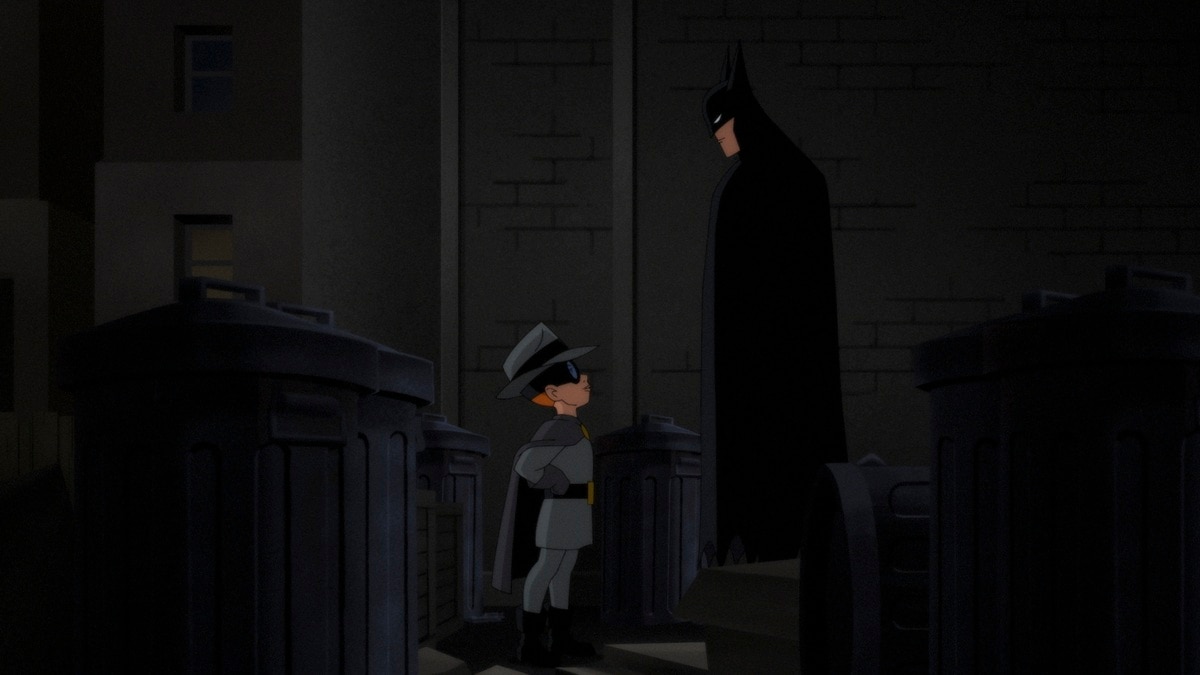
The most interesting partnership this season is with Carrie Kelley in the episode “Zero Hour.” Batman previously encountered Carrie in season one, and it’s clear their meeting had a profound effect on the young orphan. Inspired by Batman’s example, Carrie dons a Gray Ghost outfit and dubs herself the Crime Smasher. Batman isn’t amused.
If you thought Bruce gave Harley the cold shoulder, he’s downright cruel to Carrie. The Caped Crusader tells her she’s wasting his time and yells at her to go home. His tone is so sharp and ferocious that the young girl runs away crying. It can be argued that this is an act of mercy. Perhaps the memory of Desmond’s death was still in Batman’s mind, and he didn’t want Carrie to suffer the same fate. Even if his bedside manner was lacking, Carrie crying is much better than Carrie dying.
However, the episode more or less proves Carrie’s point. Batman is captured by Mr. Zero, and he surely would have been killed if Carrie hadn’t rescued him. Yes, putting a child in front of dangerous criminals is a horrible idea, but you can’t deny Carrie’s value. In the comic book storyline A Lonely Place of Dying, Tim Drake introduces the hypothesis that Batman needs a Robin in order to keep him from becoming too dark and violent. “Zero Hour” seems to support this theory.
As Carrie and Batman finish off Mr. Zero, the Dark Knight says one of the Gray Ghost’s catchphrases alongside the young girl: “The road of life takes many turns. Crime is a dead end.”
This is a very telling moment. It’s Batman allowing himself to have fun and remember a piece of his childhood. It’s also him having a true human connection with someone, which is something he’s denied with almost everyone in the series so far, including Alfred.
However, the experience with Mr. Zero scares Carrie so much that she runs home and leaves her Crime Smasher life behind. If you’ve seen Caped Crusader, you know how violent it gets, which means this version of Gotham is no place for a child sidekick. Still, the warm moment with Carrie proves that on some level, Batman needs a partner to ground him and remind him what it means to be human. Caped Crusader’s Batman might not be ready for a partner yet, but Carrie Kelley brought him one step closer.
The first two seasons of Batman: Caped Crusader are now streaming on Prime Video.
Joshua Lapin-Bertone writes about TV, movies and comics for DC.com, is a regular contributor to the Couch Club and writes our monthly Batman column, "Gotham Gazette." Follow him on Bluesky at @joshualapinbertone and on X at @TBUJosh.
NOTE: The views and opinions expressed in this feature are solely those of Joshua Lapin-Bertone and do not necessarily reflect those of DC or Warner Bros. Discovery, nor should they be read as confirmation or denial of future DC plans.