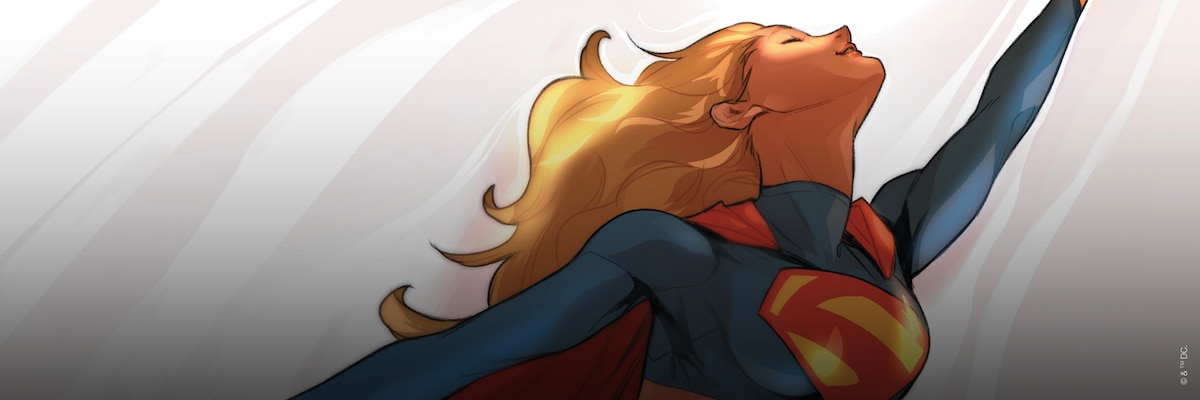
The cheerful survivor. The legacy bearer. The hero-in-training. The secret weapon. For as long as there has been a Supergirl, writers have faced the challenge of defining her in a way that sets her apart from her elder (or, sometimes, younger) cousin. Differentiating the two Supers is arguably the driving philosophy behind the new Supergirl film, making its own statement on who Kara Zor-El is.
But the Supergirl filmmakers are far from the first to tackle that divergence. When your guiding principle for Supergirl is only that she isn’t Superman, there are thousands of directions you can take. So, which is the right one? Well, we could offer our hot take, or…we can go right to the source. So, we asked as many Supergirl writers as we could reach in a day one simple question:
"What can you do in a Supergirl story that you can't do with Superman?"
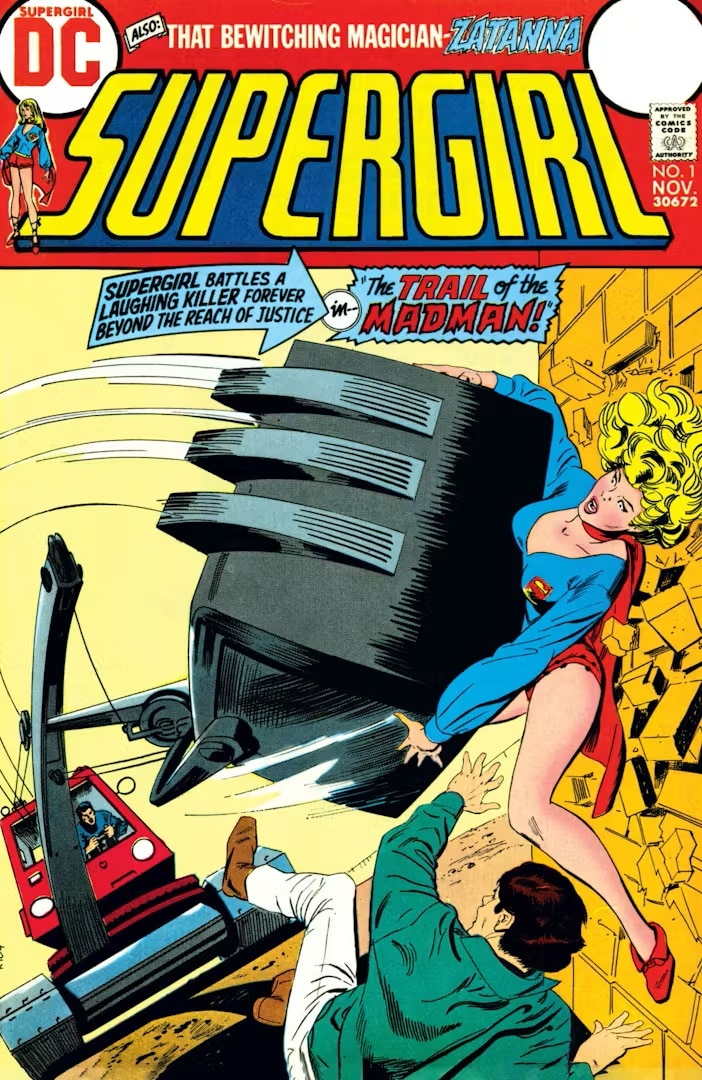
Cary Bates, one of the first Supergirl writers for her evolutionary Adventure Comics feature and the original Bronze Age Supergirl title in the ’60s and ’70s, offered us a frank look at her humble beginnings.
“At the time I was writing,” he told us, “the answer would be ‘not much,’ since Superman Family continuity was fairly restrictive back then. But I think a more blunt answer to the question came in 1985 with Crisis on Infinite Earths, when DC took the drastic step of killing Supergirl "for real." Obviously, (not to throw shade on the Doomsday arc) that could never really happen with Superman.”
And he does have a point. Yes, we lost Superman for a time after Doomsday, but only for a period of about six months. After her death in the Crisis, we wouldn’t see Superman’s cousin again until 2004, when Jeph Loeb crashed her rocket into Earth again in his Superman/Batman, and spun her off from there to a 2005 solo title. Bringing her back into the fold after nearly twenty years, Loeb had his own perspective on defining Kara for the modern reader.
“What I loved about writing Supergirl was that she was a young woman who came to Earth—unlike her cousin Superman,” Loeb told us. “She had no Ma and Pa Kent, so her perspective on everything had to do with what she knew from Krypton. It became a different kind of immigrant story. Much more of a stranger in a strange land than Clark.”
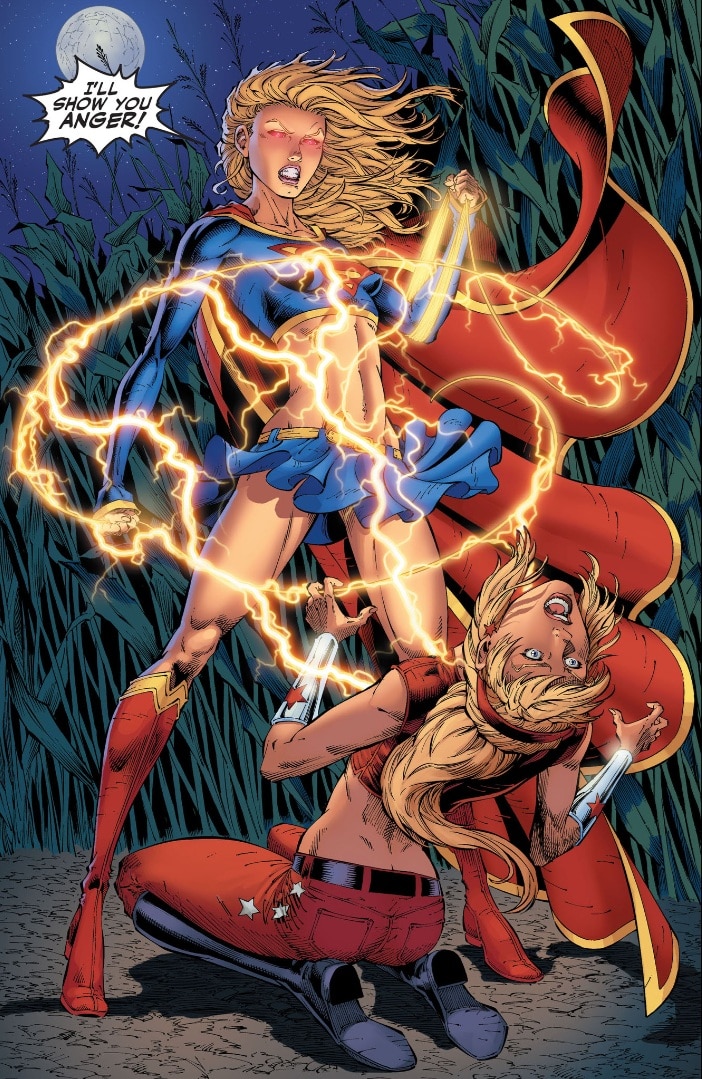
The H2SH author had his own read on the scope of Supergirl’s powers, as well.
“Having spent years exposed to the yellow sun, she is, in many ways, more powerful than Superman, and hasn't had the human experience of keeping those skills in check when needed,” he suggested. “She can be the badass in the family. It's great fun.”
That difference in Supergirl and Superman’s origins is where most writers seem to find the crux of Supergirl’s character.
“Supergirl is the stranger in the strange land trope at its best,” Landry Q. Walker (Supergirl: Cosmic Adventures in the Eighth Grade) told us. “And that is a tremendous amount of fun to write. She can look at a cow with wonder and amazement. She can be skeptical about ice cream. The room for comedy and drama is virtually limitless as Supergirl gets to be overwhelmed by the best and worst that Earth has to offer in a way that Superman—born and raised as a human—never can.”
Shea Fontana (DC Super Hero Girls) similarly casts her view of Kara back to her origins.
“Supergirl had a much more complex life and journey before she came to Earth than Superman,” she told us. “I love stories that explore the potential friction that causes and how it shapes her as a hero.”
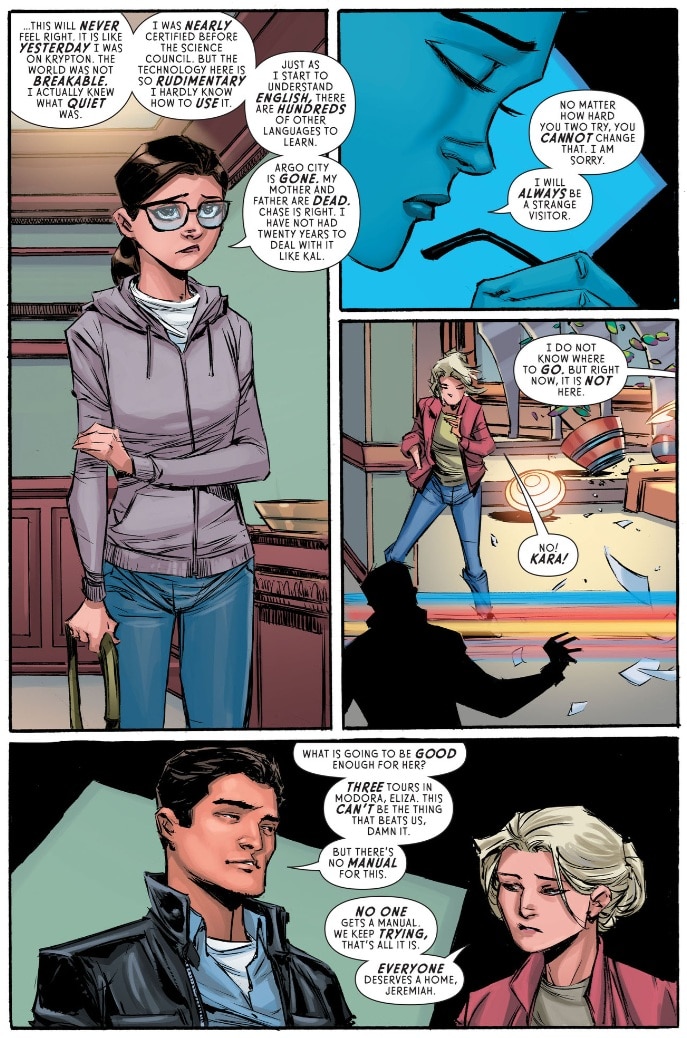
Steve Orlando, one of the writers on Supergirl’s Rebirth series, is of the same mind, but has clearly given the issue considerable thought.
“While Kal learned about the home he lost after the fact, Kara experienced it firsthand—she had plans, hopes and dreams,” he explained. “She had friends, family and teachers she left behind. For Superman, coming to Earth meant discovering a history he never knew. For Supergirl, coming to Earth means leaving behind a future she'll never see. So, with Supergirl, you can tell stories that truly analyze the immigrant experience, even the refugee experience, in a way completely different than with Superman. And that can be as big as the pain she feels on a holiday no one else alive remembers should be celebrated, on the birthday for a lost friend no one but her in the universe remembers...or as personal as the complexities of the Kryptonian languages and the Sapir-Whorf hypothesis as it pertains to Kara's lens on Earth.”
In contrast, Supergirl: Being Super’s Mariko Tamaki takes another approach—looking not to Kara’s past, but the nature of her arrival.
“The essence of Supergirl is that she showed up second,” Tamaki posited. “She’s someone who has to forge her own path in a world that has a Superman. I don’t think that’s her essence, but I think it’s relatable to have a character who is becoming themselves in the context of an existing narrative that isn’t their story. It’s why I love writing her.”
It’s a fantastically resonant point, and one which feels true to the process of writing Supergirl. Like the writers themselves, Supergirl herself is also looking to define who she is in comparison, in contrast and entirely outside of Superman. And as many of Kara’s more recent writers have embraced, it’s about existing outside of Kal’s strict moral bounds and giving herself some room to let her hair down and get wild with it when she needs to.
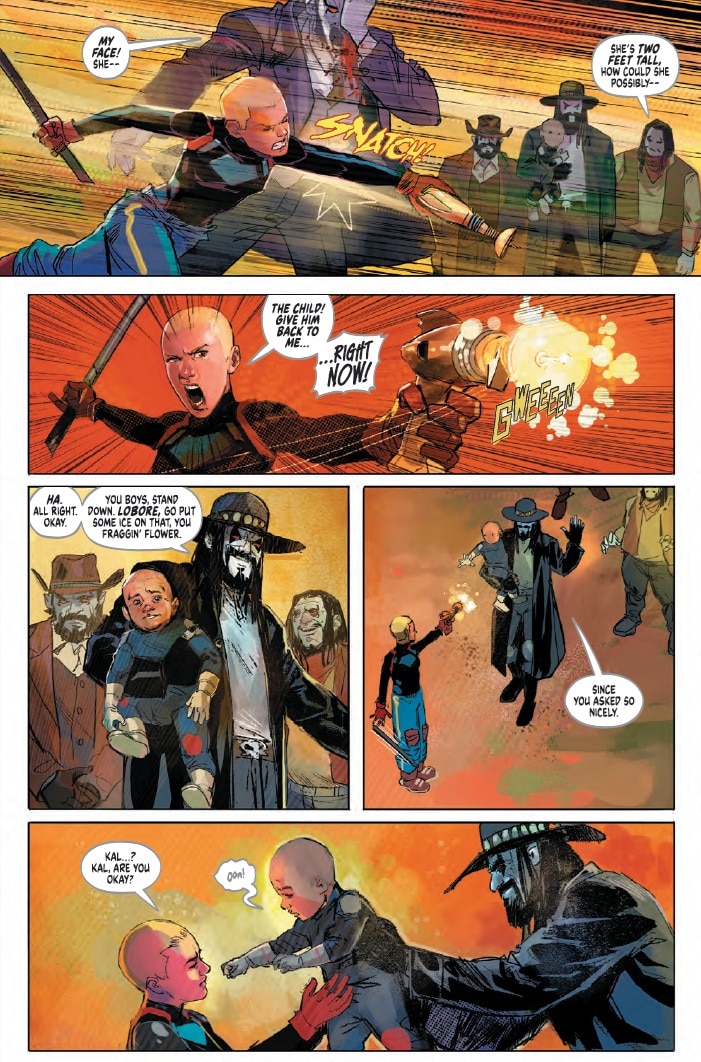
“Supergirl, despite sharing so many qualities with her cousin, is her own person,” Supergirl: Survive’s Griffin Sheridan explained. “With Superman, we see him arrive as a blank slate that is raised human and must eventually learn what it is to be Kryptonian as well. The balancing act of being a god amongst man. With Supergirl, it’s almost reversed. She has always been a Kryptonian who has to learn to accept her new home, all while having a much more vivid picture of what was lost.”
To Brandon T. Snider, the writer of the middle grade graphic novel Supergirl’s Family Vacation, Kara Zor-El’s value is often as a critique of Superman.
“Superman wants to be an example,” offered Snider. “He knows his own impact. He doesn’t just say whatever is on his mind at any given time. He also looks for ways to get his message across inoffensively. Supergirl, however, doesn’t have those same self-imposed constraints. She says what she’s thinking. If something doesn’t sit right with her, she’s not going to mince words or censor herself. Part of that is her youth. Part of that is her ability to see things Superman can’t. They both have a sense of right and wrong, but Supergirl is unafraid to point out inconsistences.”
That sense of uninhibited freedom is what defines the tone of Sophie Campbell’s ongoing Supergirl run, now well into its dizzying second year.
“The main thing you can do with Supergirl that isn't allowed with Superman is that she can be messy both literally and figuratively,” Campbell shared with us. “She can be a bit slobby, make mistakes, go overboard, she can party, and she can be a bit of a hot mess and still be a hero. She can have an all-night pizza party and still go save the city.”
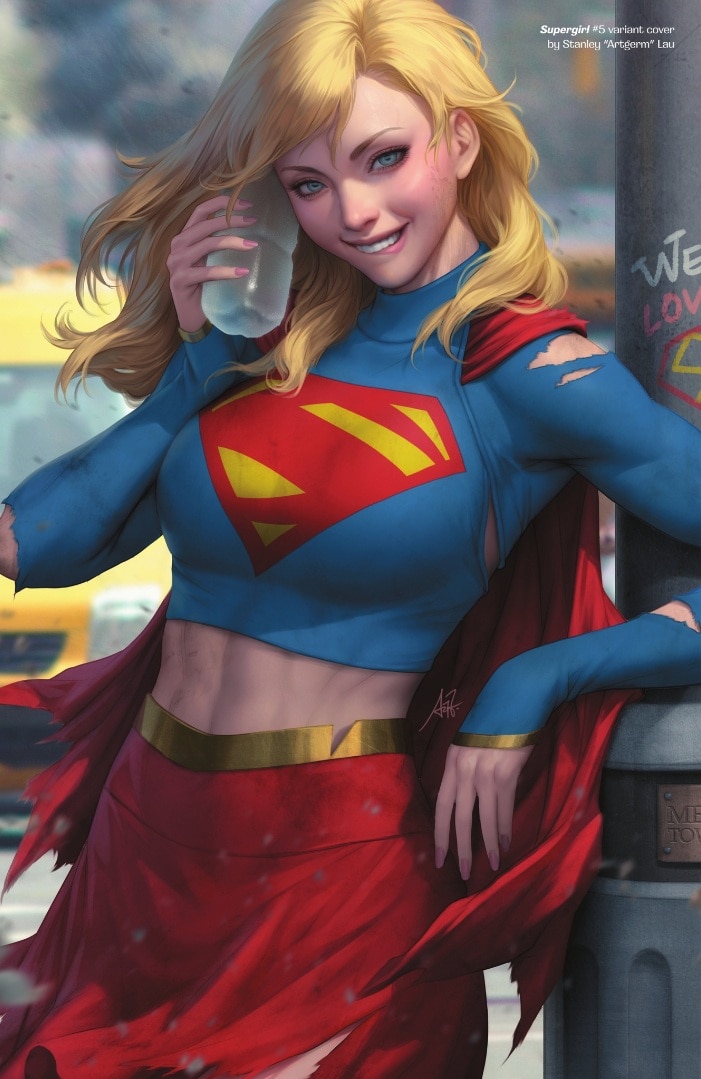
And if that sounds fun to you, buddy, you’re gonna love how Kara gets down in the Supergirl movie.
One last note from the legendary Mark Waid, who took on Kara for his Supergirl and the Legion of Super-Heroes storyline as well as the recent Summer of Supergirl Special. He only had three words for us when we asked him what you can do with Supergirl that you can’t with her cousin: “Change her costume.”
Given the wild, frequent outfit changes from her very first solo run to her ongoing title right now, I think everyone from Cary Bates to Sophie Campbell would agree with that.
Supergirl, directed by Craig Gillespie and starring Milly Alcock and Jason Momoa, is now in theaters. Get your tickets today!
Alex Jaffe is the author of our monthly "Ask the Question" column and writes about TV, movies, comics and superhero history for DC.com. Follow him on Bluesky at @AlexJaffe and find him in the DC Official Discord server as HubCityQuestion.
NOTE: The views and opinions expressed in this feature are solely those of Alex Jaffe and the Supergirl writers interviewed and do not necessarily reflect those of DC or Warner Bros. Discovery, nor should they be read as confirmation or denial of future DC plans.