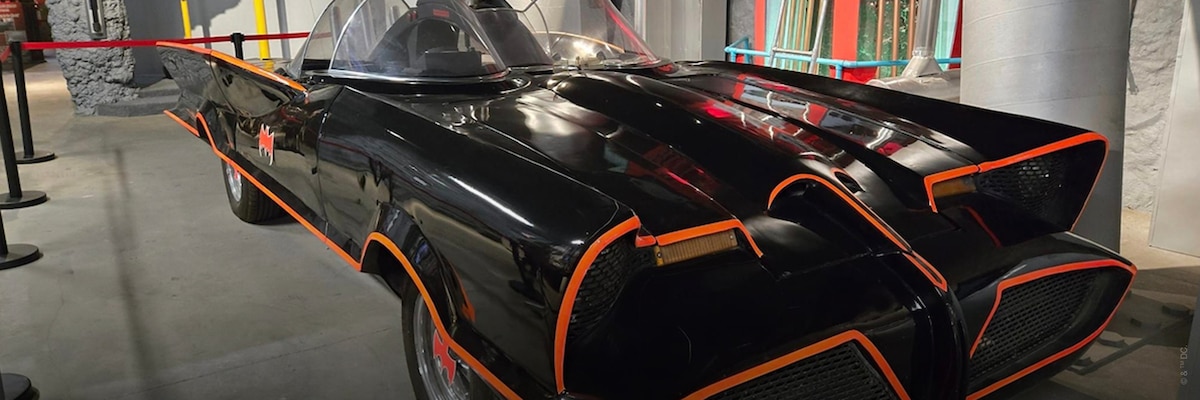
Holy pop culture, Batman! The 1966 Batman TV show is a landmark of Americana. It helped cement the Caped Crusader as one of the most recognized fictional characters in the world today. So, it’s fitting that a museum has finally been created in its honor. Welcome to Fiberglass Freaks’ Batman Museum.
Founded on October 31, 2024, and located at 525 East Market Street in Logansport, Indiana, the Batman Museum consists of 7,284 square feet filled with Batman sets, props, statues, memorabilia and photo ops. Though largely devoted to the ’66 show starring Adam West and Burt Ward as Batman and Robin, founder Mark Racop tells us that all versions of Batman are represented and appreciated here.
Racop is the owner of Fiberglass Freaks, whose factory is also located in Logansport. It’s the only company in the world officially licensed by DC to manufacture full-size replicas of the 1966 Batmobile. Originally created by “King of the Kustomizers” George Barris, the iconic TV automobile was built out of the 1955 Lincoln Futura, a one-of-a-kind concept car designed by Ford.
“I've been a huge fan since I was two years old,” shares Racop. “Way back in 1967, I saw my very first episode of Batman, where Robin was about to be stamped into a comic book by the Joker. It made me a lifelong Batman fan. From then, I started collecting. I'm the kind of kid that kept my boxes for my toys. So, I'd play with the toy, but then I'd put it back in the box afterward. My brother was the kind that smashed toy cars together and blew them up. So, it was quite the challenge to keep everything that I had in good shape, but a few pieces in my collection did survive from when I was about 4 or 5 years old.”
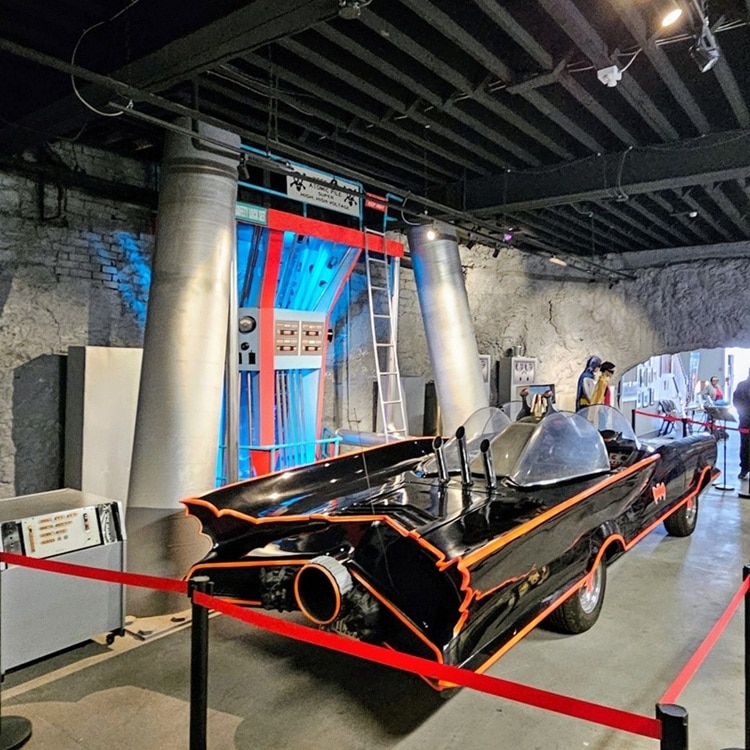
Those pieces and 2,000 more can be seen in the Batman Museum, which also showcases the first 1966 Batmobile Racop built when he was just 17 years old. He started building them professionally in 2003. Today, the Batman Museum’s two floors offer fans a chance to experience the world of Batman ’66 through stunning interactive set replicas.
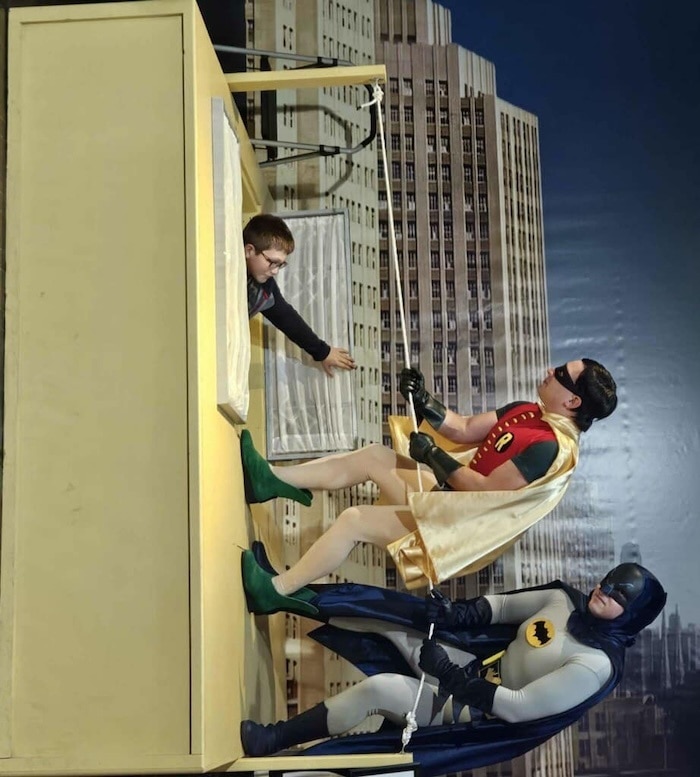
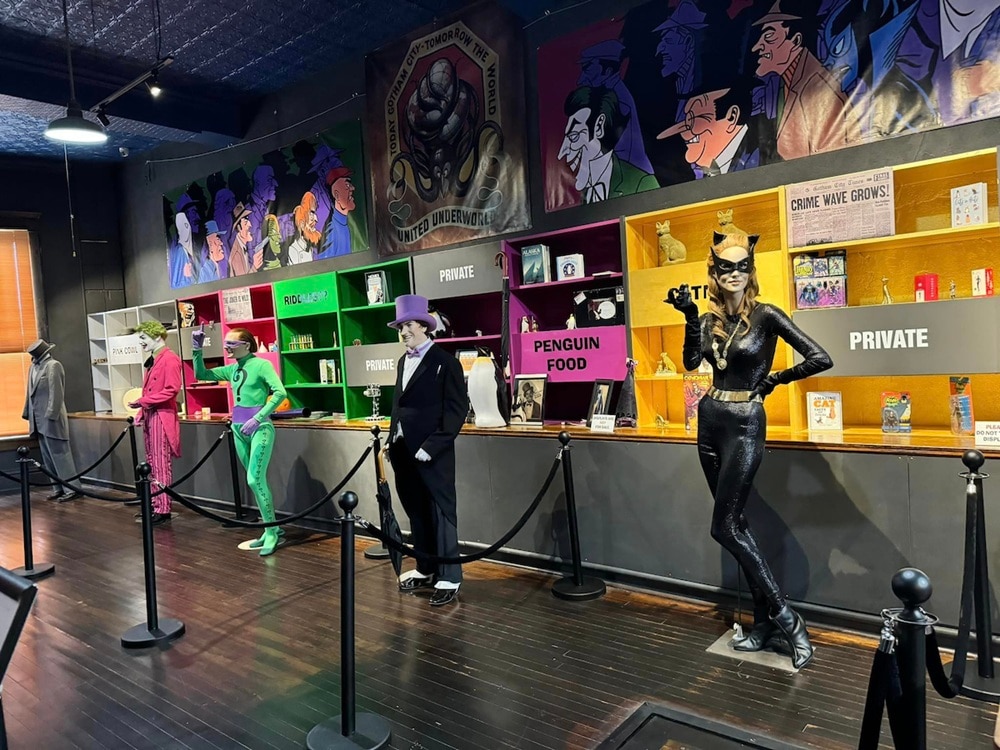
“We have a Wayne Manor study with the sliding bookcase,” Racop teases. “We have the climbing wall, where people can stand up on the wall sideways and pretend to do the climb. We also have full-size statues of Batman and Robin, Joker, Riddler, Penguin and Catwoman, as well as Barbara Gordon and Batgirl alongside the world’s first Batgirl Cycle replica.
“Downstairs, we have the bulk of the memorabilia and the Batcave with the atomic pile/nuclear reactor and the bottom of the Batpoles from the study. My first Batmobile is in the Batcave. We've also got a theater showing documentaries about Batman. Then the final room in the museum is dedicated to the Futura, the car that became the Batmobile. We also have a gift shop selling licensed merchandise.”
Racop beams with pride when speaking of the museum’s reception over the last two years.
“We had 4,300 people come through in our first year, from 44 states and 14 countries,” he enthuses. “I'm very pleased with the turnout. We're just about coming up to our 2nd year anniversary here in October. So, who would have thought? It's a labor of love, of course. We continue to spread the word about Batman ’66 and why it was important and why it continues to be part of our conversation sixty years later. It was part of the beginning of the modern age of television. Without the Batman TV series, we certainly wouldn't be where we are today.”
Racop says he once asked Adam West himself why the ’66 Batmobile remains so iconic.
“In 2017, when he was still with us, Adam said that the car was futuristic looking in ’55 as a Lincoln Futura,” he reveals. “Then George modified it and made it even more futuristic looking, and that it still looks like something that could happen in the future.”
Alas, there is one part of his museum that Racop wished had turned out differently: guests are not allowed to slide on the Batpoles.
“My insurance agent and my attorney both turned me down,” he laughs.
To learn more about Fiberglass Freaks’ Batman Museum, and how you can visit it, be sure to drop by their website.
Joseph McCabe writes about comics, film and superhero history for DC.com. Follow him on Instagram at @joe_mccabe_editor.
NOTE: The views and opinions expressed in this feature are solely those of Joseph McCabe and Mark Racop and do not necessarily reflect those of DC or Warner Bros. Discovery, nor should they be read as confirmation or denial of future DC plans.