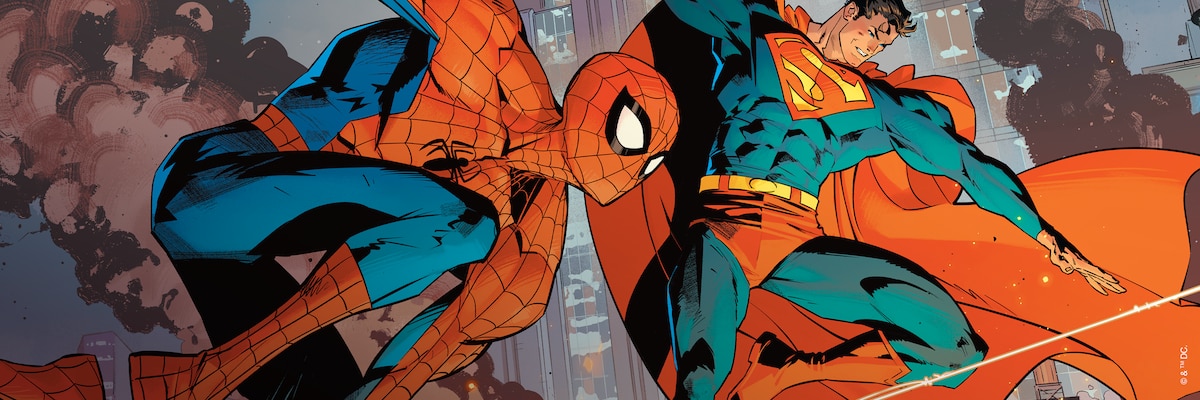
Few comic creators today wear their heart on their sleeve like Mark Waid. The writer of classic works like Kingdom Come, Superman: Birthright and his epic run on the 1990s The Flash—as well as his current stints on Batman/Superman: World’s Finest and Action Comics—Waid brings a joy and optimism to all his work, presenting superheroes as the better angels of our nature. So he’s the perfect scribe to lead the highly anticipated Superman/Spider-Man #1, illustrated by Jorge Jiménez. We sat down with Waid to discuss how his undying love for these characters informs this long-awaited reunion between the two pop culture legends…
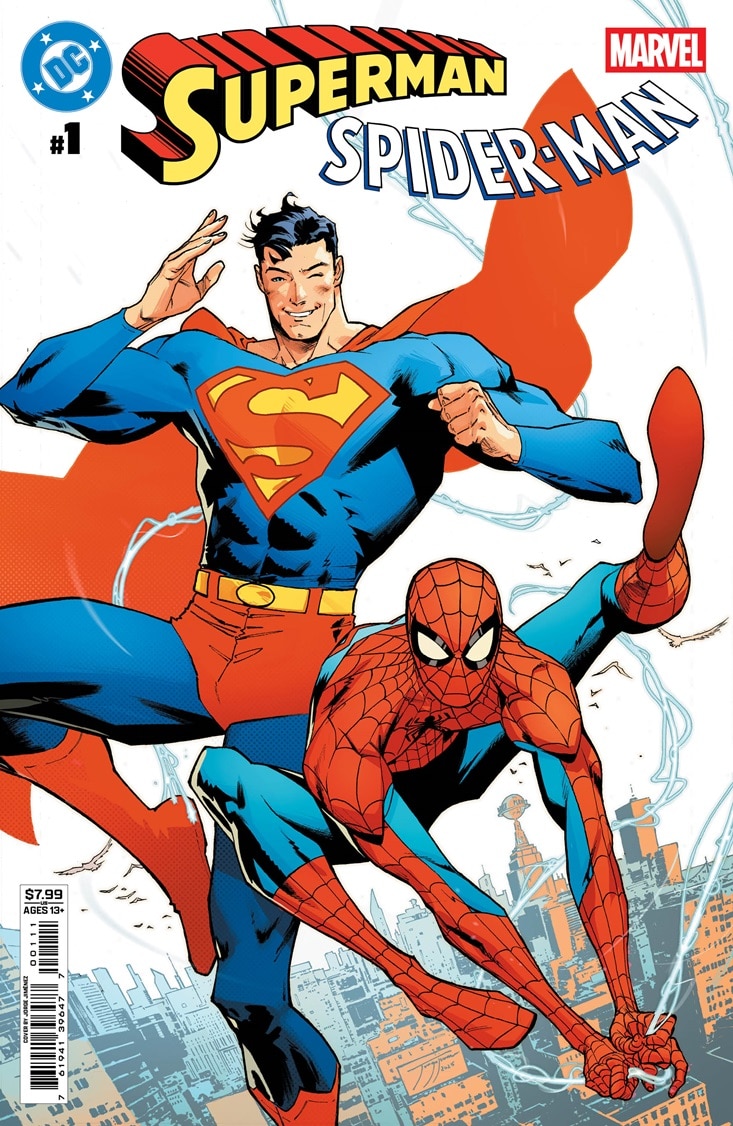
Was the original Superman vs The Amazing Spider-Man crossover a seminal comic for you when you were growing up?
Yeah. It was January of ’76, and I was 13 years old. I remember standing on my front porch like Calvin waiting for his propeller beanie to show up in the mail. I just stood there for an hour waiting for my mom to come home from the drugstore and she came home with three copies because I knew back then it was going to be worth something someday. I still have those three copies.
It was just a mind-blowing experience, because nothing like that had ever happened in comics before. They picked the right team because they picked creators who had worked on both characters: [writer] Gerry Conway and [artist] Ross Andru. So, the voices were right and the plot was cool and it was just amazing.
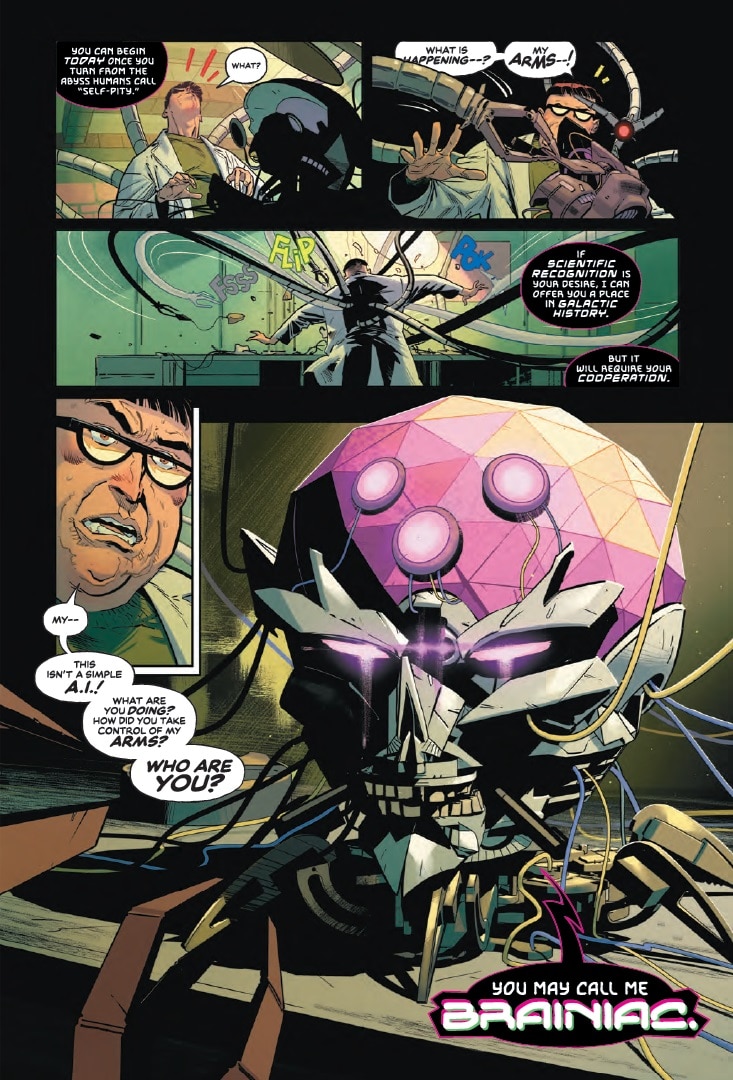
You're bringing back one of the villains from that crossover—Dr. Octopus—and we're seeing a new one in the form of Brainiac.
Yeah, that wasn't the plan. The plan was Norman Osborn and Lex Luthor. Then I found out way late in the game that Brad Meltzer's doing the same characters in Spider-Man/Superman and his script was already done. I didn't want to step on his toes, even though we came out first. So, I was trying to figure out who would be good. I put together the sort of robotic/metallic visual motifs that both of them have, Dr. Octopus and Brainiac. That suggested something to me, and then it went from there.
What is Jorge Jiménez bringing to the table with his art?
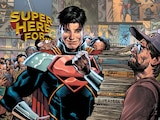
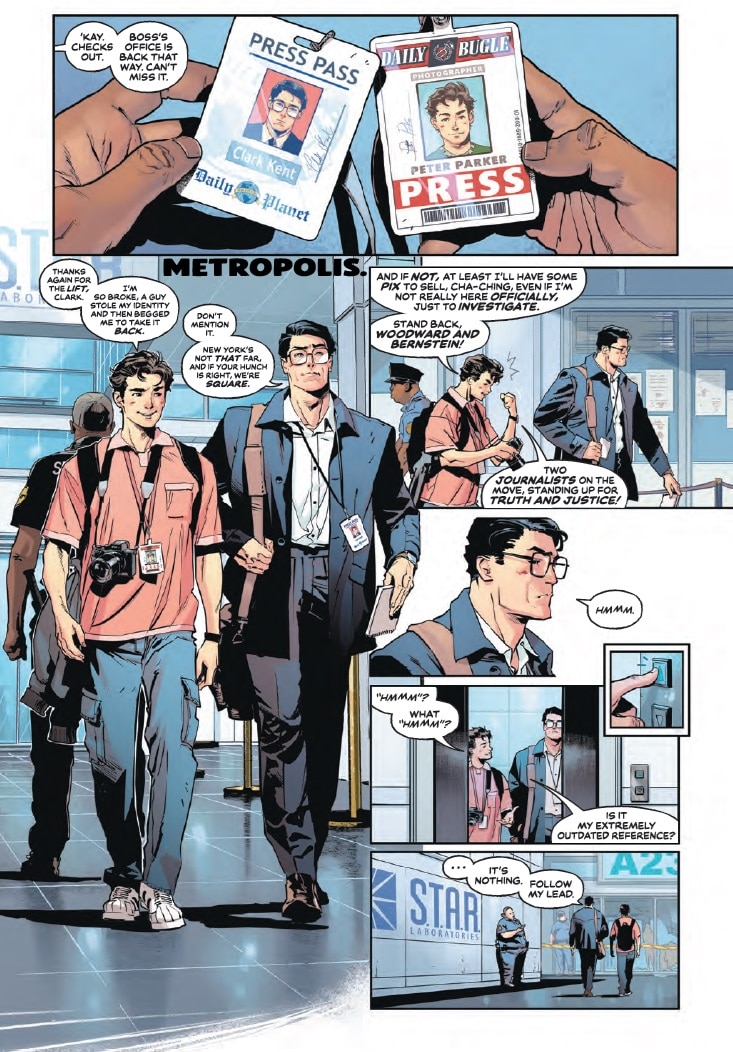
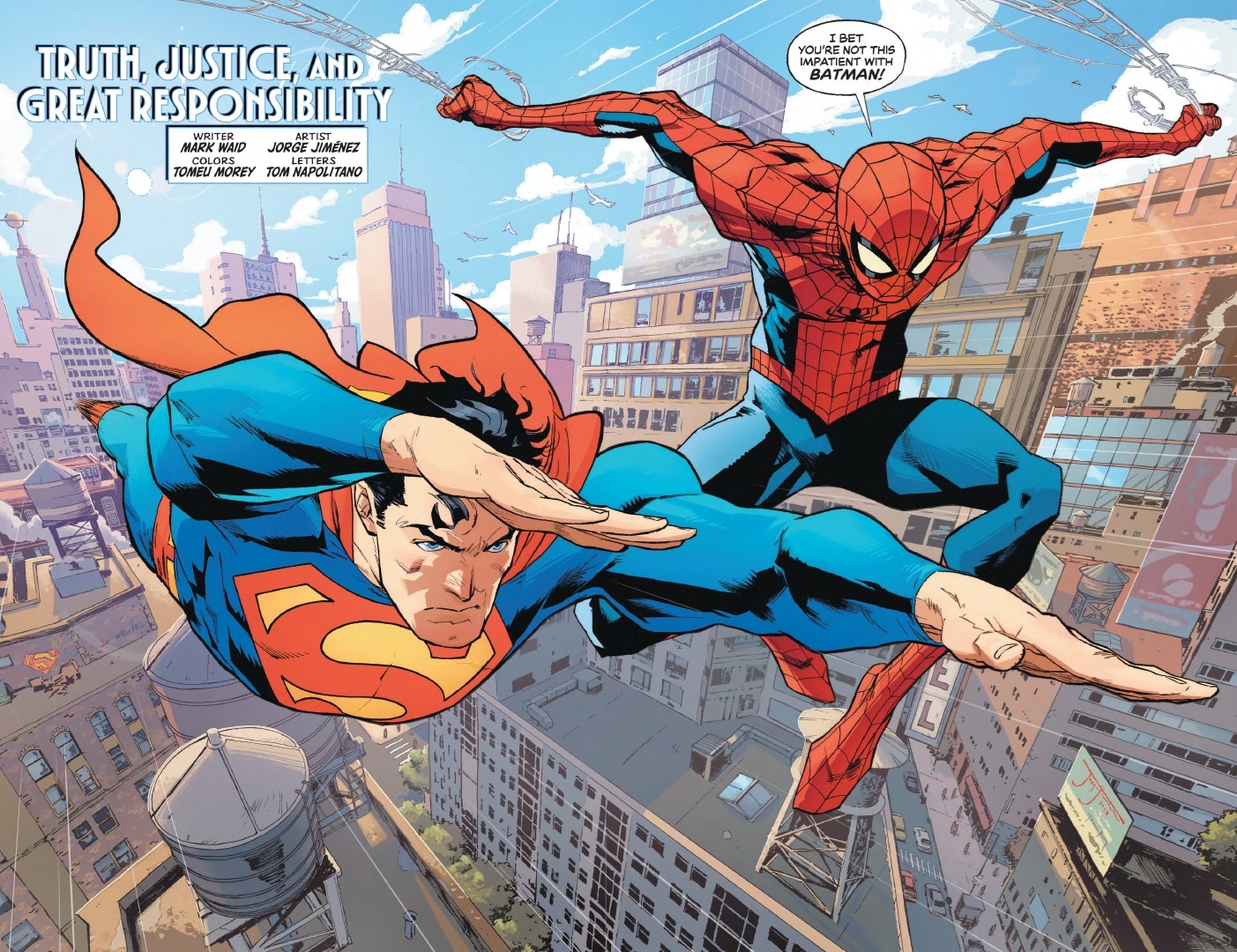
It looks fantastic. I think it's the first time he's gotten to draw Spider-Man in anything, and you can tell in the sense that he's so excited to draw that character. His Superman is great, and a lot of our story is Clark Kent and Peter Parker. It’s not to the exclusion of Superman and Spider-Man, but I wanted the idea that these two already know each other. I didn't really have time to do the whole, “Hey, I'm Superman nice to meet you.”
The way he draws Clark and Peter is as exciting as the way he draws Superman and Spider-Man. There are big action sequences—a big action climax at the end—that he really elevates from my script, and makes it look even better. There's so much joy in his work.
The fact that you are focusing on the human side of these guys so much, does that open the door for Peter to square off against Brainiac and Clark to square off against Dr. Octopus, without it appearing one-sided for Superman to fight Doc Ock?
That's always what I land on. That is the most important thing to me as a writer. Whenever I take two characters and put them together, I always look for what they have in common that is not obvious immediately. With Peter, the fact that he was a news photographer and Clark being a newsman, I knew that was the angle. Then I also wanted a little conflict between them. Not in a punchy way and not in a mean way, but there's a running thread throughout where Peter suspects that Clark maybe has some issue with the way Peter does his job as a photographer and how Peter treats the news, because they come at it from such different places. Peter's there just to get through college and stuff, whereas Clark takes this very seriously—it's his career. For Peter, it's part-time. Clark doesn't quite understand how this works for Peter and what motivates Peter to do this.
You’ve said before that it was Marvel Vice President Tom Brevoort who suggested the hero-villain pairings?
Yes, I had finished the script and it was going around for notes. Tom is actually not officially part of the approval process, but I've known Tom for 40 years. He was one of my best friends, so I just ran it by him as a friend. He wrote back and said, “I'm not officially involved in this, but as a friend, I have a note that you may or may not take. Don't feel like you have to…”
Somehow, in my rush to get the script done, after I found out we had to change the villains, I ended up having Superman versus Brainiac and Spider-Man versus Dr. Octopus at the climax. As Tom wisely noted, “I can see that anytime. I don't have to buy a special crossover to see Spider-Man versus Dr. Octopus.”
So, when he said, “Switch the villains,” it made perfect sense. It meant I had to tear up the floorboards on act three, but it was a welcome note after I cursed his name. [laughs]
A lot of your best work is inspired by the impressions you had of these characters when you were young. Did that also play a role with this book?
I didn't come in from that point of view, but I was aware at one point that it's easy to take for granted after all this time—and after I've written 2,000 comics—that I'm writing Superman today. But writing this one in particular, there was a point at which I realized how much the 13-year-old in me was enjoying the process and how much the 13-year-old would be astounded at the idea that he was able to do this 50 years later.
You always bring a sense of wonder to your work. Yet on social media, it’s clear you're very clued in to what's going on in the world. How do you stave off cynicism? How do you preserve the joy in your stories?
Part of it is that I don't like to bring cynicism into my whole life very much. I'm aware of what's going on in the world at all times, and I am a realist. But I have always believed in my core that these characters were not created to be cynical. These characters were created—not just Superman, but all superheroes—to be aspirational, hopeful characters. Not to say there's not room every once in a while for a dark take or a cynical take on some of these characters. But on the whole, I just don't buy the idea that they would be anything but optimistic.
A lot of your work also finds our heroes solving problems with their brains and their hearts rather than their fists.
At the end of the day, that is what is most important to me. As a writer, I don't enjoy seeing everything solved by a punch. I've seen it before, and I've written it before, and there's only so many ways you can write Spider-Man versus Doctor Octopus or Superman versus Lex Luthor. So, the idea that it is heart and it is brains that solve the problem—those were the heroes that I grew up reading in that 1960s science-fiction era. One of my favorites was Adam Strange [in Mystery in Space], and Adam Strange's whole thing was he was the thinking man's superhero. He was the one who solved his problems not with a ray gun. There was action, but he always solved his problems by thinking his way out of it.
I'm always cognizant, every time I sit down, that I don't want this to be a nostalgia act. I don't cater to people my age. I want to keep it contemporary. I want to keep it fresh and feel like it's a modern comic. But I think there are so many interesting visuals and concepts from the Bronze Age, from the Silver Age, that are strong. There's something to them that can be brought up to the modern day without losing what they were. I just come in and put a new coat of polish on them and shine them up and make them feel contemporary. There's nothing I enjoy more than doing that.
Superman/Spider-Man #1, featuring “Truth, Justice, and Great Responsibility” by Mark Waid and Jorge Jiménez, is now available in print and as a digital comic book.