It’s that time of the month again, Jonni DCs and DC Johnnys. I’m Alex Jaffe, popularly known amongst DC’s rambunctious official online community as HubCityQuestion. My duty is to help you navigate the vast, fractally expansive kingdoms of the DC Universe, charting the way towards the solution to any doubt or mystery you may have, no matter how granular or obscure. As I do every month, I present this sampling of my best questions to perhaps answer some you didn’t even know you had. We’ve no time to waste, so let’s get into it.
ARCANUM asks:
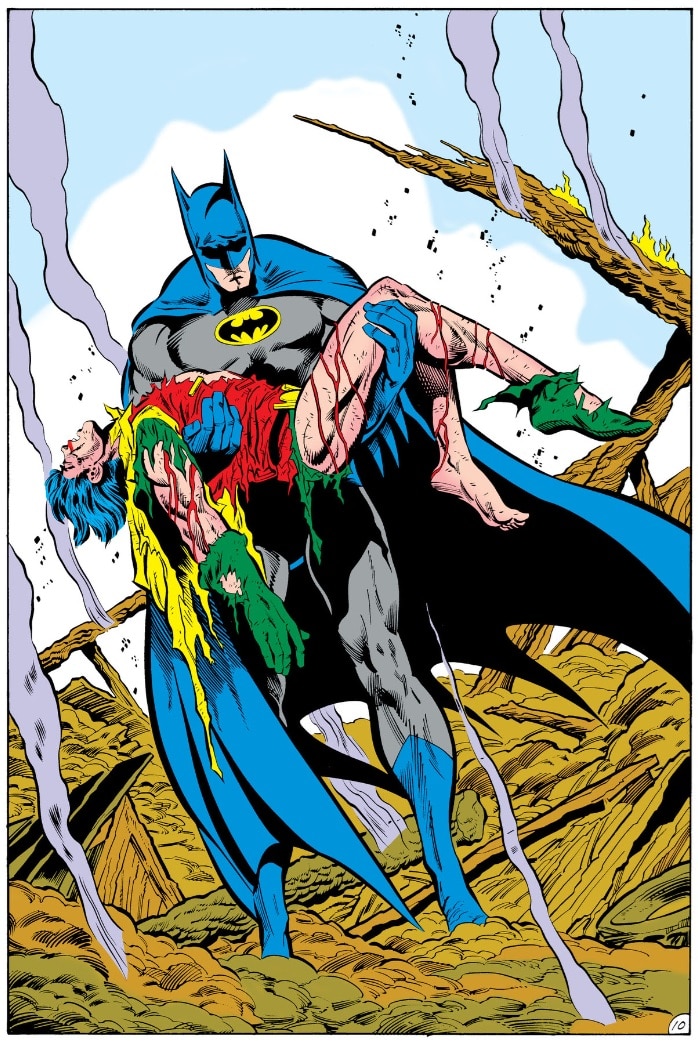
Can I ask for context around the poll given to decide the fate of Jason Todd (back when he was Robin) that led to his death by the Joker? I was born years after that and I don't understand it.
In short, 1-900 call-in numbers had become a popular easy-to-set-up money making operation in the 1980s. So DC, in a reflection of the zeitgeist, was looking to set up a poll that readers could vote on, for both publicity and profit. It was Jim Starlin, one of the main Batman writers at the time, who suggested putting Jason Todd on the chopping block. Jason was an extremely divisive character within the fanbase at the time. Some people resented him for “replacing” the “real” Robin, and others either liked the new take or didn’t mind it. Notably, a lot of staff at the time, including Starlin himself, were not fans.
So, the story was drafted, and it was put to a vote. In truth, no one at DC was really cynical enough to believe that their readers would vote to kill off Jason. And as it happened, the margins were extremely small. Out of thousands and thousands of votes, the phone number you would dial to let Jason die only came out 72 votes ahead.
Why death was the winning vote is something people still speculate about. Ask a lot of people who voted that way today, and they’ll tell you they just wanted to see if DC would actually do it. Others didn’t like the concept of Robin at all, finding the idea antiquated following the increasing popularity of darker takes on Batman at the time like The Dark Knight Returns. And while this has never been proven, there are popular apocryphal stories of autodialers and marathon repeat calls from pranksters at comic book stores stuffing the phone ballots. The result is one of the most infamous marketing stunts in comic book history, and one of the most notable inflection points in Batman’s history.
Rain asks:
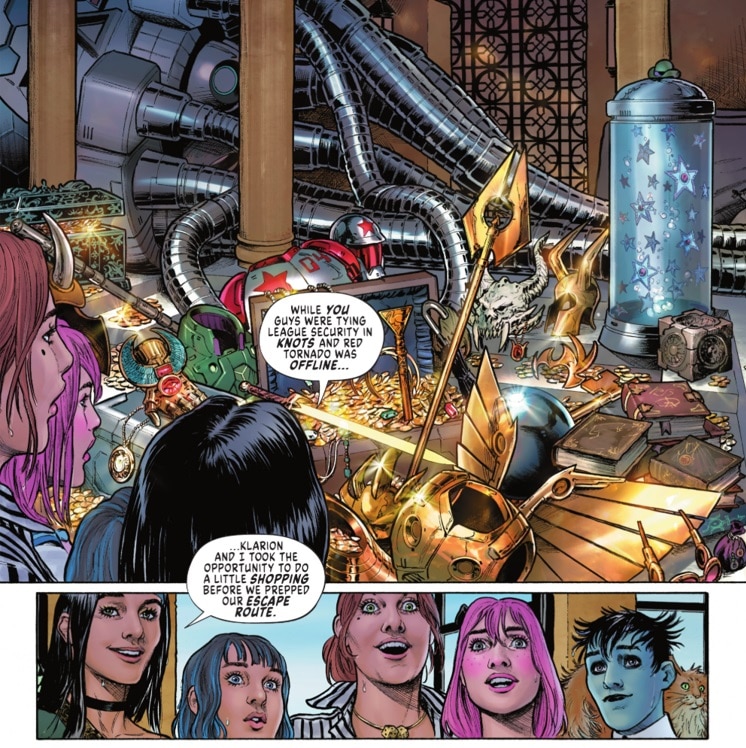
Cheetah and Cheshire Rob the Justice League #6 features some weird items that look tantalizingly familiar. What are the goggles? What is the weird looking gauntlet? What is the horned skull?
Quite the treasure hunter yourself, aren’t you? Rather than take a guess, I went straight to the source, and asked artist Nicola Scott what she had in mind when depicting these particular trophies. Before you read on, take your final guesses now…
Got your answers? Give up? Here’s what they were:
-
- The goggles were taken from one of Darkseid’s Parademons.
- The gauntlet is the Claw of Horus, once wielded by Hawkman.
- The horned skull is the helmet of Brother Blood, enemy of the Teen Titans.
Dragon moth asks:
I know Catwoman's exact ethnicity tends to vary but is any version of her Cuban? I'm super sure of having read somewhere that Catwoman was ethnically Cuban, but I can't recall where or if it was a reputable source.
While certain sects of the Catwoman fanbase have adopted the idea of Selina Kyle being of Cuban descent, the evidence for that nationality within the text is shaky at best. What I can tell you is that Maria Kyle, Selina’s mother, being a Latina immigrant can be sourced back to Bronwyn Carlton’s 2000-2001 Catwoman run. Her exact origin is never explicitly specified. However, later in that same run, Harley Quinn makes a flippant allusion to Selina being “Cuban or something.” So you’ll have to take Harley’s word for it, although she doesn’t seem quite sure herself.
OG asks:
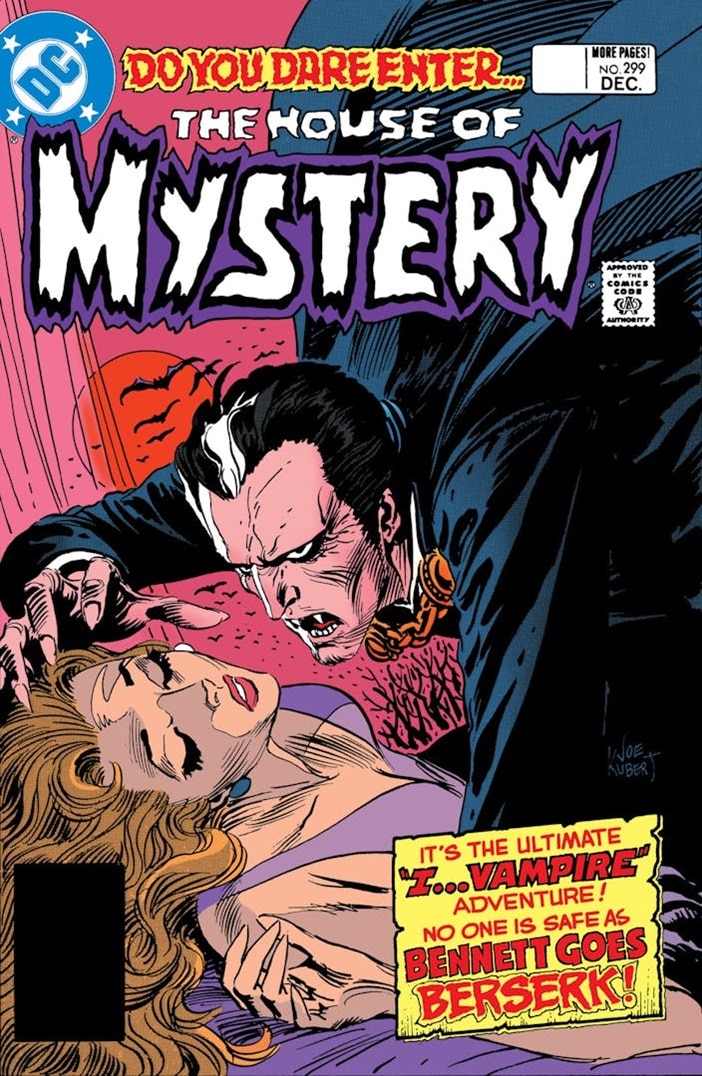
What are the recurring features in House of Mystery, House of Secrets, Strange Adventures and Mystery in Space?
Okay, just to make sure I didn't miss anything, I went through all four of the entire runs of these series to check for recurring features. Here's what I've got:
House of Mystery:
Manhunter from Mars (later Martian Manhunter), #143-173
Dial H for Hero, #156-173
Cain’s House of Mystery (framing narrative), #175-321
I…Vampire!, #290-319
House of Secrets:
Mark Merlin (later Prince Ra-Man), #23-80
Eclipso, #61-80
Abel's House of Secrets (framing narrative), #81-154
Patchwork Man, #140 (intended to be a recurring Swamp Thing spinoff, but canceled following a publishing hiatus immediately afterward)
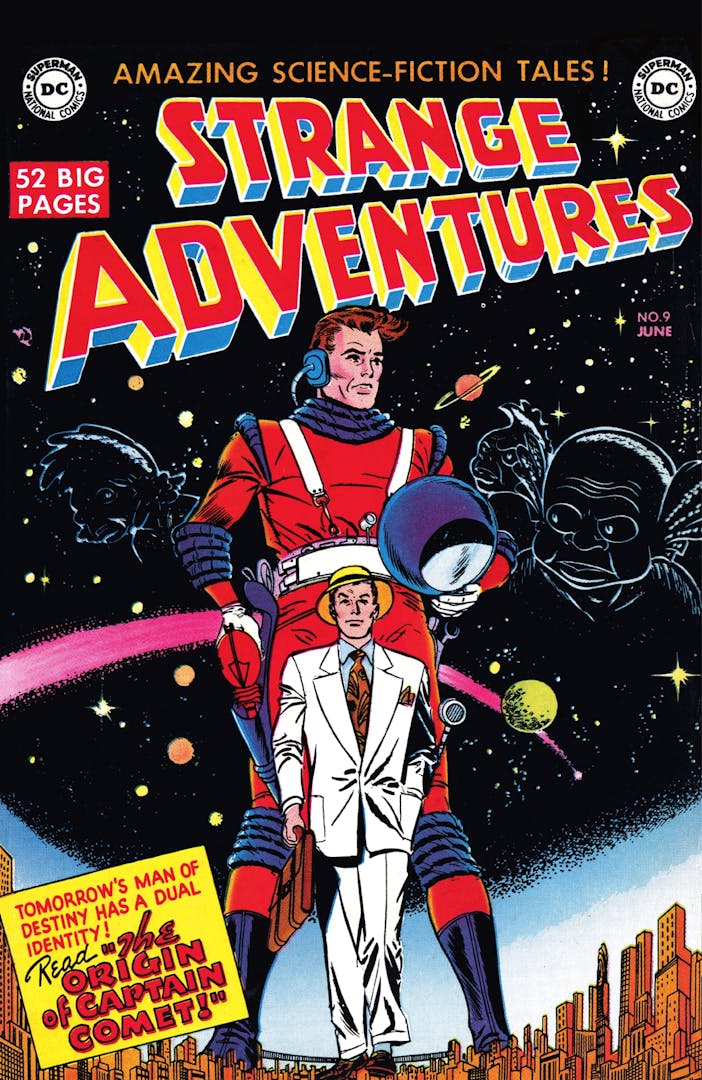
Strange Adventures:
Chris KL-99, #1-15
Darwin Jones, #1-160 (sporadic)
Captain Comet, #9-49
Space Museum, #104-161
Star Hawkins, #114-185
Atomic Knights, #117-160 (followed by reprints)
Star Rovers, #159 & 163
Immortal Man, #177-198 (sporadic)
Animal Man, #180-201 (sporadic)
Enchantress, #187-200 (sporadic)
Deadman, #205-216
Mystery in Space:
Knights of the Galaxy, #1-8
Interplanetary Insurance, Inc., #16-25
Space Cabbie, #21-47
Adam Strange, #53-102
Star Rovers, #66-86
Hawkman, #87-91
Space Ranger, #92-103
Ultra, the Multi-Alien, #103-110
And here we have the real reason I write this column. Before researching this answer, not even I knew about “Interplanetary Insurance, Inc.” Space Cabbie? Comparatively, practically mainstream.
Jason asks:
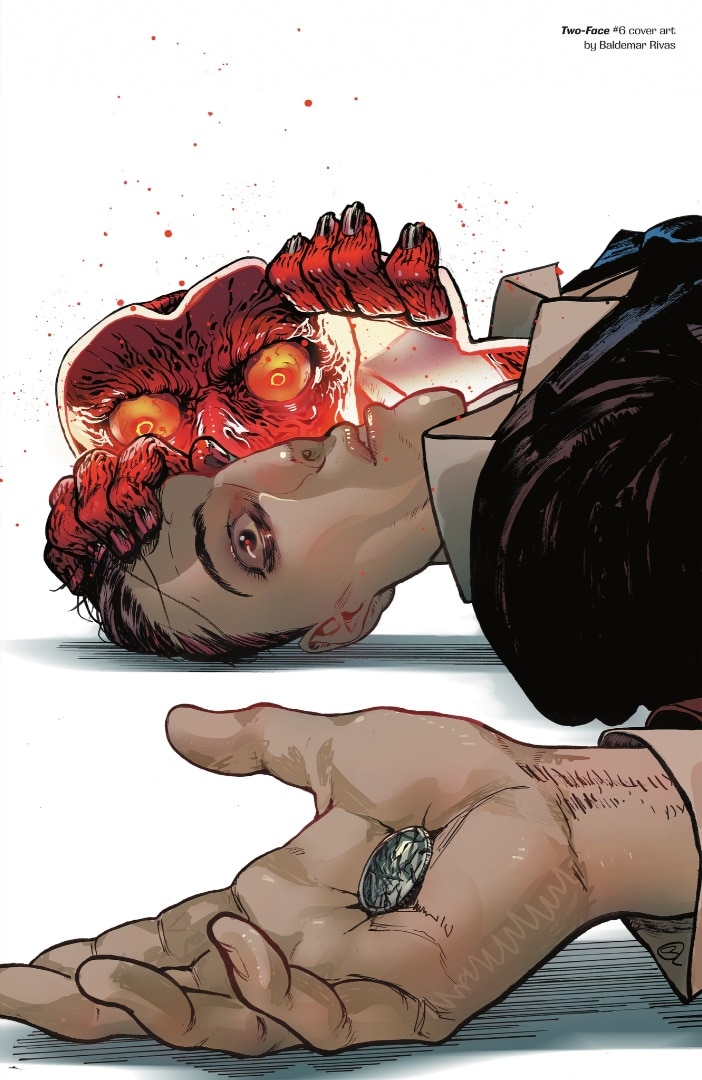
From what I know, Two-Face is supposed to canonically have Dissociative Identity Disorder. If that’s true, why has it been portrayed so inaccurately, to the point where it is not even DID, and why do they still say he has DID? Like the way he’s supposed to develop DID is impossible medically. (From what I’ve seen it’s generally portrayed as when he’s an adult, his personality splits due to the acid attack. When according to medical research, you have to develop DID before 10 years old.) I’m just genuinely curious about this as someone with DID.
Hi, Jason. While Dissociative Identity Disorder is something that some have theorized might be Two-Face's diagnosis, it's never been explicitly confirmed that this is his condition.
However, I will say that it's not necessarily the case that Harvey Dent developed his alternate personality during the acid-splashing incident. Many versions of Two-Face's origin story, including the ones we see in Batman: The Animated Series, Scott Snyder’s All-Star Batman and the one retold in last year's Two-Face series, have presented us with a young Harvey who has always had another personality inside of him—one which he mainly kept hidden from the world, until the trauma of his acid attack presented him with a catalyst to express it more openly.
(Fun fact: according to Batman: The Animated Series, Harvey referred to his other persona, even before the court room incident, as “Big Bad Harv.” But in Ram V’s Detective Comics and the recent Two-Face series, his alternate persona is given another name: “Scarvey.”)
DorisZuel asks:
So, I know Circe can turn people into animals obviously but what would happen if she tried that on someone like Beast Boy considering he can basically turn into animals? What then?
That’s a pretty good question, especially as fans of the Teen Titans cartoon series watched Beast Boy evade the Amazing Mumbo’s magical ability to transform the Titans into animals—until switching to inanimate objects—in “Bunny Raven.” But Phil Jimenez comes through with an answer for us, presenting us with a transformed Beast Boy in his Wonder Woman #175—an ambitious story where Circe transforms every active male hero into animal hybrids. According to Circe, the nature of Beast Boy’s mutation actually makes him more susceptible to her magic than other heroes. Go figure!
Thjor247 asks:
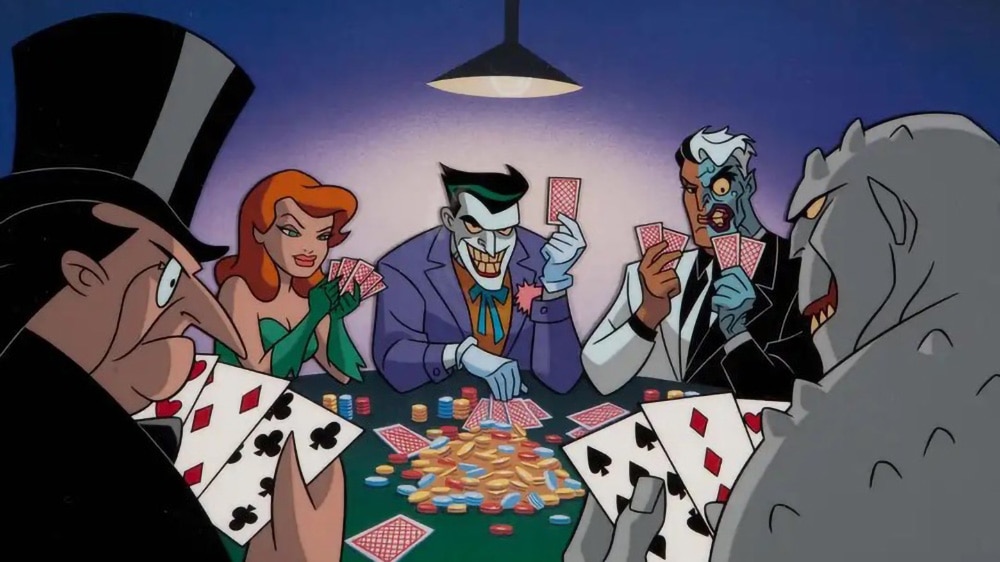
In what order did the Batman: The Animated Series villain roster first appear in the comics in order of first to last?
Whew! All right. This is as complete a list as I could manage. Where earlier incarnations of a character don't exactly line up with the way they're introduced in the show, I have notated the earliest precedent in brackets.
Hugo Strange (Detective Comics #36, February 1940)
The Joker (Batman #1, April 1940)
Catwoman (Batman #1, April 1940)
Tony Zucco (Detective Comics #38, April 1940)
Clayface [as Basil Karlo] (Detective Comics #40, 1940)
Scarecrow (World's Finest Comics #3, September 1941)
The Penguin (Detective Comics #58, December 1941)
Two-Face (Detective Comics #66, August 1942)
The Crime Doctor (Detective Comics #77, July 1943)
Mad Hatter (Batman #49, October 1948)
Riddler (Detective Comics #140, October 1948, one week after Mad Hatter)
Lloyd Ventrix, Mirror Man [as Floyd Ventris] (Detective Comics #213, November 1954)
Professor Milo (Detective Comics #247, 1957)
The Terrible Trio (Detective Comics #253, March 1958)
Mr. Freeze [as "Mr. Zero"] (Batman #121, February 1959)
Clock King [as William Tockman] (World's Finest Comics #111, August 1960)
Poison Ivy (Batman #181, June 1966)
Man-Bat (Detective Comics #400, June 1970)
Ra's al Ghul (Batman #232, June 1971)
The Werewolf [as Anthony Lupus] (Batman #255, April 1974)
Josiah Wormwood [as Jeremy Wormwood] (Detective Comics #450, August 1975)
Rupert Thorne (Detective Comics #469, May 1977)
Count Vertigo (World's Finest Comics #251, July 1978)
Maxie Zeus (Detective Comics #483, May 1979)
Killer Croc (Detective Comics #523, February 1983)
Ventriloquist (Detective Comics #583, February 1988)
Bane (Batman: Vengeance of Bane #1, January 1993)
Sewer King, Red Claw, Nostromos, Harley Quinn, Roland Daggett, Kyodai Ken, HARDAC, Emile Dorian, The Jazzman, Montague Kane, Gil Mason, Baby Doll, Arkady Duvall, Lock-Up, and Grant Walker are all BTAS originals.
Red asks:
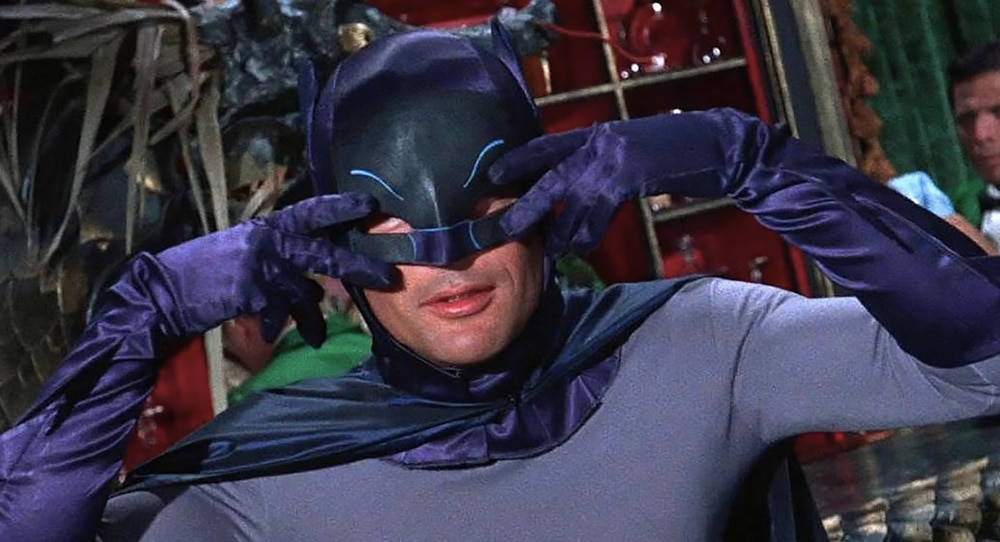
Why doesn’t Batman dance anymore?
He does! Batman dances all the time! Don’t believe me? Just boot up any game of Fortnite.
And that does it for this month’s column! Don’t miss me too much. You’re always free to come see me in the Discord community before next month’s installment. As long as you approach with earnest curiosity, you’re always welcome to ASK…THE QUESTION.
Alex Jaffe is the author of our monthly "Ask the Question" column and writes about TV, movies, comics and superhero history for DC.com. Follow him on Bluesky at @AlexJaffe and find him in the DC Official Discord server as HubCityQuestion.
NOTE: The views and opinions expressed in this feature are solely those of Alex Jaffe and do not necessarily reflect those of DC or Warner Bros. Discovery, nor should they be read as confirmation or denial of future DC plans.