You’ve seen Batman: The Animated Series. You’ve watched Robert Pattinson in The Batman. Now you’re ready to dive into the source material. The question is, where do you get started?
If you’re new to comics and want to begin your Batman reading journey, we’re here to help you take your first steps. With that, let’s dive in and tell you everything you need to know about reading Batman comics.
I want to read Batman comics from the beginning. Where should I start?
If you’re trying to get into Batman comics, don’t worry about starting from the beginning. Comic book storytelling doesn’t work the same way as movies or television. Unlike a show like Severance or Stranger Things, you don’t need to start from the very first issue to get the whole story—unless you’re more interested in researching Batman in an academic sense. If you just want to read some entertaining Batman stories and get to know him and his world, you could skip the first forty years of Batman’s publishing history and still understand everything you need to know.
This is because many comic books are written with the understanding that they could be someone’s first. There is some serialization within specific runs and storylines, but not the same way you typically see with TV. Nobody expects you to read eight decades of Batman comics before you start on his modern adventures. Even the writers and editors haven’t read every single comic.
A modern comic might have Batman reference his complicated romance with Catwoman, but if it does, it will be written in a way where you’ll understand their history even if you haven’t read those comics.
What’s the very first Batman comic? Should I start reading from there?
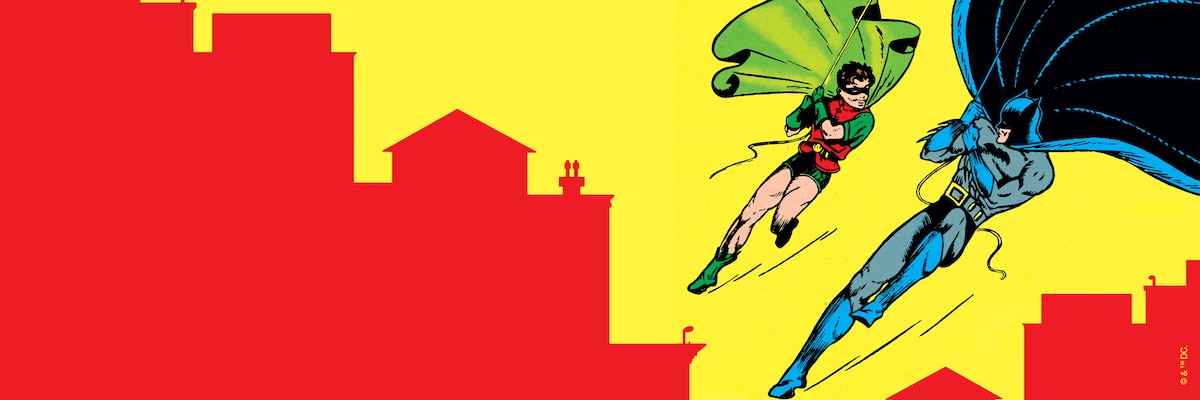
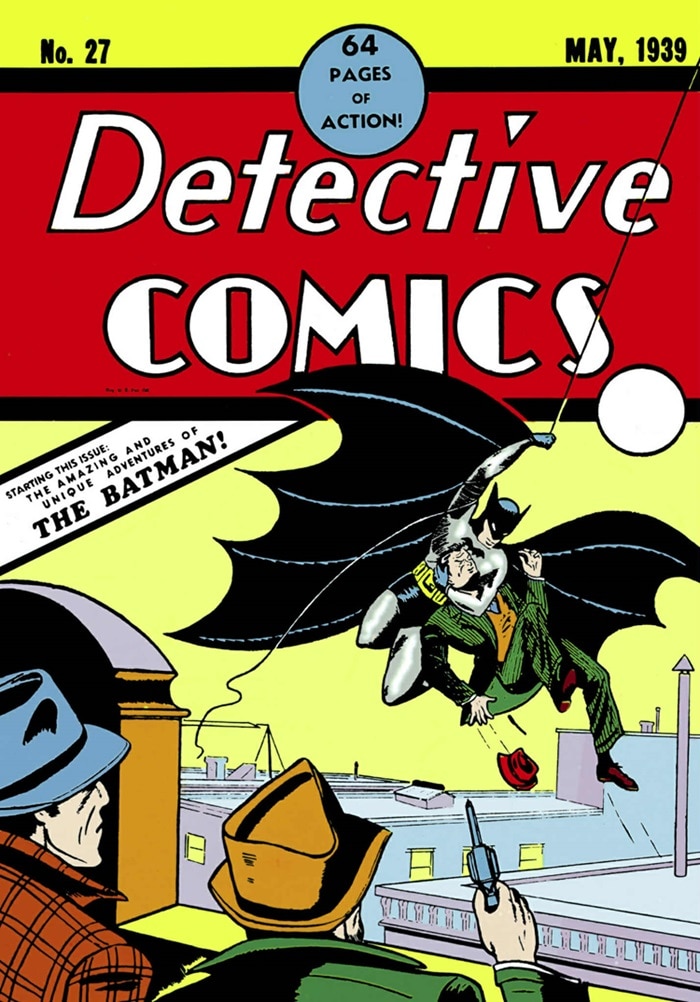
The very first Batman comic is Detective Comics #27, which was published in 1939. You can start from there, but if you’re new to comics, it’s best to start with something more recent. Most of Batman’s early adventures are standalone stories that could be read in any order. These comics are great, and establish some important things about the character, but if you aren’t used to comics, you might have trouble reading large chunks in one sitting.
Older comics have different storytelling sensibilities and were largely meant to be disposable entertainment. The Batman writers and artists of the 1930s and 1940s never imagined that fans would be reading hundreds of pages in a single afternoon.
Also, from a practical standpoint, if you read every Batman comic from 1939 to today, you’ll never catch up (unless you have a Lazarus Pit). The best way to start reading Batman comic books is to pick a starting point that makes sense to you and take things from there, while also reading random back issues and storylines that interest you along the way.
If I’m not starting from 1939, then where should I start?
One of the great things about Batman is that he has multiple starting points. Don’t worry, we explain why later in this guide.
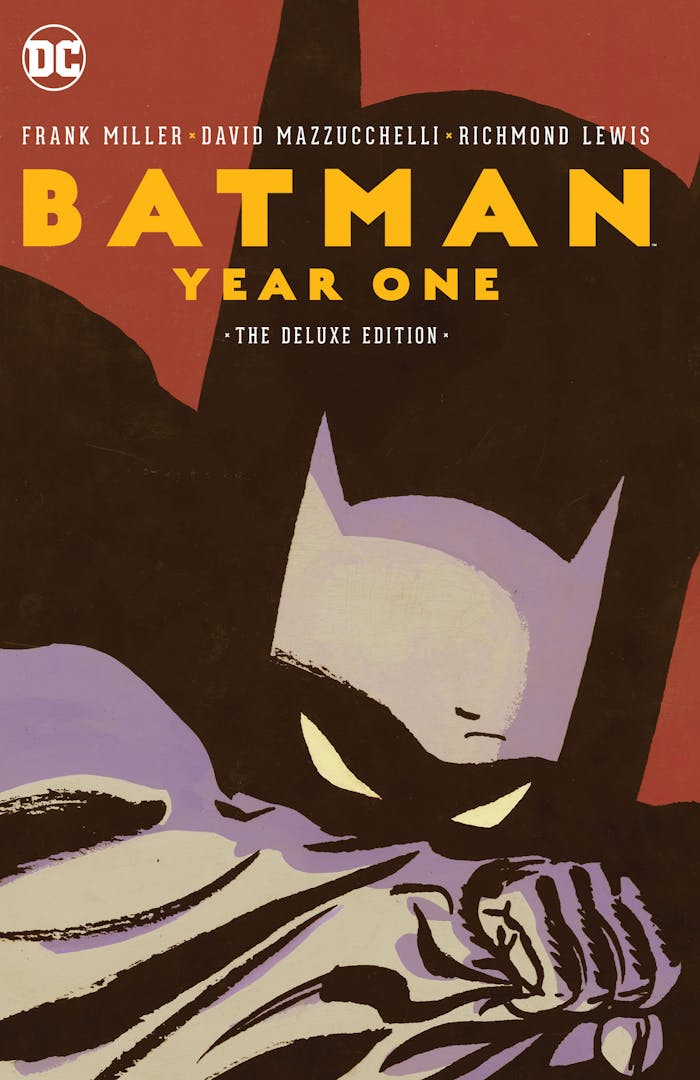
Batman: Year One is universally accepted as the gold standard for Batman’s origin. The storyline, which was originally published in Batman #404-407 in 1987, gives readers a look at the early days of the Dark Knight’s crimefighting career. It’s also an engaging crime noir tale, and if you’re a fan of Christopher Nolan’s Dark Knight Trilogy, it’s easy to see how this comic inspired his movies.
You can also check out other versions of Batman’s origin, such as The Untold Legend of the Batman and Batman: Zero Year. Still, if you had to pick just one, Batman: Year One is by far the strongest choice, with many Batman comics still making callbacks to it to this day. Batman: Year One has also been adapted into an animated movie and a narrative podcast. It’s the closest thing to a “season one” Batman has.
Alternatively, you can begin your Batman reading journey by starting with whatever the newest volume or newest creative run is. I know this can seem jarring if you’re used to watching long-running TV shows from the beginning, but as we mentioned earlier, comic book storytelling is a different animal. New runs are typically written to serve as jumping on points for new readers like you.
As of this writing, the latest Batman run by Matt Fraction and Jorge Jimenez began in 2025 with a new Batman #1. Fraction and Jimenez do a great job bringing readers up to speed on the current status quo of Gotham, even if you aren’t familiar with the comics that were published just prior to it. As you’re going through Fraction and Jimenez’s Batman, you can branch out and try other titles and classic storylines like Hush or The Court of Owls.
In my opinion, that’s the best way to get into Batman comics. Start with the current title and read a curated sample of the classic storylines as you go along.
What is a good reading order for Batman?
As I mentioned in our previous section, you have a lot of flexibility when it comes to the order in which you should tackle reading Batman. However, if you want to get the most essential status quo changes and classic storylines, here’s a “chronological speedrun” which hits the main beats. For example, the death of Jason Todd, the introduction of Damian Wayne, and other highlights from Batman’s career.
Please note, this list doesn’t include all the classic storylines, or it would be too long to put here. It also doesn’t include every major event in Batman’s life. It’s meant to be a “speedrun” for readers who want to get a sense of Batman’s history and most essential storylines before starting on his modern comics.
Batman: Year One – The early days of Batman’s career in Gotham, and the beginning of his partnership with Jim Gordon.
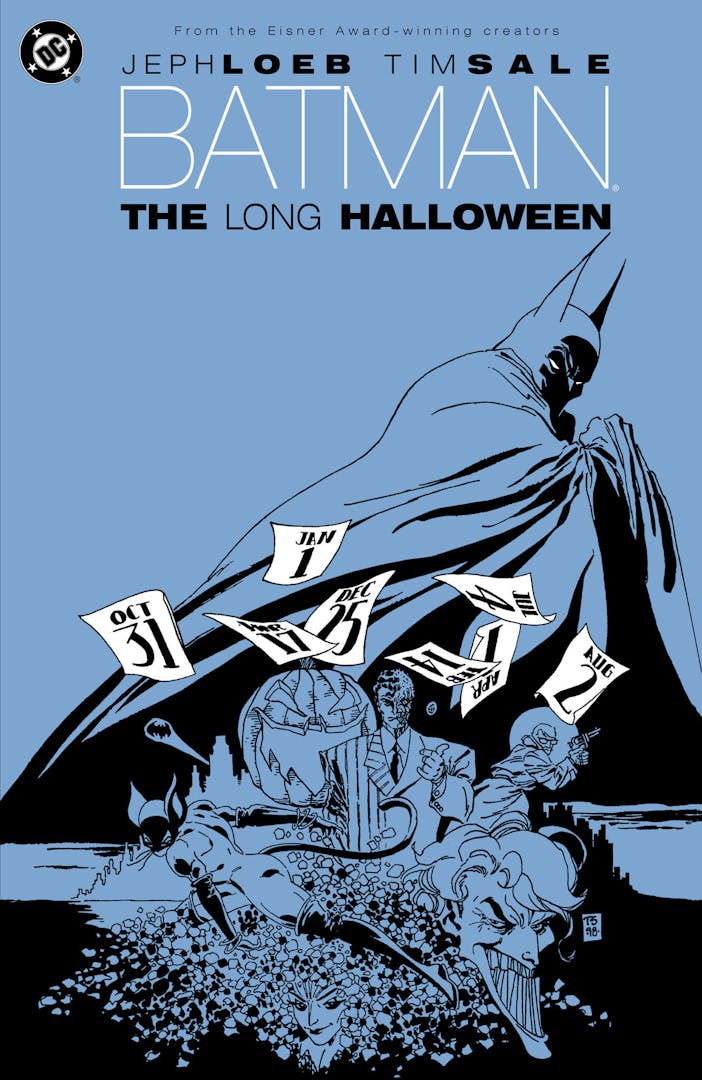
Batman: The Long Halloween – A classic tale also set in the early days of Batman’s career, which serves as a spiritual sequel to Year One. Batman tracks a mysterious killer and fights many of his most iconic foes.
Batman: Dark Victory – A sequel to The Long Halloween, and a new take on Dick Grayson’s origin.
Batman: Second Chances – Batman meets Jason Todd, the boy who becomes the second Robin.
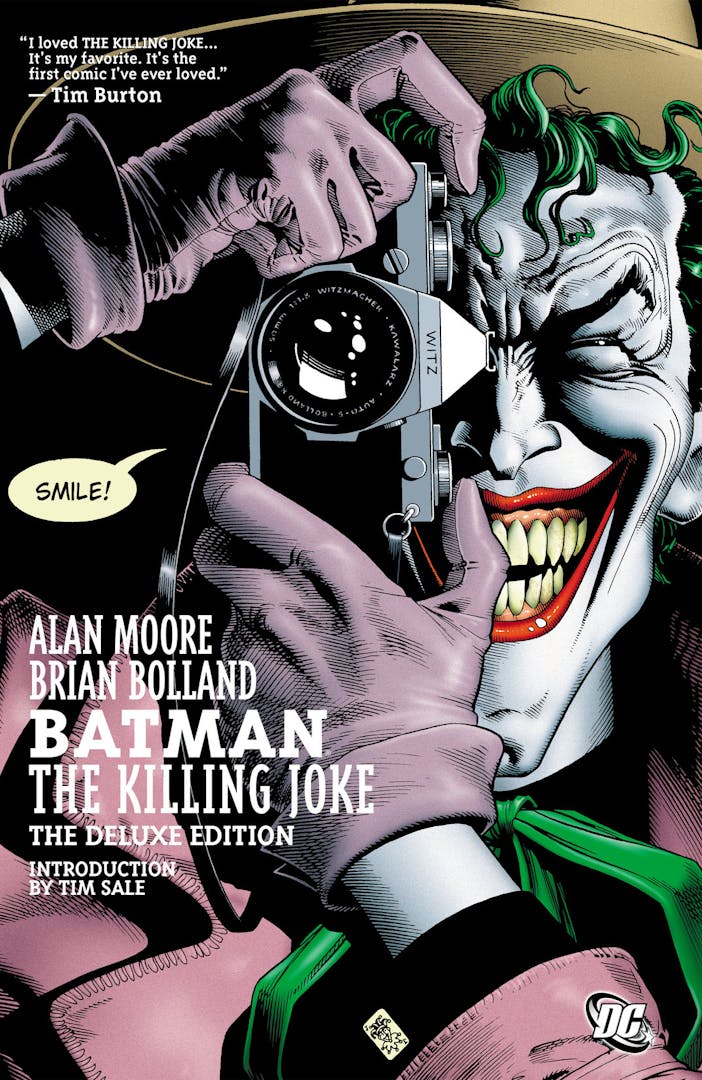
Batman: The Killing Joke – One of the most iconic and revisited Batman versus the Joker stories. This classic tale also includes Joker paralyzing Barbara Gordon, a moment that would have major repercussions for the character.
Batman: A Death in the Family – The Joker kills Jason Todd, the second Robin.
Batman: A Lonely Place of Dying – The introduction of Tim Drake, the boy who would become the third Robin.
Batman: Knightfall – The first chapter of the Knightfall trilogy, a storyline which became the template for future Batman events. Bane sets all of Arkham’s inmates loose and breaks Batman’s back.
Knightquest: The Crusade and Knightquest: The Search – John-Paul Valley patrols Gotham as the new Batman while Bruce searches for Tim Drake’s missing father.
Batman: Knightsend – Bruce, now healed, reclaims the Batman mantle from John-Paul in the final act of the Knightfall trilogy.
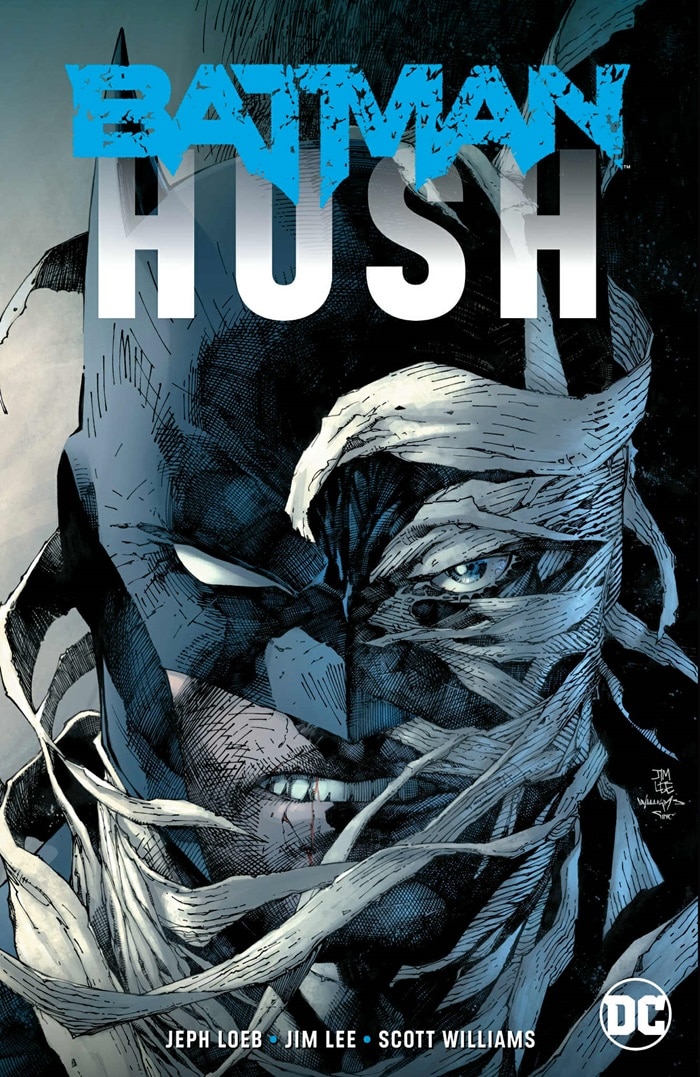
Batman: Hush – Batman finds his life manipulated by a mysterious villain called Hush. This storyline could almost be considered Batman 101, as it touches on most of the characters and concepts in the mythos. It also sets up Jason Todd’s return.
Batman: Under the Red Hood – A mysterious anti-hero in Gotham is revealed to be Jason Todd, somehow returned from the grave.
Batman and Son – Batman discovers that he has a ten-year-old son named Damian, who has been raised by Ra’s al Ghul’s League of Assassins. Batman tries to take his son under his wing and rein in his killer instincts.
Batman: The Court of Owls – A classic storyline where Batman uncovers a secret society operating in Gotham.
Batman: The City of Owls – Batman and his allies take on the Court of Owls.
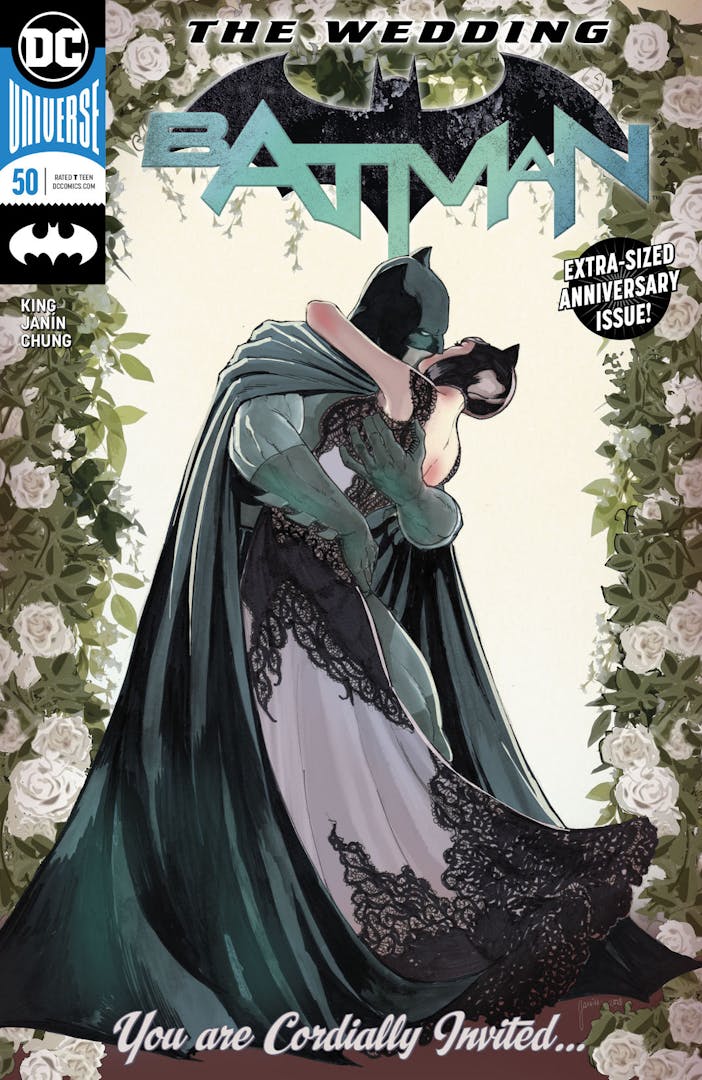
Batman: The Wedding – Batman and Catwoman almost get married, until Bane secretly manipulates Selina into leaving Bruce at the altar.
Batman: City of Bane – Bane takes over Gotham City. This storyline is the final chapter of Tom King’s legendary Batman run and features the death of Alfred Pennyworth.
Batman: The Dying City – Batman takes on the Court of Owls to save Gotham. This story is the final chapter of Chip Zdarsky’s Batman run, and the last major storyline before Matt Fraction’s new era began with 2025’s Batman #1.

What’s the difference between all the Batman titles?
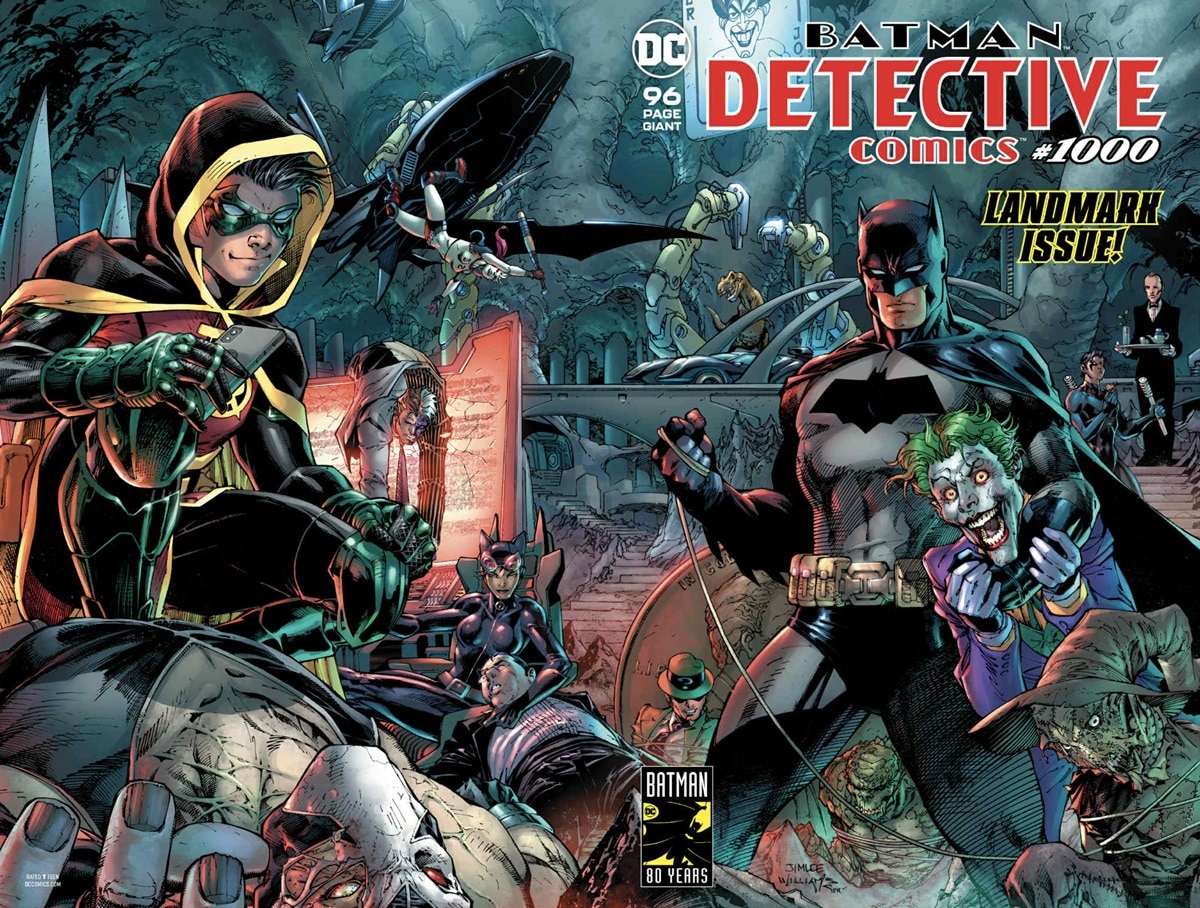
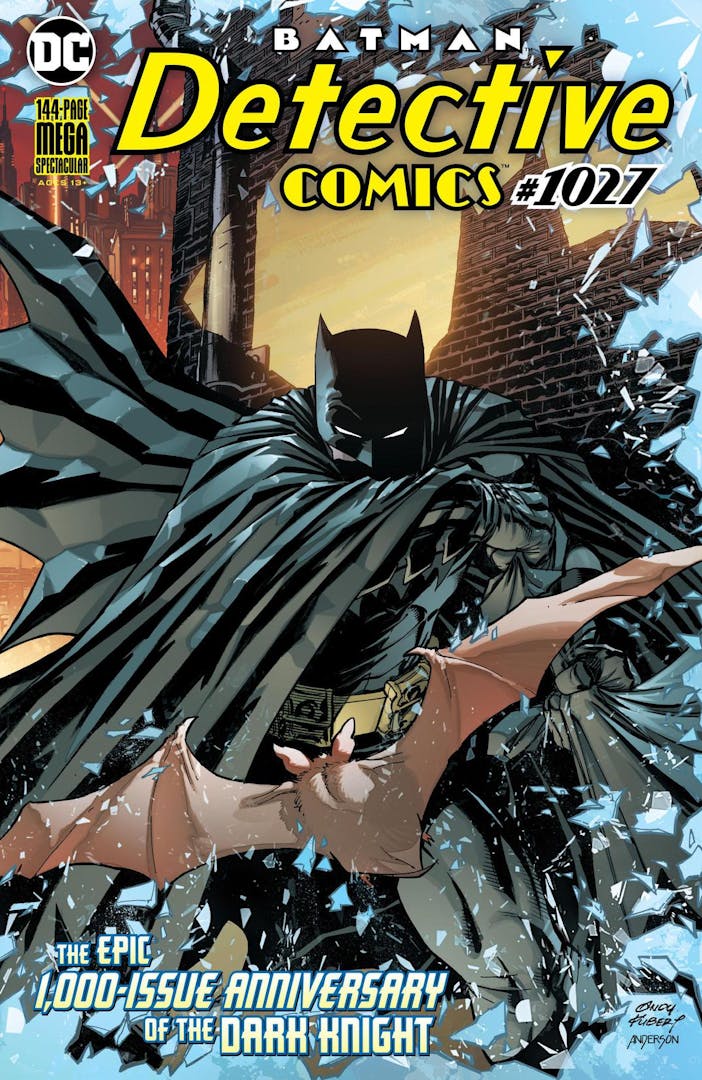
There are multiple monthly comics featuring Batman, but the two ongoing titles that have been there from the beginning are Detective Comics and Batman. Both comic series are set in the same universe, telling parallel stories about Batman’s life. There are times when the books crossover, but for the most part you can read Batman without needing to know what’s happening in Detective Comics and vice versa. If you read both, you’ll have more context for what’s happening in Gotham, but it's not a requirement.
Detective Comics launched in 1937, two years before Batman’s debut in issue #27, and Batman launched in 1940. While there’s no telling what the future may hold, it’s likely that if you walk into your comic shop and ask for the latest issue of either title, they’ll have it on their shelves.
Batman also has multiple spinoff titles. As I write this, the Dark Knight is currently appearing monthly in Absolute Batman (which is set in an alternate continuity), Batman and Robin and Batman/Superman: World’s Finest. This is in addition to his appearances in team books like Justice League Unlimited or frequent guest appearances in other Bat-Family titles like Nightwing. Of course, this could change depending on when you’re reading this guide.
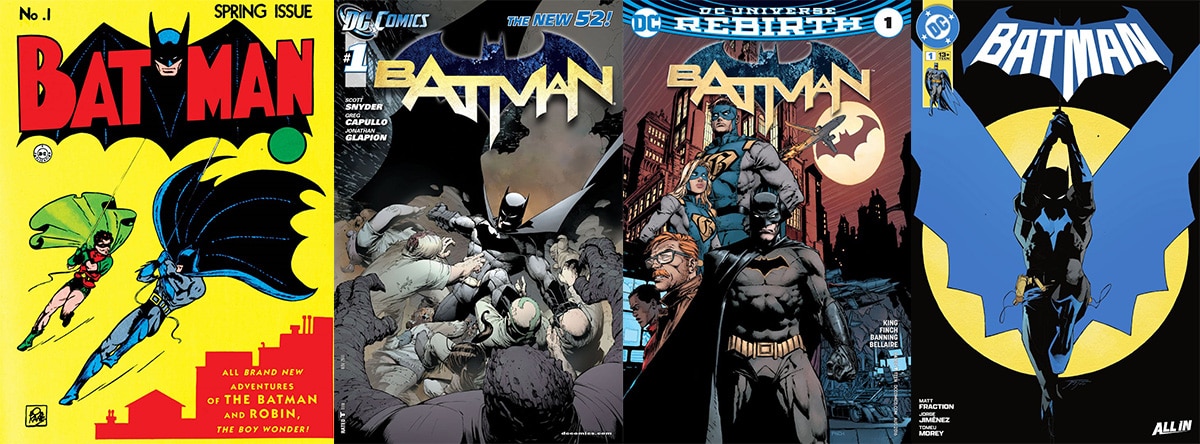
Why are there multiple versions of Batman #1?
As you look through Batman’s back issues, you might notice that DC published Batman #50 in 2018 and Batman #52 in 2016. No, DC isn’t publishing issues out of order. Batman and many of DC’s other titles occasionally relaunch with a new volume. This might be to showcase a new creative team, or to mark a new direction in Batman’s life. As of this writing, the Batman title is currently on its fourth volume, which launched in 2025.
If you’re looking for a certain issue, like 2011’s Batman #3, check the publishing year to make sure you have the correct volume. To make things easier for new readers, the guides and articles published here on DC.com will usually list the year a comic was published if there are multiple volumes.
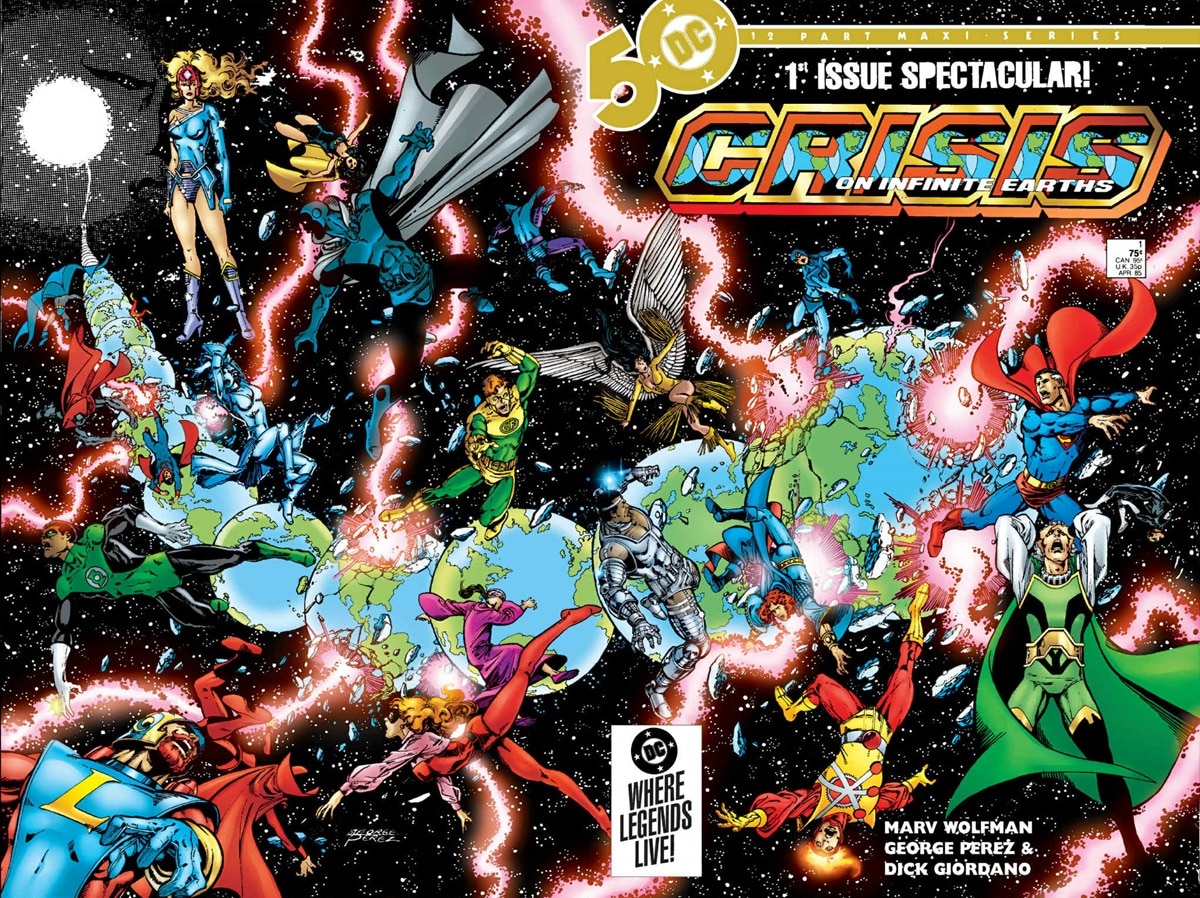
What is Pre-Crisis and Post-Crisis?
You’ve probably seen terms like Post-Crisis and Pre-Crisis thrown around surrounding Batman comics. This refers to Crisis on Infinite Earths, a major crossover event published in 1985-1986. In the story, the heroes of the DC Universe must come together to fight a threat known as the Anti-Monitor. There was some time travel and reality manipulation, and when the dust settled the DC Universe had a new history.
When people say Pre-Crisis or Post-Crisis, they’re referring to the version of the character that existed before or after Crisis changed their history. There are other history-changing events like Flashpoint and Zero Hour, but Crisis on Infinite Earths is by far the most consequential one.
Don’t worry, it’s not as confusing as it sounds. The Batman we met in 1939’s Detective Comics #27 is the same character in the comics today—his history was just changed by the Crisis. For example, in Pre-Crisis continuity Bruce Wayne didn’t meet Alfred until he had already been Batman for a few years, whereas in Post-Crisis continuity Alfred helped raise Bruce to adulthood.
This is why you might see multiple versions of Dick Grayson’s origin, or Batman’s first meeting with the Joker. Every story counts, they just get updated by time travel and reality altering.
Where can I find Batman comics?
One of the best things about getting into Batman comics today is that there are so many ways to do it. Batman’s monthly comics can be purchased at your local comic shop. If you prefer to catch up by reading the trade paperback collections, many bookstores and libraries have a dedicated graphic novel selection where you can buy or check out selected Batman trade paperbacks.
If you want to read your comics digitally, then DC UNIVERSE INFINITE is the way to go. Think of it like a streaming service for digital comics. You can read decades of Batman back issues for one monthly price. If you’re looking to read a lot of Batman comics in one sitting, this is the best and most convenient way to do it.
This should get you started on your Batman reading journey! If you still have questions, feel free to join the DC Official Discord server where you can chat with other fans for answers and recommendations. Plus, you can share your thoughts on the comics with other readers.
Joshua Lapin-Bertone writes about TV, movies and comics for DC.com, is a regular contributor to the Couch Club and writes our monthly Batman column, "Gotham Gazette." Follow him on Bluesky at @joshualapinbertone and on X at @TBUJosh.
NOTE: The views and opinions expressed in this feature are solely those of Joshua Lapin-Bertone and do not necessarily reflect those of DC or Warner Bros. Discovery, nor should they be read as confirmation or denial of future DC plans.