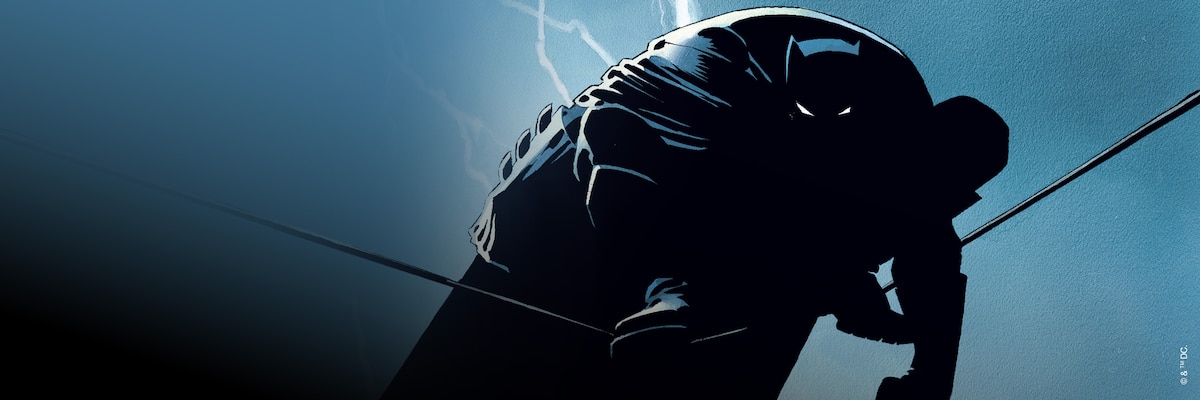
In the beginning there was Batman, and Batman was vengeance incarnate. Bill Finger and Bob Kane gave superhero comics its shadowy id—a nocturnal avenger with the coolest costume, the richest rogues gallery and the darkest origin story, which even the bright light of his cheerful kid sidekick Robin couldn’t diminish. The Dark Knight Detective would go on to survive World War II, ’50s conservatism and a camp ’60s TV makeover before again becoming a haunted creature of the night under the stewardship of Neal Adams and Denny O’Neil, and later Marshall Rogers and Steve Englehart. Night, however, is inevitably followed by the harsh glare of morning, and the Batman’s monthly adventures eventually grew stagnant.
That’s when Frank Miller took hold of him. With 1986’s Batman: The Dark Knight Returns, Miller redefined not only Batman but the entire the comics medium.
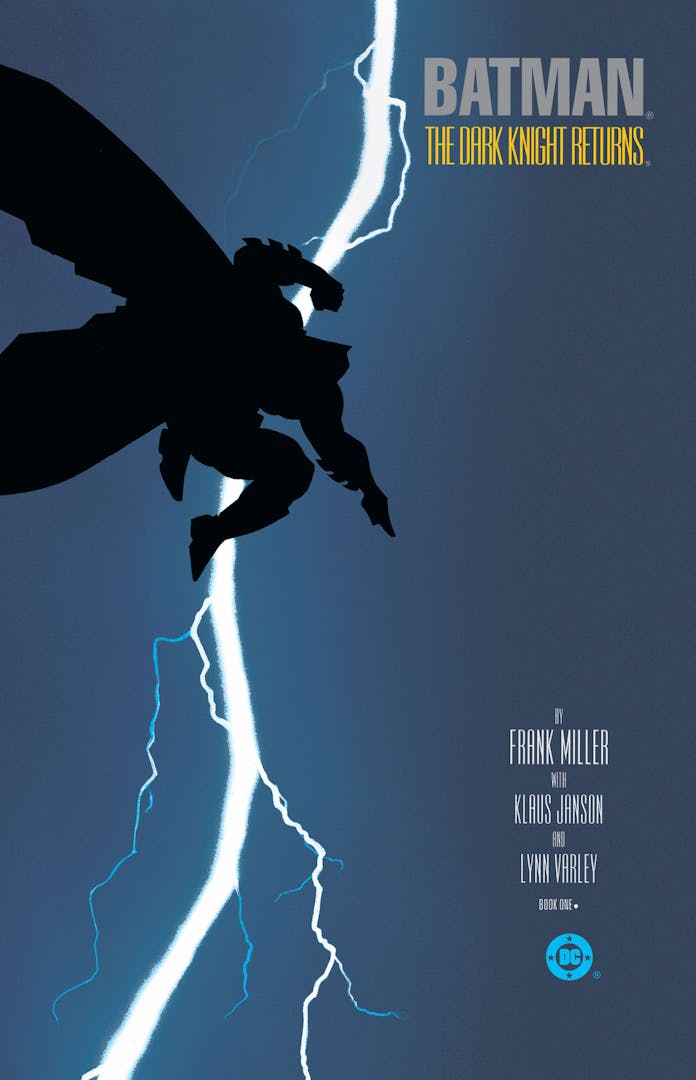
This month, The Dark Knight Returns celebrates its 40th anniversary. Within this four-issue prestige-format limited series written and drawn by Miller, inked by Klaus Janson and colored by Lynn Varley, an aging Bruce Wayne comes out of retirement to battle old foes like the Joker and Two-Face, mutant street gangs terrorizing Gotham City and a government-controlled Superman. Along the way, he faces the grim realization that the world may no longer hold a place for his singular form of justice.
As Miller told me when I interviewed him several years ago, The Dark Knight Returns began when he suddenly realized his own mortality.
“I always wanted to get my hands on Batman, for years on end,” he shared. “It was one of the big things that lured me over to DC Comics in the first place. But I just didn’t know what I could do to refresh him after all the different versions of the character I’d seen growing up. Then, all of a sudden, I realized I was about to turn twenty-nine years old, Batman’s age. Then I realized I was one year away from turning older than Batman. The more the year went on, the more it bothered me that I might be older than him. So finally, I [decided] to fix that, and make him older than me once and for all. I conceived of a story where Batman was at the impossibly old age of fifty.”
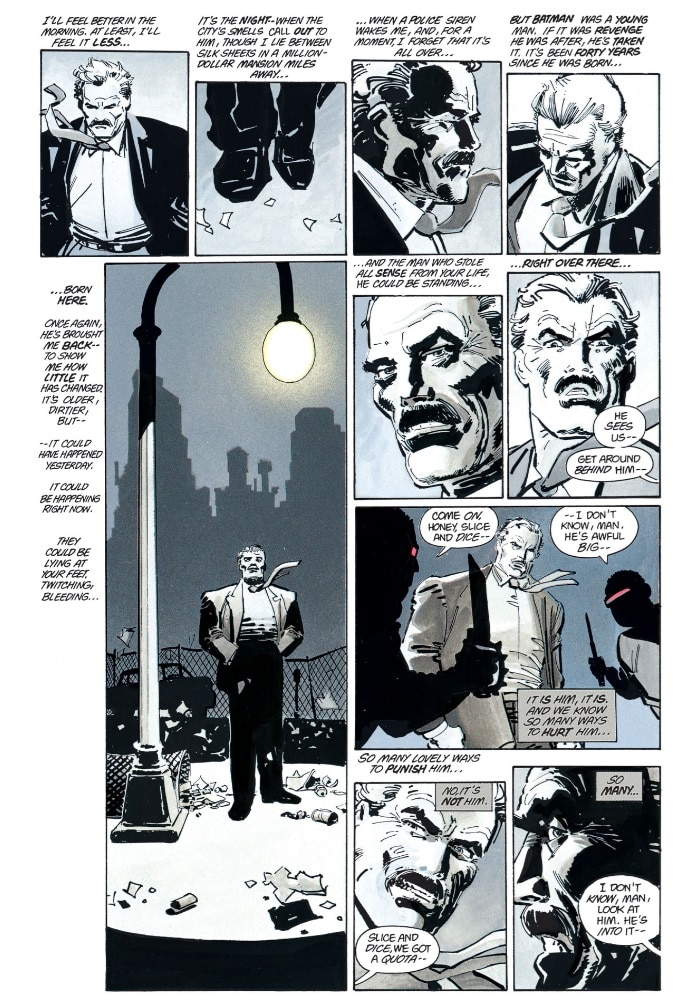
The Dark Knight Returns was a smash hit. It gave the character, both literally and figuratively, a new lease on life, by grounding him in the psychology of the real world. It opened the floodgates to what would become many of the most beloved Batman titles ever published: Year One, The Killing Joke, Gotham by Gaslight, Arkham Asylum, A Death in the Family, Legends of the Dark Knight, Shadow of the Bat, Batman: Black and White. Director Tim Burton’s 1989 Batman movie took its cue from Miller and spawned a film franchise that resulted in today’s box-office dominance by the superhero genre. 1992’s Batman: The Animated Series also resulted, sparking the DC Animated Universe, Batman’s own TV animation franchise and a long line of DC animated movies. We also can’t overlook the bestselling Arkham video games. Like The Dark Knight Returns, almost all of them depicted Batman as a grimly determined vigilante.
But the impact Miller’s work had on Batman paled in comparison to its effect on comics in America.
Alongside The Dark Knight Returns, 1986 also marked the release of Alan Moore and Dave Gibbons’ Watchmen and the first collected volume of Art Spiegelman’s Maus. The former is considered the Ulysses of superhero comics, a deconstruction of the genre and medium and the only comic on Time’s 100 Best English-Language Novels. The latter is the only graphic novel to win the Pulitzer Prize. Their combined success transformed comics from an industry built largely for adolescents to one aimed at discerning adult readers. Yet of the three, The Dark Knight Returns’ impact resounded most loudly.
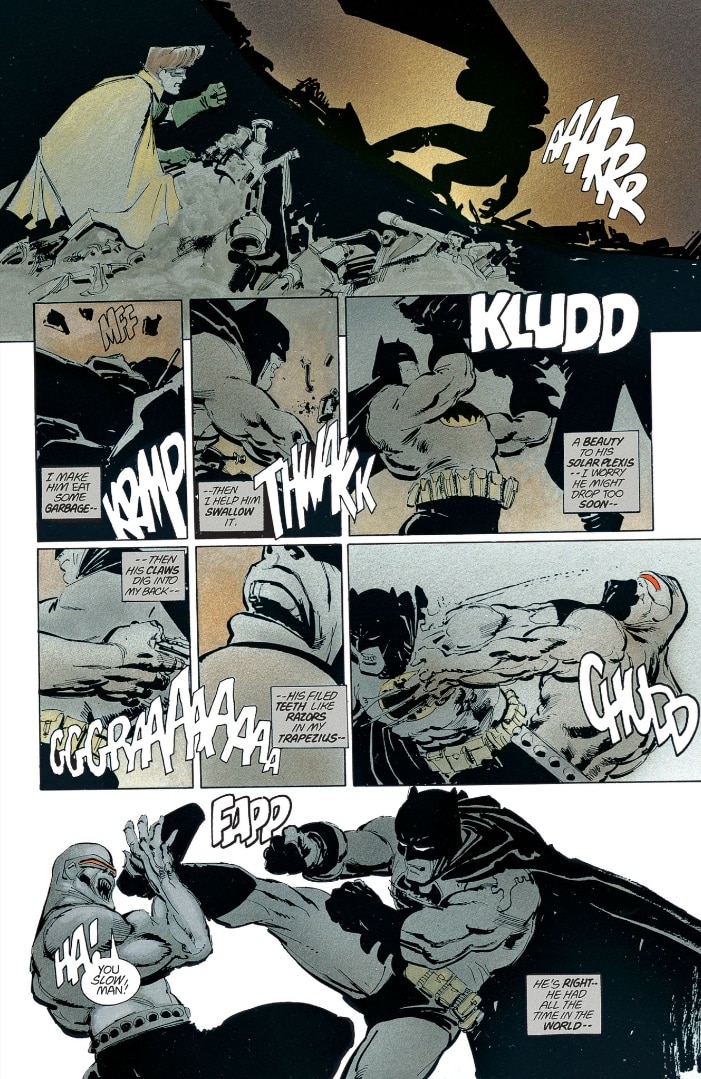
Watchmen, despite the richness of its meta narrative, assumes a prior knowledge of comics history on the part of its readers in order to fully appreciate its scope. While Maus, unyielding in its power, is an art comic with a portrait of the Holocaust that may be too terrifying for many new comic fans. Regardless of how it compares to the year’s other two comic book masterworks in your mind and the mind of the world’s critics, The Dark Knight Returns was the most accessible, the most immediately gratifying, and, for better or for worse, the most popular with mainstream comic readers. It permanently altered the pop culture landscape, starting with comic creators, who began introducing adult concerns into their work, to varying degrees of success.
DC’s era-defining Vertigo label, for example, resulted as much from the widened audience The Dark Knight Returns had grown as it did from the “Sophisticated Suspense” of Moore’s Swamp Thing. Meanwhile, some other titles merely confused dark and gritty with serious and grown-up, militarizing their characters with big guns and bigger attitudes. This question of just what constitutes “adult” would eventually find its way into billion-dollar multimedia franchises and a never-ending online debate. If Jaws and Star Wars created the blockbuster mentality, The Dark Knight Returns brought it to an even older form of storytelling.
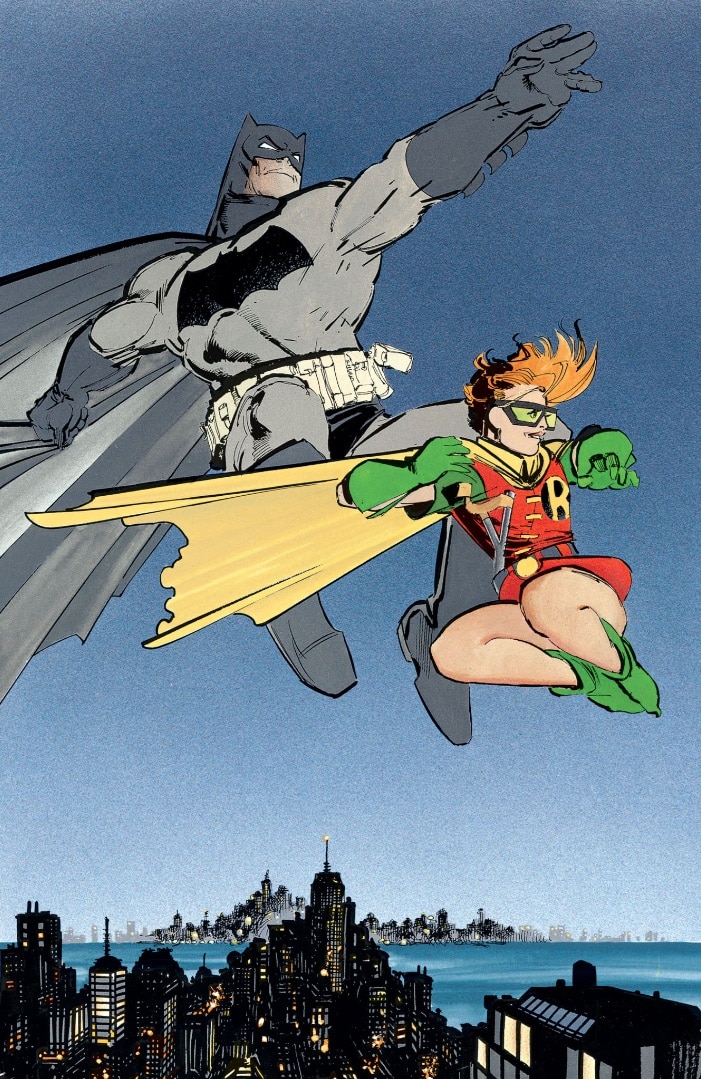
Long after The Dark Knight Returns’ release, many comics—consciously or not—are still reacting to its success. Spawn, Hellboy, Deadpool, The Boys, Saga, Criminal, The Walking Dead, Invincible and, of course, Absolute Batman were all made possible in part by the door Miller had kicked open.
The children of The Dark Knight Returns—like the former gang members who follow Bruce Wayne underground at saga’s end—are innumerable, as in turn, are their progeny.
Long may they flourish.
Batman: The Dark Knight Returns is available in a softcover graphic novel collection and can be read in full on DC UNIVERSE INFINITE. Look for a special facsimile edition of the series to be released in celebration of its 40th anniversary starting with issue #1 on February 25 and a Compact Comics collection of the full series on April 7.
Joseph McCabe writes about comics, film and superhero history for DC.com. Follow him on Instagram at @joe_mccabe_editor.
NOTE: The views and opinions expressed in this feature are solely those of Joseph McCabe and do not necessarily reflect those of DC or Warner Bros. Discovery, nor should they be read as confirmation or denial of future DC plans.