Hello, I’m Alex Jaffe, better known as HubCityQuestion to the DC Community for what’s now the better part of a decade. My prime directive here in ASK…THE QUESTION is to bring you answers to any question you might have about the DC Universe and its environs. Every month, I treat DC.com readers to a sample of some of the many questions I receive each day in the DC Official Discord server in hopes that it’ll give you a greater appreciation of the depth of DC’s expanding comic book universe. Let’s see if you learn the answers to some questions today that you never even thought to ask.
Cree asks:
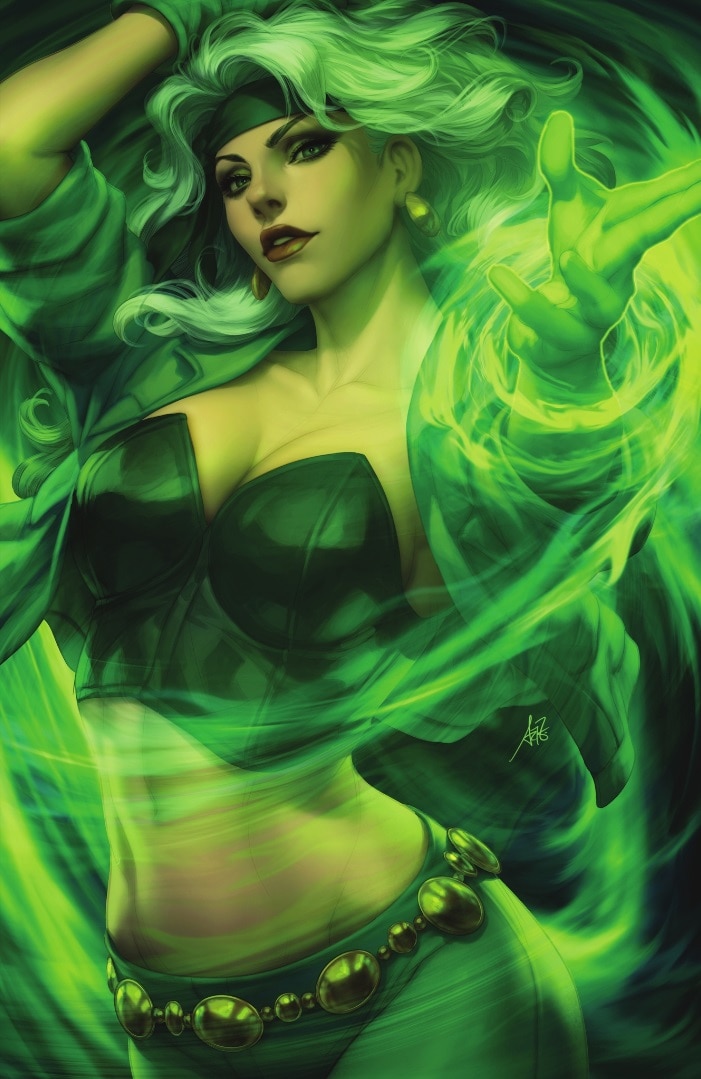
Why are Fire’s flames green?
As is so often the case whenever you ask the “why” question about a comic book particularity, there are really two ways to answer it: from a creative standpoint, or by addressing the reasons given in fiction. We’ll start metatextually here. Originally, Beatriz da Costa was introduced as one of many international heroes created by Ramona Fradon debuting in the ’70s Super Friends TV show tie-in comic, with an intention of increasing the diversity and representation of the superhero line. There, before she was “Fire,” she was known as “The Green Fury,” representing her home country of Brazil in the international superhero community—a country frequently associated with the color green, for its dense rainforests and its verdant flag.
In the fiction of the DC Universe itself, a couple other explanations have been offered. Prior to Crisis on Infinite Earths, Fire was presented as a more mystical hero, drawing her unnaturally green flames from an elemental plane of green fire. After being reintroduced Post-Crisis, Fire’s powers were said to originate from an accident where she was caught in a reactor explosion during a laboratory procedure on an unstable, experimental chemical compound. Either way, it works as a handy visual signpost that if you’re seeing a green fire break out, you probably know who the cause is. (Unless Hal Jordan’s turned heel again.)
Jor-El asks:
When did the concept of the Kent family first show up? Martha in particular? And when did Batman's Martha first show up? Which one appeared and was named first?
Ma and Pa Kent first appear as early as an unnamed couple in 1939’s Superman #1, but Ma didn’t take the name Martha until her appearance until much later. While many sources you may find online cite the 1948 Superman serial as the first time Ma Kent was identified with Martha, I've reviewed the tapes multiple times myself and found no such evidence of this in the footage. Barring that, Ma Kent is first called "Marthe" in 1950's Superboy #12, and "Martha" in 1951's Adventure Comics #169.
Batman’s parents appeared for the first time in 1939’s Detective Comics #33, but Martha Wayne isn’t named until 1948’s Batman #47—three years before Ma Kent would be identified as Martha. So as an on-panel presence, Ma Kent predates Mrs. Wayne, but Mrs. Wayne inherited the name Martha first.
AbsoluteArcana asks:
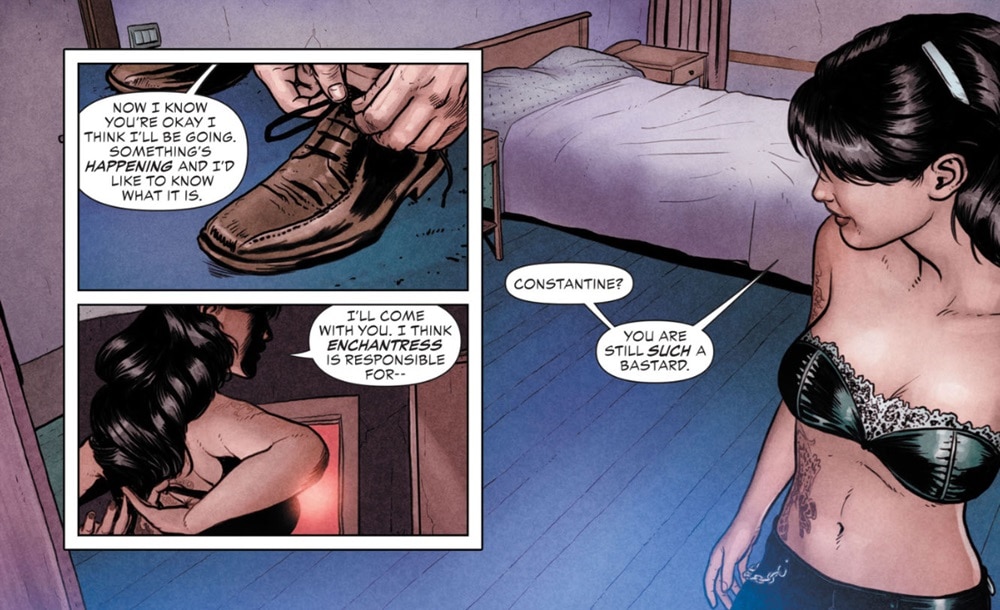
I was just reading the New 52’s Justice League Dark and in issue #3, Zatanna has a tattoo. Issue #0 of the same series shows that Zee and Constantine got tattoo markings from Nick Necro as a way of summoning them in case Nick gets caught in some danger. Could this tattoo also be Necro's handiwork, or is that only the shoulder part? If it’s the shoulder, then what is the issue #3 tattoo? Has it ever appeared before or after this run?
Zatanna’s ink didn’t survive the New 52, but I wouldn’t presume to answer what they’re meant to represent without a textual answer from the comics—at least, not without consulting the artist who designed them. So, I went to Mikel Janín, who designed Zatanna’s New 52 look back in 2011, to get his perspective. Here’s what he had to say:
That's actually a good question, but honestly, I don't remember why they were there, or what I had in mind when doing them fifteen years ago. I remember the editors wanted her with a goth and edgy look, and not sure if they requested some tattoos or it was me who added them. As for the designs themselves, I think they were just some floral ornaments, nothing too specific, otherwise it would be hard to replicate in every panel. Not even sure if I kept them consistent. Now looking back, I wish I had done something more significant. Cheers!
In short, Arcana…they’re magic.
DEATHSTROKE asks:
Why wasn’t Hal Jordan in Crisis on Infinite Earths?
This is a better question than the casual reader might think, actually, and it’s one that bothered me personally for quite some time. The entire premise of the original Crisis was to be a massive curtain call for every character of any significance who had ever appeared in DC history stacked against the greatest threat they had ever faced…and yet, one of the founding members of the Justice League of America was nowhere to be seen. It puzzled me to the point that when I got one opportunity to speak with Crisis writer Marv Wolfman several years ago, it was the only question I asked him. What he told me was that at the time in the Green Lantern comics, Hal Jordan had just recently retired from being a Green Lantern, passing the torch to John Stewart, and it would feel disingenuous to bring him back into action after so brief a respite.
(Granted, if one were reading the Green Lantern issues coming out contemporarily to Crisis, they would see that Hal Jordan was, in fact, present—but that wasn’t Marv’s call.)
Guest2 asks:
How many women has Wonder Woman dated in canon and Elseworlds?
The fairer side of Wonder Woman’s date book is a little more on the elusive side, filled with insinuations and passing mentions. But in the interest of sapphic study, I’ve prepared as complete an accounting for you as I could manage:
In Wonder Woman: Year One, Megara and Evrayle are mentioned as having been romantically involved with Diana in the past. It is implied there have been others, as well. Diana’s last Amazon lover before embarking on her journey to man’s world, Kasia, is seen kissing her farewell before they must part company for her mission. Another Amazon, the blacksmith Io, has been seen pining for Diana as early as the ’90s, though her feelings went unrequited. (Io is currently enjoying a loving relationship with Nubia, the reigning queen of the Amazons.) As far as “canon” goes, that’s the lot we know of.
Another Amazon, Mala—the warden of Themyscira’s Reformation Island, dating back to the Golden Age—had a lot going on with Diana subtextually in the original William Marston comics, but she’s overtly romantically tied to Diana in Grant Morrison and Yanick Paquette’s Wonder Woman: Earth One.
It’s pretty easy to see Diana is pining over the Amazon stablehand Alethea in Wonder Woman: The True Amazon, but they never end up together.
In the World War II pinup model-themed Elseworld of DC Comics: Bombshells, Mera confides in passing that before the events of the story, she and Wonder Woman were once young lovers.
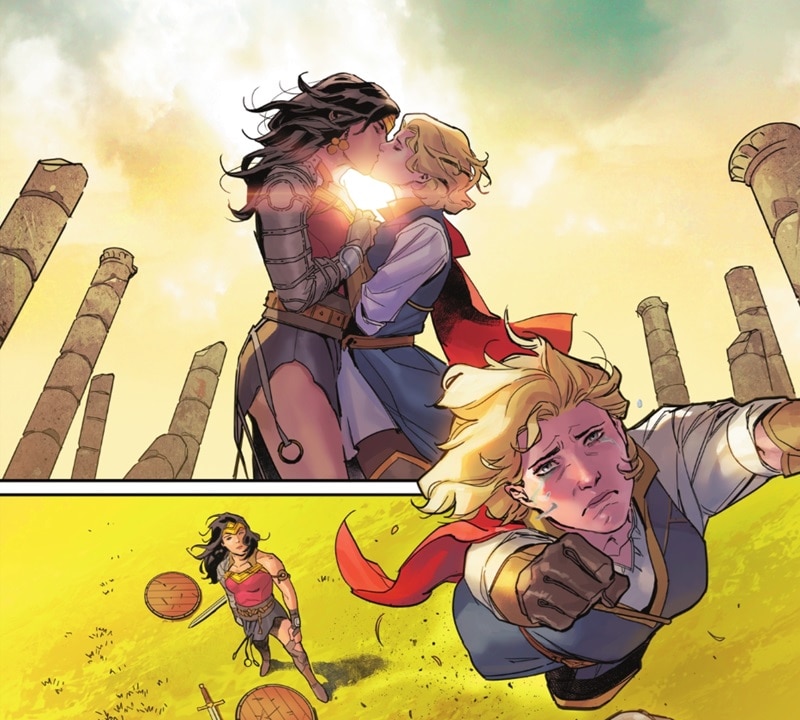
Most recently, and overtly, Diana has been connected in Elseworlds’ swords and sorcery-themed Dark Knights of Steel with Zala Jor-El, their world’s counterpart to Supergirl.
Kal of Tomorrow asks:
What does “PK” stand for at the bottom of the page when referring to another comic issue?
What you’re seeing is what we call an “editor’s note”—a clarifying remark made by the editor of a comic to help clarify events to the reader, usually by referring them to a previous issue. Sometimes they’ll mark their presence with a simple “-ed.” for “editor,” but other times, they’ll insert their own initials. If you’re seeing this in a recently published DC comic, then you’re most likely seeing a remark from editor Paul Kaminski, currently overseeing, among other projects, the DC K.O. event.
Ecot1 asks:
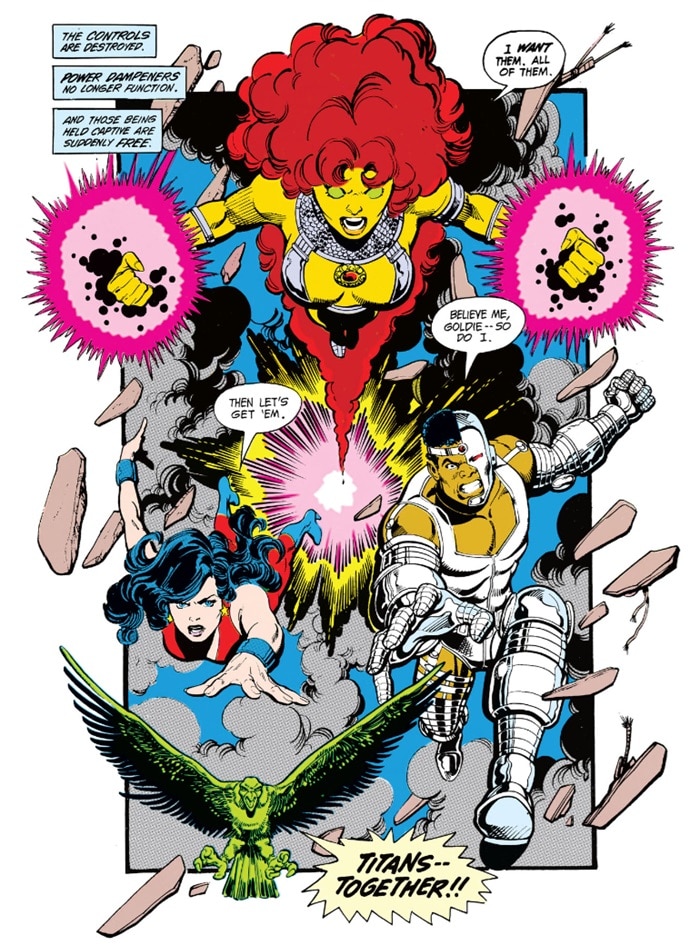
I was wondering who said “Titans Together” for the first time and when it was said.
This is a great question. At first, my instinct was to say that the phrase was popularized by the 2000s cartoon, but of course it’s older than that. The earliest instance I could find was actually in 1984’s Tales of the Teen Titans Annual #3, right at the finale of the most famous story arc in Teen Titans history, The Judas Contract. It’s Beast Boy (then, “Changeling”) who gives the cry for the first time.
Souron1 asks:
When did it become usual for comics to just have one main story, as opposed to being anthologies or composed of several shorter stories like the earliest Detective Comics, Batman or Superman were?
There’s no exact single point where the trend in comic storytelling shifted over, as some titles were early adopters, and others took their time. You could say that All-Star Comics, for instance, was already trying it out in 1940 with the Justice Society of America. But the shift really started in earnest after Stan Lee’s wave of Marvel stories made it popular in the 1960s. Technically, DC’s book length stories predated the Marvel renaissance, with Superman and Justice League of America already engaging in the format by 1960. But as the “Marvel Method” of storytelling gained in popularity, the rest of the publishing industry took note of their uniform book-length story format and largely followed suit.
Lithose asks:
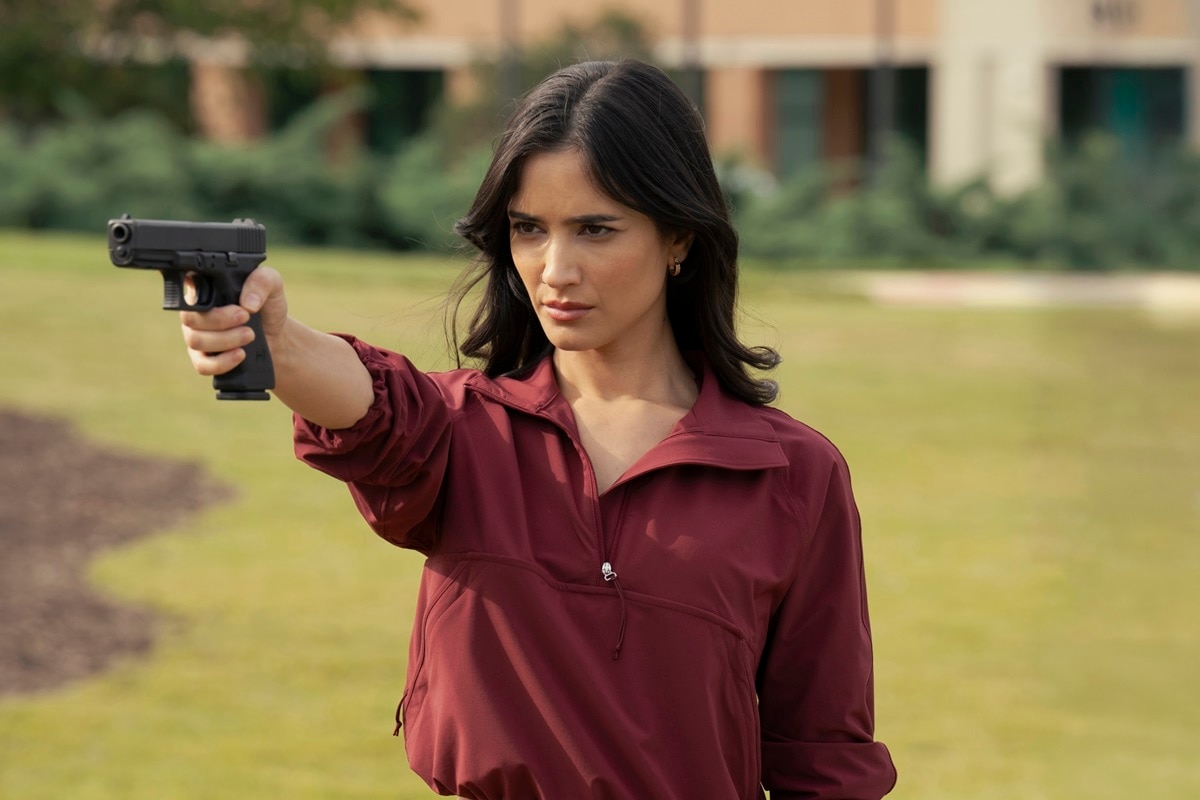
In Peacemaker Season 2, Sasha Bordeaux is considered a meta, but she only has an aimbot eyeball, which makes me wonder why Peacemaker then isn’t considered a meta. His helmets can explode a human or give him x-ray vision.
I’m gonna be real with you, kid. If you’re looking for consistent parameters on what does or doesn’t count as a metahuman, you’re not gonna find them. Is Ray Palmer a metahuman? Is Green Lantern? Is it about the scope of the powers or their nature? It all depends who you ask. As far as Peacemaker goes, the line seems to be drawn at intrinsic powers versus extrinsic powers. If your powers come from an accessory you can take on and off, you’re not a metahuman. But if you have a cybernetic implant, that does classify you as a metahuman. Now, that’s not necessarily the case across the board, but it does seem to at least be where Rick Flag Sr. is making the distinction from his point of view.
That’s just about all the time we have here on the website. But we keep this going pretty much 24/7 over on discord.gg/dcofficial, where you’re free to visit #ask-the-question at any time to satiate your curious mind. It’s as simple as resolving to ASK…THE QUESTION.
Alex Jaffe is the author of our monthly "Ask the Question" column and writes about TV, movies, comics and superhero history for DC.com. Follow him on Bluesky at @AlexJaffe and find him in the DC Official Discord server as HubCityQuestion.
NOTE: The views and opinions expressed in this feature are solely those of Alex Jaffe and do not necessarily reflect those of DC or Warner Bros. Discovery, nor should they be read as confirmation or denial of future DC plans.