Another month, another mystery. Hello, I’m Alex Jaffe, known to our official DC Community as HubCityQuestion. It’s there that I challenge fans to games of trivia, share my personal recommendations and, most importantly, answer just about every single question about DC Comics you can ever think of, no matter how difficult or how silly. Here are some of my favorite cases to cross my desk from the past month.

Msf asks:
I’ve recently stumbled upon repeated use of the phrase "not a dream, not a hoax, not an imaginary story," or some variation upon, in a couple DC comics. I was wondering if you knew anything about the history of the phrase.
Back in the Silver Age of the 1950s and ’60s, a common tactic to get readers to check a comic out was to have something fantastic take place on the cover—like Jimmy Olsen marrying a gorilla or Lois Lane transforming into a centaur. Pretty quickly, readers caught on that these scenarios would end up being dream sequences, or be otherwise misleading (a "hoax"), or what DC eventually started calling "Imaginary Stories" set outside of regular continuity (precursors to what we now call "Elseworlds," if you will). And so, to assure savvy readers, the phrase, "Not a hoax! Not a dream! Not an imaginary story!" began to feature on more fantastical covers.
Perhaps the earliest iteration of the phrase can be found above, on the cover of 1960's Superman's Girl Friend, Lois Lane #15.
(For the record, the “Super-Wedding” referenced here turns out not to be between Superman and Lois at all, but Superman’s lookalike Kandorian cousin Van-Zee, and a dead ringer for Lois named Sylvia DeWitt.)
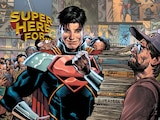
Since then, self-aware comics such as those involving Superboy-Prime, Fifth Dimensional Imps, or perhaps most famously, the introductory remarks of “Whatever Happened to the Man of Tomorrow,” have come to codify the sentiment that, “While we recognize that stunts like this happen all the time in comics, THIS time it’s for real.”

Lithose asks:
Which artist, whether it be comics or animation, has drawn Bruce Wayne the longest and most number of times? Specifically, his actual face without the cowl. If you don’t know, I’ll settle for who's drawn Batman the most too.
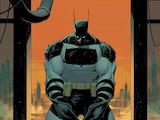
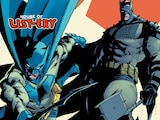
Cowled or not will come to roughly the same number, as most Batman artists tend to draw him with the cowl at about the same rate as non-cowled appearances. But there are still two very different answers to this question, thanks to the increased boom of Batman comics as he became more popular in the late 20th century.
If we’re simply going by the greatest number of issues, the artist who has drawn Batman most frequently for DC would be Jim Aparo, who drew Batman in nearly 400 issues between 1971 and 2001. But in terms of who’s been active as a Batman artist for the most years, that would indisputably have to go to Neal Adams, who first drew Batman for DC in 1967, and kept on drawing him until 2021—a Batman career of 54 years.
beware MyPower asks:
Was there a Green Lantern of 2814 when the dinosaurs went extinct? If so, why didn't they protect them?
Actually, there is an explanation for this in John Ostrander and Tim Truman’s Martian Manhunter #21. Eons ago, the Guardians introduced themselves to the Martians, peddling their new protection program to them. Martians got such a bad vibe from them that they told them to get lost from their solar system for as long as they were around. And so, Green Lanterns only started patrolling our solar system again when the Martians were wiped out.

Souron1 asks:
What was the maximum number of Bat-books that Chuck Dixon wrote simultaneously?
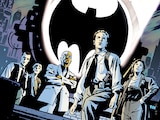
For a time in the 1990s and early 2000s, Chuck Dixon's name across the DC line was practically ubiquitous. To verify Peak Dixon, however, I had to go through his entire publishing history to compare his credits for each month of his career. My findings are that we reach critical mass on Dixon’s Bat-titles twice in his career, with seven credits across those months: April, 1997 (Robin, Nightwing, Detective Comics, Detective Comics Annual, Robin Annual, The Batman Chronicles and Batman/Wildcat), and July, 2001 (Robin, Nightwing, Birds of Prey, Legends of the Dark Knight, Gotham Knights, Nightwing: The Target and Nightwing: Our Worlds At War).
JJ asks:
In Batman (1940-2011), when did Dick Grayson begin to physically grow up and leave the role of Robin?
"Begin to" is the key clause here, as it was a process which occurred gradually over a long period of time. Between 1965 and 1966, Robin grew from Boy Wonder to Teen Wonder alongside the founding of the Teen Titans—and, by necessity, to match an older Burt Ward in the contemporary Batman TV show. We can earnestly say that Robin's evolution into a more independent hero started in 1969's Batman #217, when Dick left Wayne Manor to study at Hudson University. While that didn't stick, from that point on, Dick became less of a constant presence in his mentor's shadow. He would complete the move towards independence by adopting the Nightwing mantle right in the middle of Teen Titans: The Judas Contract, in 1984's Tales of the Teen Titans #44—an act meant to fully commit him to the world of the Titans, as Jason Todd moved into the Robin role.

ARCANUM asks:
Where did the idea of Wonder Woman liking ice cream come from?
Between Diana’s fanatical fondness for frozen confections in the 2017 movie and DC Super Hero Girls, of late it can sometimes feel like she’s always felt this way. But in truth, it’s a relatively new invention. It was Geoff Johns who introduced Diana to ice cream as a symbol of the goodness that could be found in man’s world early in the New 52, in a sequence found in his Justice League #3.
Seraph asks:
I’m reading Green Lantern/Green Arrow #82 and Dinah just referred to her late husband Larry. I was under the impression that Larry Lance was the husband of the elder Dinah, yet this Dinah is currently in a relationship with Ollie, which implies to me that this is the younger Dinah. Which Black Canary is this in this era?
Okay, this is a pretty confusing and controversial period in Black Canary’s history you’ve stumbled into between Black Canary’s introduction to the Justice League in 1969 and Crisis on Infinite Earths in 1985. Prior to the Crisis, there was this complicated mind transplant narrative of Dinah Drake’s consciousness being transferred into her own daughter, so that she could have her JSA history from Earth-2 while still being a younger hero who could be romantically connected to Green Arrow. It was pretty wild, inelegant and, frankly, unnecessary, and one of the many snarls of continuity which were straightened out after the Crisis with the implementation of the JSA as the superheroic age of a generation past.

Mithrophon asks:
When was the last time Crazy Quilt appeared as the primary villain of a comic story (as opposed to in the background or part of an ensemble)?
It’s been quite a while. In fact, Crazy Quilt hasn’t appeared as a primary villain at all since Crisis on Infinite Earths. The last time he appeared was as one of the final tests before the original incarnation of Jason Todd could prove himself as Robin, as an enemy who has nearly always made Robin himself the target of his ire instead of Batman. Crazy Quilt’s last stand can be found in 1983’s Batman #368.
AfterDark asks:
Do Shazam and Wonder Woman share any connection in-universe?
They’ve fleetingly orbited similar circles in the past, but like many of the individual heroes of Greek myth who called various gods their patrons, Billy Batson and Diana have had little to do with each other directly. After all, Diana’s benefactors tend to be among the goddesses of Olympus, while the Power of Shazam is bestowed by many of its male Gods and Titans.
Mary Bromfield, on the other hand, is a different story. Back in the Golden Age, Mary’s powers were sometimes said to come from her own set of goddesses—the grace of Selene, the strength of Hippolyta, the skill of Artemis, the speed of Zephyrus, the beauty of Aphrodite, and the wisdom of Minerva. This derivation of her power source was recently rekindled in 2023’s Lazarus Planet: Revenge of the Gods, when a newly ascended Hippolyta, as God of the Amazons, chose Mary from among mortalkind to rise as her personal champion. The Captain and Wonder Woman may bear no relation directly, but both call Mary their sister.

Monster_Society asks:
I've noticed "Soder Cola" is a brand that's been in the background of various DC projects, alongside "Big Belly Burger." Where and when did Soder Cola & Big Belly Burger make their debut?
The seemingly unassuming, but now ubiquitous, branding of Big Belly Burger and Soder Cola are products of the early “Triangle Era” of Superman comics, cropping up for the first time in 1988’s Adventures of Superman #441 and 1991’s Action Comics #663, respectively. So what’s the secret to these stand-in brands sticking around all these years, when so many others have fallen by the wayside? That would be their intersection with one of the most widely read events in DC Comics history: The Death of Superman. With the world watching Metropolis for the Man of Steel’s last stand and its aftermath, Soder Cola and Big Belly Burger were among the brands that could be found decorating Metropolis with their fictionalized presence, making them feel like a part of the city that always existed just when everyone who’s ever had feelings about Superman was checking in. Nothing says “Branding Opportunity” like a national tragedy!
Superman Lover asks:
Why haven’t I met Superman yet?
You need to look up.
…After all, whether it’s in the sky, or in the comic book archives, looking up is all I do. And it’s my pleasure to keep on doing it to find the answers you crave. All you have to do is ASK…THE QUESTION.
Alex Jaffe is the author of our monthly "Ask the Question" column and writes about TV, movies, comics and superhero history for DC.com. Follow him on Bluesky at @AlexJaffe and find him in the DC Official Discord server as HubCityQuestion.
NOTE: The views and opinions expressed in this feature are solely those of Alex Jaffe and do not necessarily reflect those of DC or Warner Bros. Discovery, nor should they be read as confirmation or denial of future DC plans.