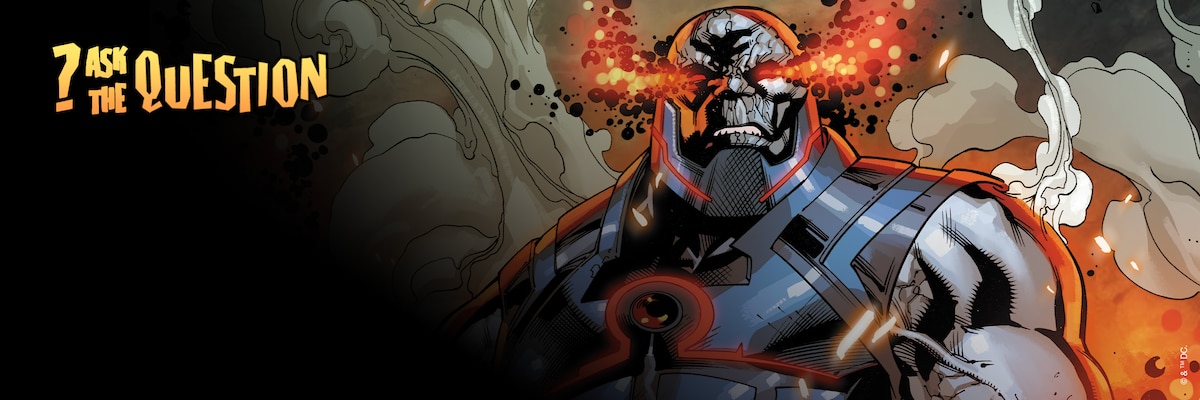
You know what they say, ask a DC question, get a DC answer. Hello, I’m Alex Jaffe, popularly known amongst our rambunctious official online community as HubCityQuestion. My duty: to help you navigate the vast, fractally expansive kingdoms of the DC Universe, charting the way towards clarity and understanding. I’m out here in these streets answering questions like the ones you’ll see below every day, but you can consider this monthly column a collection of a few recent favorites. Here’s what I’ve dug up for you all this time.
santa slade asks:
Is Mantis still canon to DC? As the writer brought the character from Marvel to DC to Eclipse Comics back to Marvel again, but could DC ever use Mantis again?
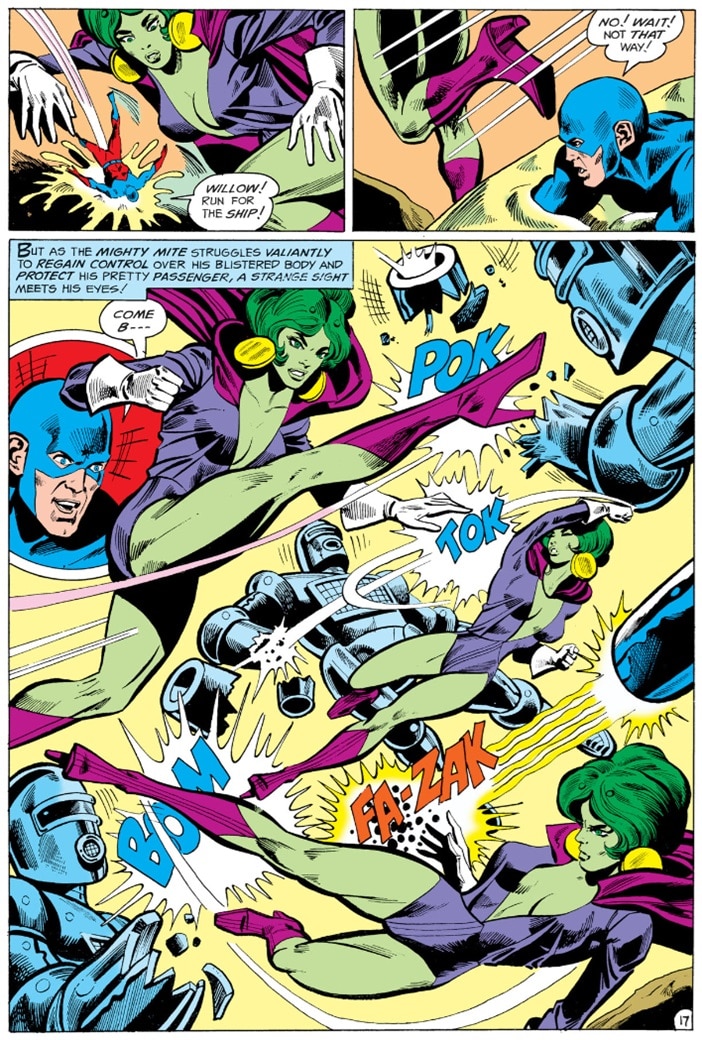
I understand what’s going on here, and it appears to be the result of a little bit of comic book mythology telephone. For those unfamiliar, Slade here is referring to a legendary industry story regarding the origins of the Marvel Comics character Mantis, created for The Avengers by Steve Englehart and Don Heck in 1973. There, Mantis was set up in the role of a “Celestial Madonna,” the fated mother of a cosmic chosen being. Shortly after creating Mantis, Englehart wrote further stories as a freelancer at large about the destined bearer of a cosmic champion across multiple publishers, before returning to Marvel. At DC, a similar figure appeared in Englehart’s Justice League of America #142, under the name of “Willow.” Eclipse Comics’ Scorpio Rose #2, also by Englehart, likewise featured a character in that same role who went by “Lorelei.”
In the broader scope of Englehart’s body of work, you can form a narrative of a figure adrift in the infinite cosmos who takes a grand odyssey before returning home to deliver her fated child. From a legal standpoint, however, and from DC and Marvel’s perspective, Mantis, Lorelei and Willow are entirely distinct characters, even if they were written by the same author along the same themes. No “rights” to any character were ever brought over between publishers. It’s possible that Englehart himself may consider them all parts of the story he was telling, but only Willow belongs to the history of the DC Universe. Intellectual property law! Based on my inbox, you just can’t get enough of it.
Green Loontern asks:
Why is it called Jack Kirby’s Fourth World, and are there Worlds 1-3?
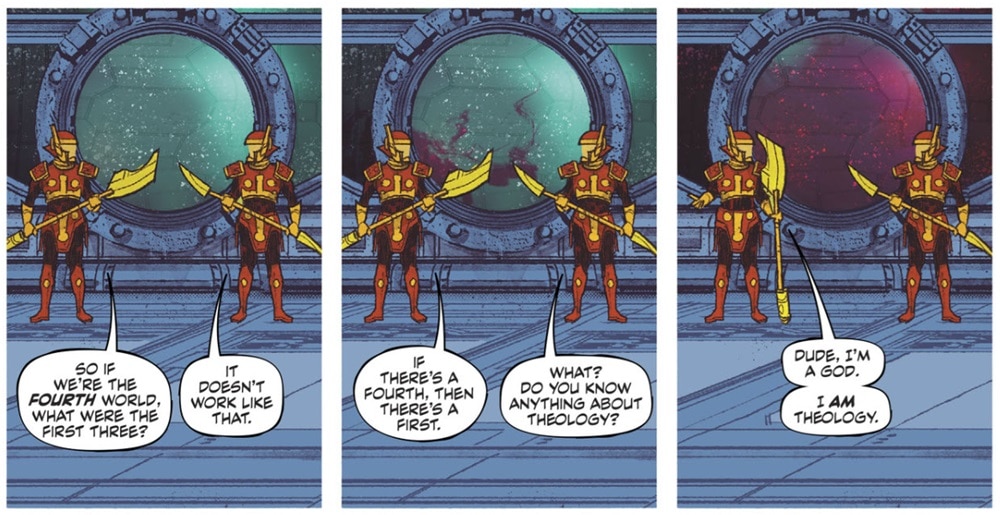
Believe it or not, this happens to be one of the stickiest unresolved questions we have in the DC Universe. Within the narrative, it’s been clear for a long time that the “Fourth World” refers to the fact that there have been three dynasties of Old Gods before the current status quo of New Genesis and Apokolips’ warring factions, which defines the New God dichotomy. But that’s all post facto, provided textually long after Kirby himself had stepped away from the story. So where did the term “Fourth World” come from? As far as we know, Jack Kirby never explained it. The best we have to offer are educated guesses.
Personally, I always saw the term “Fourth World” as descriptive of a state that exists apart from the world we know. In the tumultuous Cold War during which Kirby’s Fourth World saga was written, it was colloquially said that the world as we knew it was broken up into three realities: a first world of developed nations functioning under capitalism, a second world of developed nations functioning under communism, and a “third world” of nations too poor to be active participants in the rivalry between the first two. The “Fourth World,” to me, always suggested the idea that there was a realm beyond even the realities we could conceive of, of gods who existed above our own struggles operating on a stage we could barely imagine.
Alternatively, I’ve also seen it suggested that the “Fourth World” terminology may be the result of Kirby picking up on ideas from Native American Hopi creation lore, which itself draws on the concept of a Fourth World after three stages of spiritual creation. Kirby was known to draw inspiration from a wide berth of mythological sources, so it’s not necessarily an impossible explanation.
The simplest, and maybe least fun, explanation I’ve seen, is this: the first time we see the term “Kirby’s Fourth World” applied in print, it’s on the covers of the fourth issues of New Gods, Mister Miracle and The Forever People. The explanation here is that it’s just the result of some slightly clumsy phrasing about the fourth cross-title installment of Kirby’s ongoing cosmic saga, which somehow stuck in its esoterism. I’ve got to say, somehow, this one feels just anticlimactic enough to be believable.
UPDATE: After we published this article, legendary Batman, Justice League, and, er, “Willow” writer Steve Englehart reached out to me personally to share his own theory about the origins of the “Fourth World” terminology, I thought I’d share with you all here:
Hi Alex -
“Regarding Kirby’s Fourth World—I don’t know this for a fact but I always thought it was Kirby’s reference to his four incarnations : First World – the ’40s with the superheroes for Marvel and DC : Second World – the ’50s with his own company, inventing romance comics, etc : Third World – the ’60s Marvel Universe : Fourth World – the ’70s Fourth World.”
Highballtism asks:
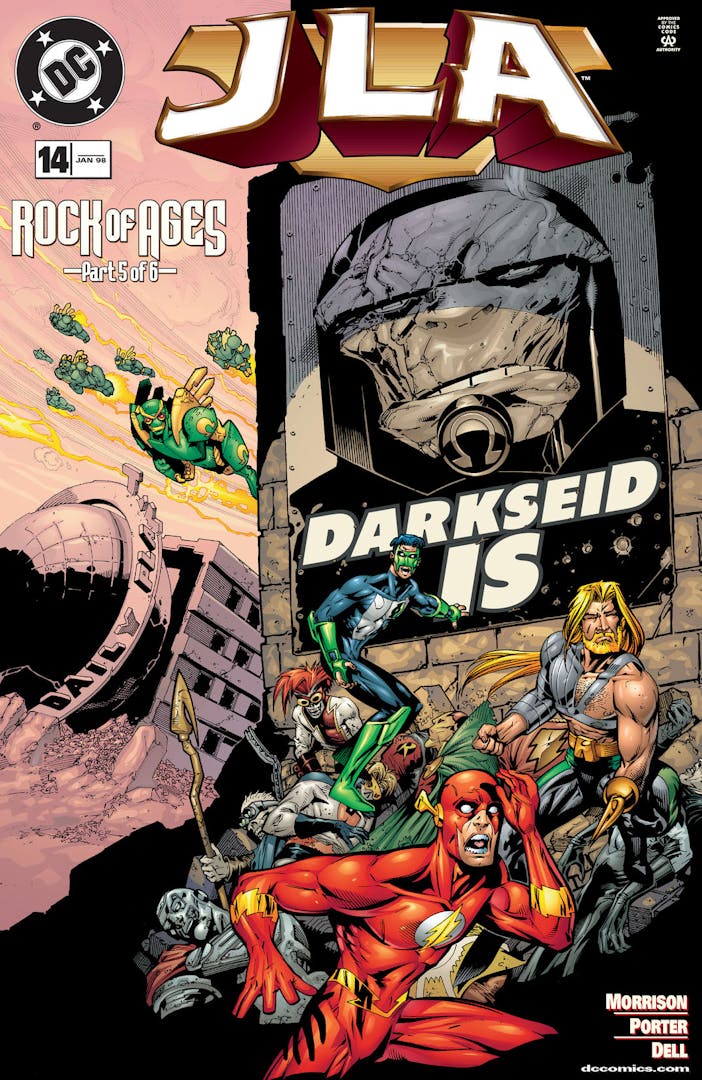
What does “Darkseid is” mean?
First coined in Grant Morrison’s JLA run from the late ’90s, and popularized in more recent years through Tom King’s Mister Miracle, “Darkseid is” can be interpreted as an inverted allusion to the Biblical concept of the singular God, who asserts their existence with a tautological declaration of “I Am that I Am.”
When Darkseid and his followers declare that “Darkseid is,” they are stating that Darkseid is a fundamental truth of the universe, as both an individualized entity and a deific manifestation of the concept of evil, and as integral to the fabric of reality as any force of nature. “Darkseid is” is an assertion that the concept of Darkseid cannot be excised from an operant universe. You cannot defeat, negate or refute Darkseid in any way that matters, because no matter what, Darkseid is.
Mithrophon asks:
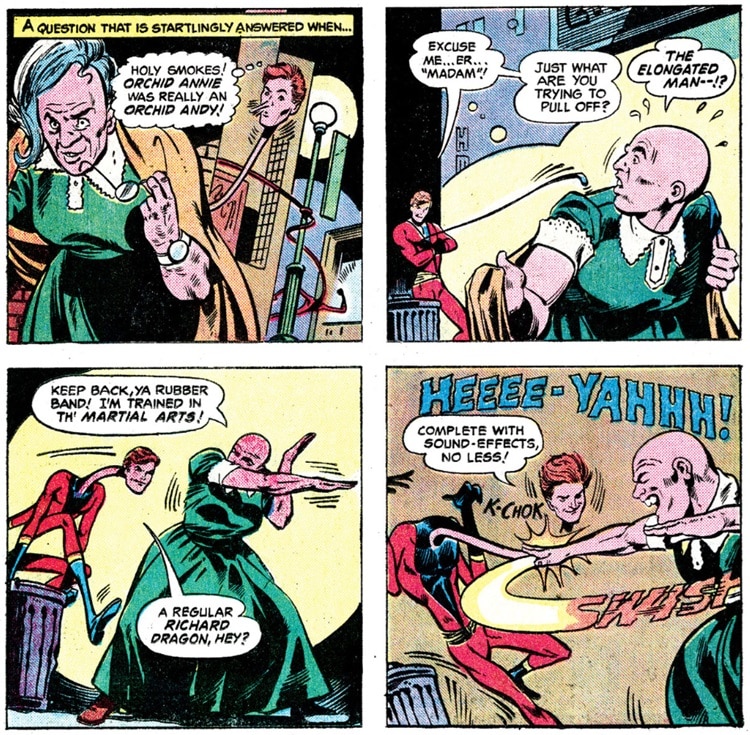
Did Elongated Man ever have a costumed nemesis that was uniquely his own?
Created as a supporting character for the Flash, and the (ahem) extended body of his work being alongside the Justice League, Ralph Dibny hasn’t had too many opportunities to make enemies of his own. For the most part, his few solo adventures, as featured mainly in back-ups of Silver Age Flash and Detective Comics issues, usually involved foiling jewel thieves, stick-up artists and occasionally aliens (as was common in Silver Age comics across the board).
There are a few exceptions and technicalities, however. Technically speaking, Elongated Man’s first exclusive costumed nemesis was a thief named Billy Brown in Detective Comics #351, whose costume was one of Elongated Man’s own old uniforms which he had stolen for himself. Brown had hoped the costume would have given him stretching powers, only to find it didn’t work that way. In Detective Comics #356, Ralph once again contends with “costumed criminals,” specifically a gang of thieves who dressed as infamous historical criminals like Billy the Kid, Dick Turpin and Jean Lafitte. In Detective Comics #462, Ralph pursues a criminal disguised as an elderly flower saleswoman, calling himself “Orchid Annie.” Not exactly a legendary rogues gallery considered altogether, and none of whom have ever been seen more than once.
We will note that Ralph did encounter some bona fide supervillains of his own during a European tour in the elusive 1992 Elongated Man miniseries, never seen outside the confines of those four issues—including the French snail-themed L’Escargot, the Italian squid-themed Calamari and the German sausage-themed supervillain gang, the Wurstwaffe. So, watch out for those guys the next time you head out to Oktoberfest.
Agent of AFK asks:
How many different Justice Leagues are there in all of history? To clarify, I’m not talking about different versions of the JL, but actually different teams like the Justice League Red and Justice League Unlimited.
That's a pretty big question. So, before I answer it, let’s set some ground rules. There are a lot of tiny Justice League variants that appear in just a few issues or so, or in very minor capacity, like the "Justice League Antarctica" team of supervillains who once tried for a stint at reformation, or the various Justice Leagues of the 2001 "Justice Leagues" series (Amazons, Aliens, Anarchy, etc). There are also a lot of variations you can find throughout the multiverse, but that feels to me outside the scope of this question. We’ll be considering substantial iterations and offshoots of the Justice League, as featured in the central continuity.
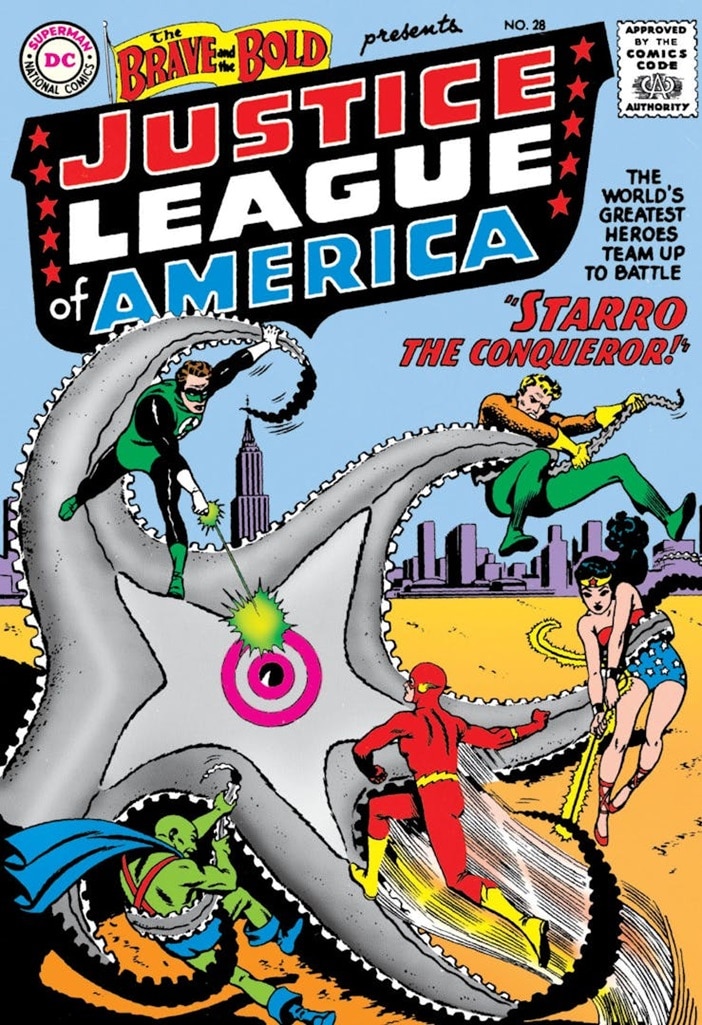
The first version of the team, unless you want to retroactively count the Justice Society, is the Justice League of America. The classic, original incarnation of the team disbanded in the 1980s, followed by a short term team led by Martian Manhunter and including members like Vibe and Cynthia Reynolds often colloquially called "Justice League Detroit."
After that came the founding of Maxwell Lord's Justice League, rebranded shortly after their founding as Justice League International. Some roster changes and expansions eventually splintered Justice League International into Justice League America and Justice League Europe for the period of the early ’90s.
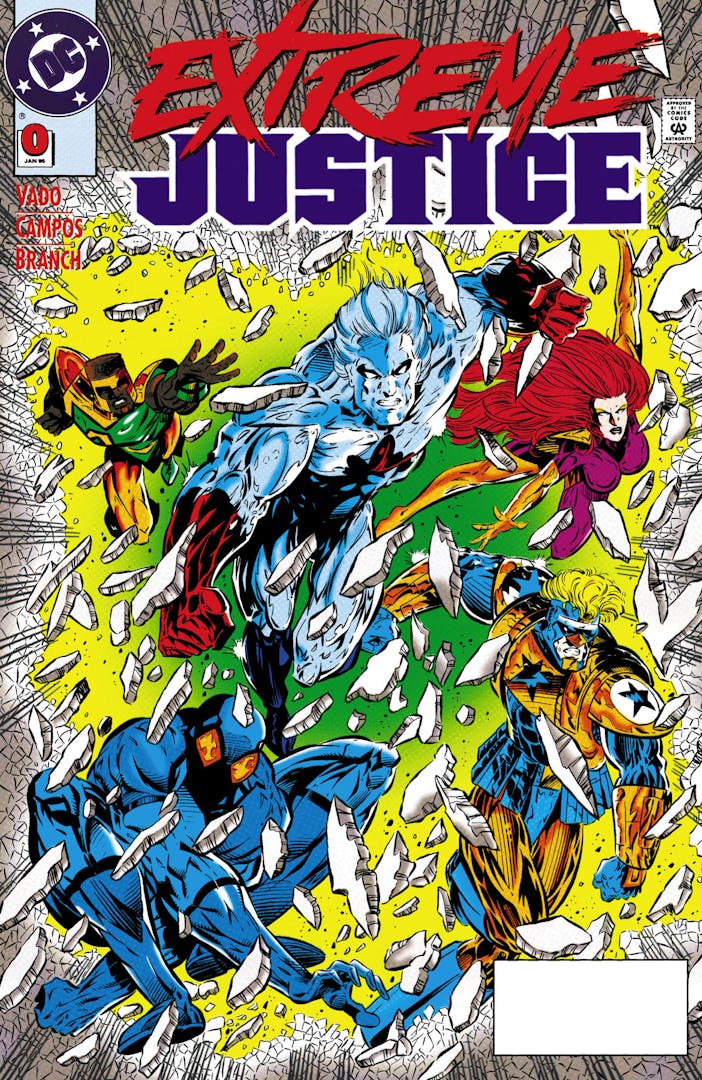
Operating outside the jurisdiction of these teams in the mid-’90s was a group led by Captain Atom who called themselves "Extreme Justice." At the time, there was also the "Justice League Task Force," coordinated by Martian Manhunter with a rotating cast of operatives best suited for each mission. Some time after the original JLA was restored, we also saw a "Justice League Elite," led by Manchester Black, which took a more controversially proactive, aggressive approach towards justice.
In the New 52, Amanda Waller founded her own "Justice League of America" as a potential counter to the Justice League operating outside the government. Around this time is also where we see the founding of Justice League Dark, a team assembled to handle the dark magic side of the DC Universe, and shortly after, a modular "Justice League United" based in Canada that dealt with stranger, more cosmic missions than the main Justice League, usually involving Adam Strange.
Early in the Rebirth era, we saw the foundation of the Justice League of China, featuring members such as New Super-Man, and an incarnation of the Justice League of America founded by Batman that rebranded itself later as the Justice Foundation, championing causes to aid humanity in ways other than fighting supervillains.
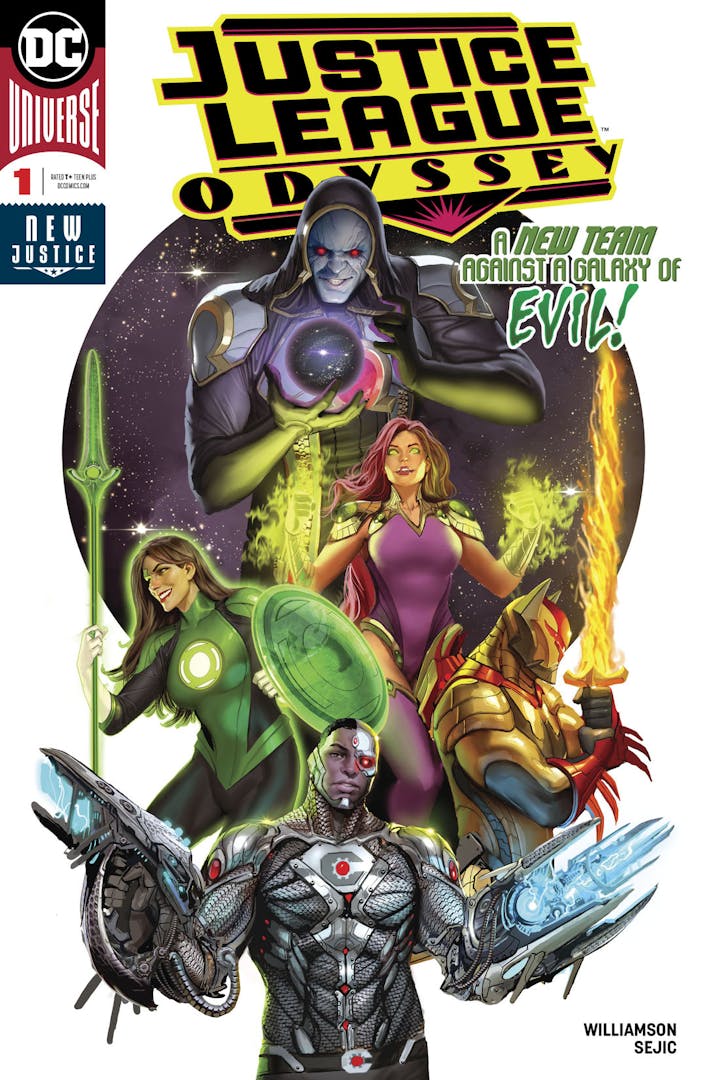
Following Dark Nights: Metal, there was a team colloquially called "Justice League Odyssey," including Cyborg, Starfire, Jessica Cruz and Azrael, which pursued Darkseid into deep space. Sort of a temporary splinter group for a single protracted mission.
That brings us to today, where, following Absolute Power, practically every active superhero has been streamlined into an all-encompassing Justice League Unlimited, along with Red Tornado’s recently founded “Justice League Red” side project to covertly settle algorithmically determined impending crisis points.
That should cover just about everything! But I can already see the new shiploads of cases peeking out for me from just over the horizon. I’ll see you back here in a month for our next column. But if you can’t wait that long, you can always catch me in the DC Community. I’m there every day, for anyone curious enough to ASK…THE QUESTION.
Alex Jaffe is the author of our monthly "Ask the Question" column and writes about TV, movies, comics and superhero history for DC.com. Follow him on Bluesky at @AlexJaffe and find him in the DC Official Discord server as HubCityQuestion.
NOTE: The views and opinions expressed in this feature are solely those of Alex Jaffe and do not necessarily reflect those of DC or Warner Bros. Discovery, nor should they be read as confirmation or denial of future DC plans.