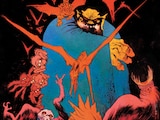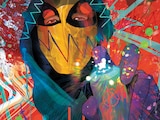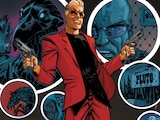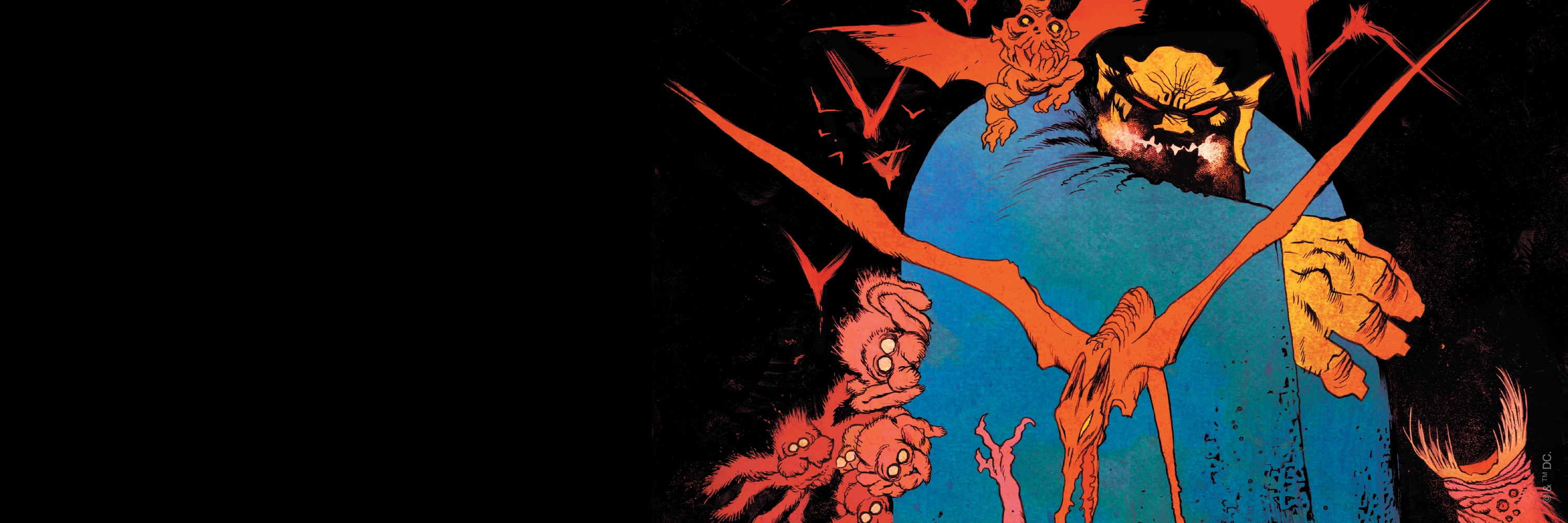
The bowels of Hell have come to pay a call on the DC Universe with the recent debut of James Harren's The Demon. The most notorious rhyming monster in DC’s retinue is once again cavorting with mortals, which may leave those unfamiliar with his proclivities with some confusion. Is he hero or monster? What are his goals? Does he really need to talk like that? We may not be qualified to dispel any supernatural entities, but we are here to dispel some myths and mysteries around them.
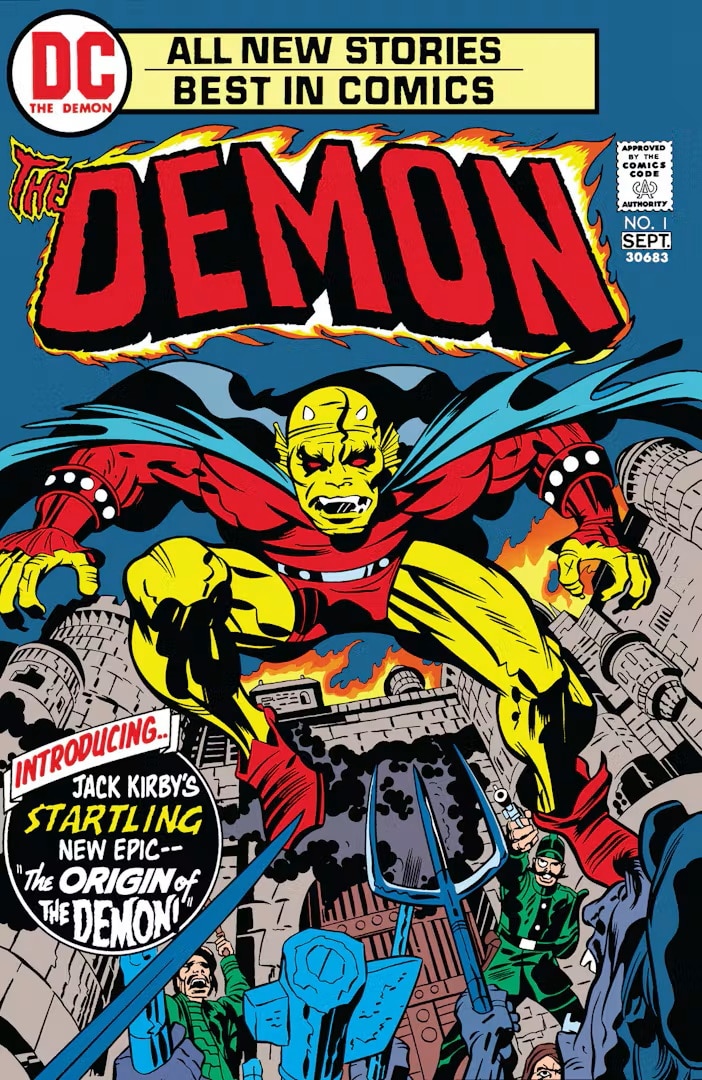
If his name is Etrigan, why do the comics call him “The Demon”? Why not title them “Etrigan”?
The novelty of Etrigan back in 1972 was that there weren't a lot of major figures in comics who were explicitly demons. The fact that the hero of creator Jack Kirby’s comic was a demon was the big selling point. Nowadays, you can probably name more than a few significant heroes tied to Hell, but Etrigan was pretty unique at the time. So, in respect to that legacy, he remains “The Demon.” But you can call him Etrigan if you like. Etrigan is the character. The Demon is the comic. Though if someone starts talking about "The Demon" in a comic book set within the DCU, they're probably talking about Etrigan.
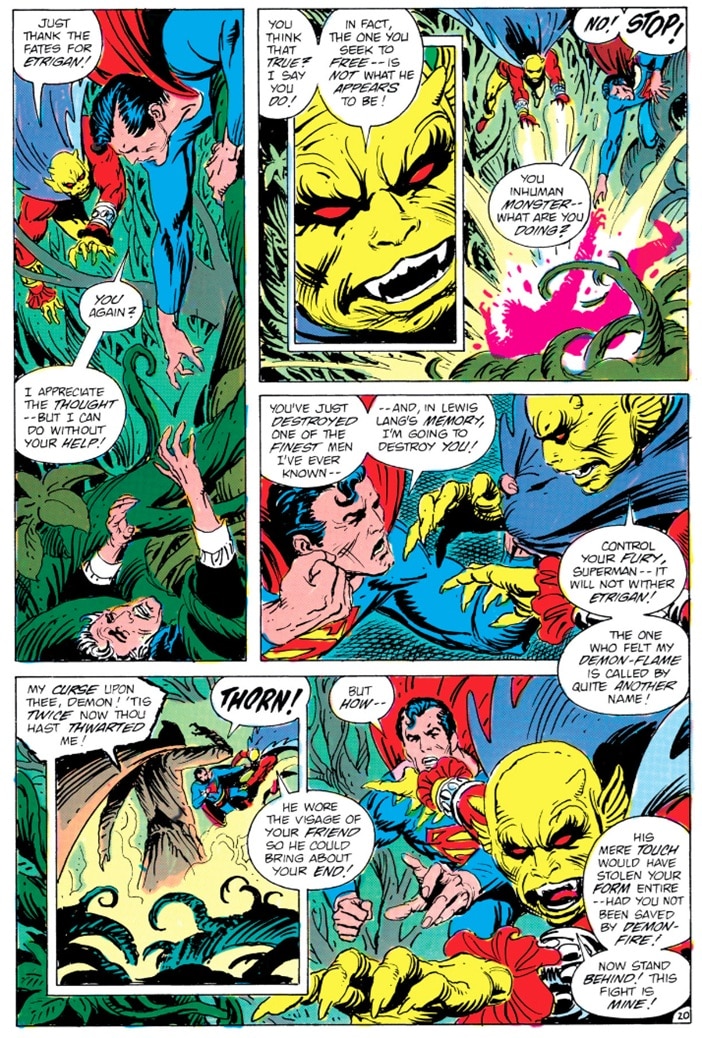
Okay, so what’s up with the rhyming?
In the original Jack Kirby series, the rhyming scheme was a puckish quality that Etrigan reserved for special occasions, to emphasize a particular point—much as Shakespeare would in his own folio. It was writer Len Wein in an issue of DC Comics Presents who brought Etrigan's rhyming quality to the fore, insisting that every line of dialogue meet a rhyme scheme. What that scheme was could vary between writers, and some writers would go back to Kirby's original scheme of deploying it only for emphasis.
As for why he does it, there are a couple schools of thought, and textually provided explanations. The most famous, put forth by Alan Moore for an Etrigan guest role in his famous Saga of the Swamp Thing, portrays it as a mark of rank within the highly regimented hierarchy of Hell. Speaking in rhyme is a mark of demonic nobility, a vocal display of one's advanced station. (Though not too advanced. Once you really get further up the chain, demons apparently go back to talking without rhymes. So, it's more like a mark of middle management.)
Another, more recent explanation was proposed by Joanne Starer in her Fire & Ice: When Hell Freezes Over miniseries. It's here that we finally get Etrigan's confession: he only really does it because he knows it annoys people.
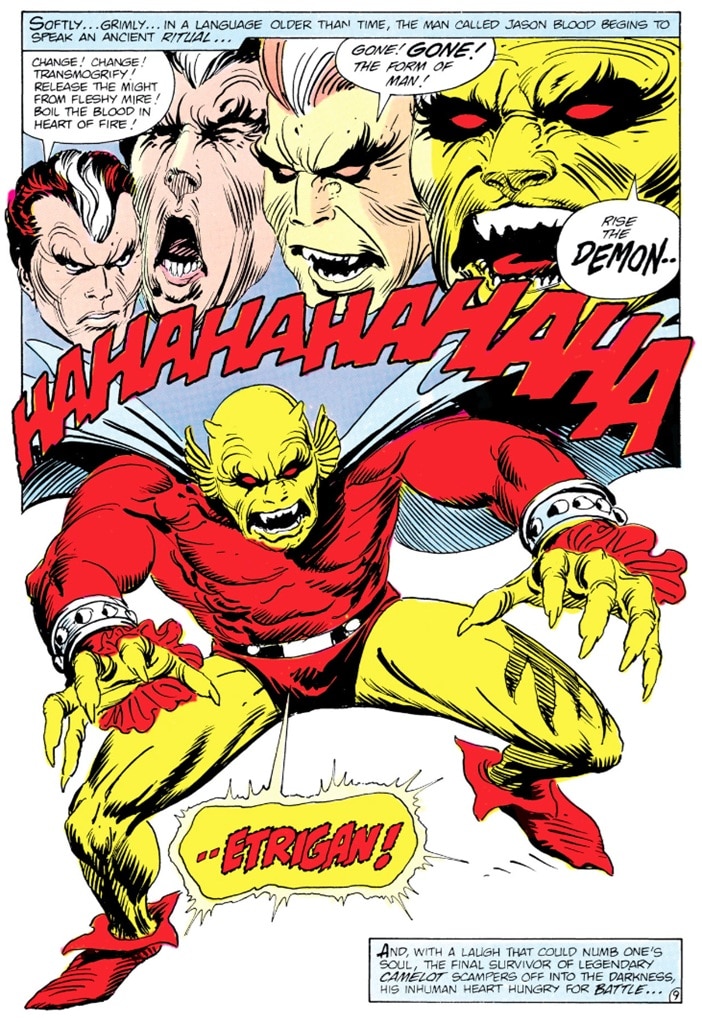
Why does he look like that? And why is he yellow?
First off, I'm not sure he's necessarily yellow. Sometimes he's closer to orange? It really depends on the colorist. But according to creator Jack Kirby's longtime assistant Mark Evanier, Kirby was inspired by an old strip of the 1930s adventure comic Prince Valiant, where the titular prince dons a demon disguise that bears a striking similarity to the gargoyle-like visage we better know as Etrigan's today.
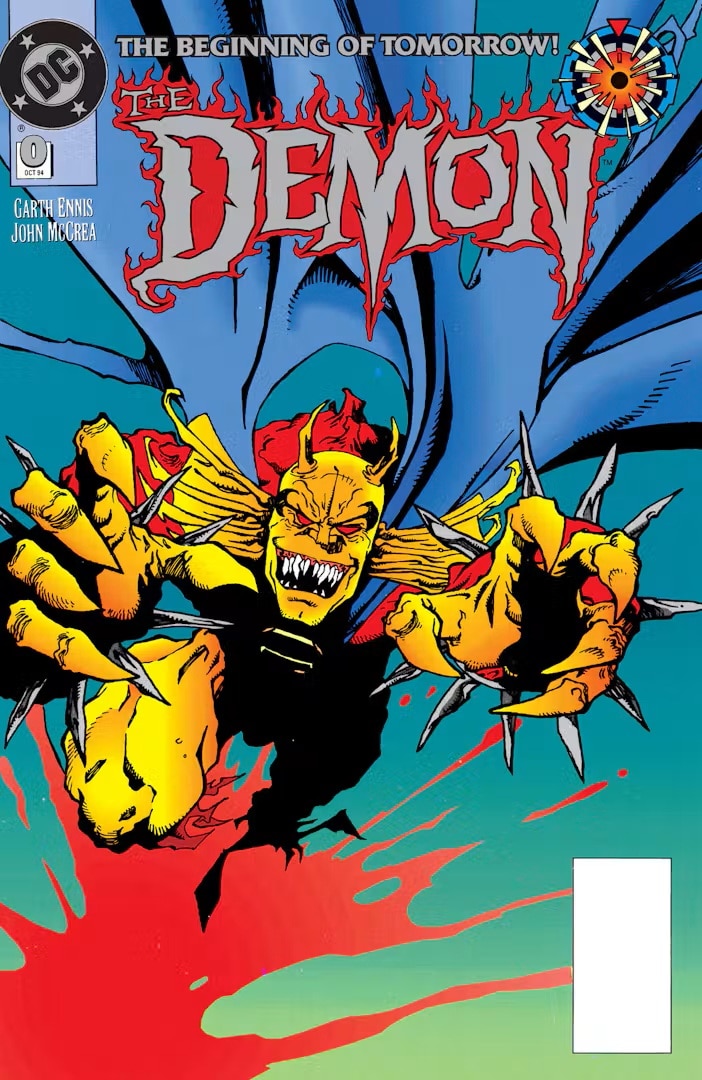
Didn’t he take over Hell?
Yeah, a couple times, but that never sticks. It's a slippery hierarchy.
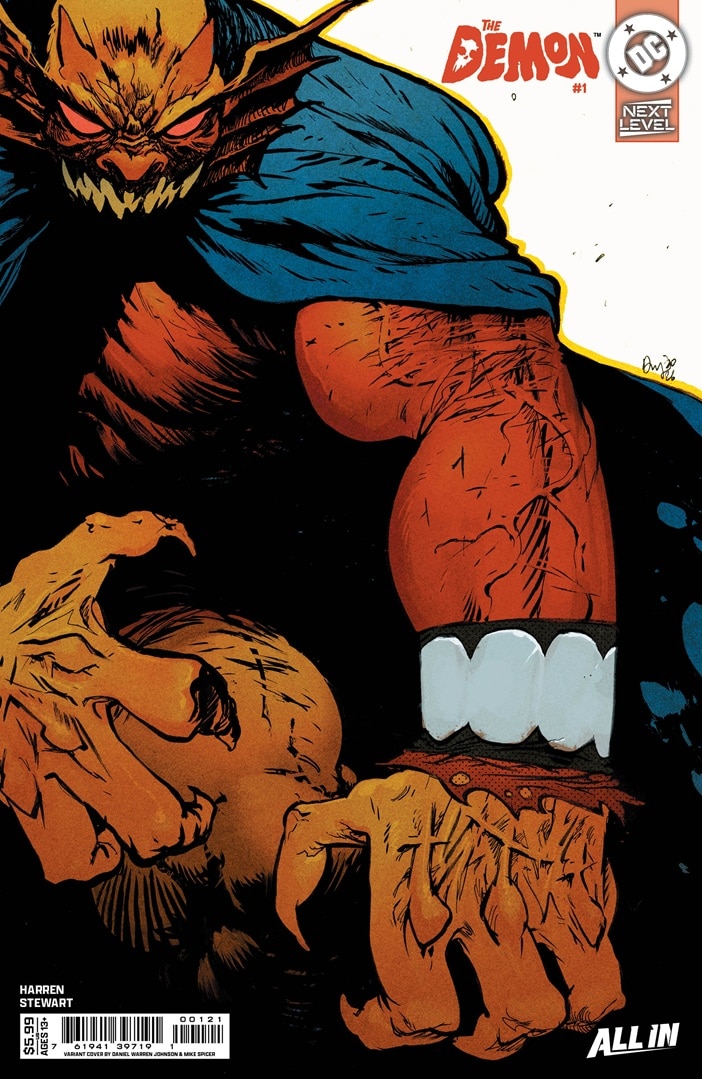
So, is he a hero, or what?
He's a demon. He also happens to be the half-brother of Merlin. Yes, *that* Merlin. In the lore of DC history, both were fathered by the demon Belial, except Merlin had a human mother.
The truth of how Etrigan began his escapades on Earth is an elusive one. What we know is that Merlin bound the soul of Etrigan over a thousand years ago to a mortal named Jason Blood. Some say he was a knight in King Arthur's court, or a scribe in Merlin's service. Others claim he was once a pagan priest, or just a humble peasant until Merlin foisted the curse of Etrigan upon him. What Jason gained in the bargain was eternal life and a chaotic demon forever whispering in his ear. With a rhyming incantation, Blood had the power to willingly send himself to Hell in exchange for Etrigan working in his stead against forces of dark magic, such as Morgaine le Fey and Klarion the Witchboy.
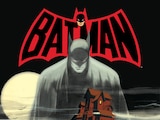
In the modern day, Jason tends to take up study in Gotham City as one of the world's foremost demonologists and Batman's go-to expert on all things supernatural. Jason only calls upon Etrigan when absolutely needed, as the process—and the demon himself—tend to be rather unpleasant.
Because his soul is bound to Jason's will, Etrigan is usually forced to act in the interests of good, but that doesn't mean he won't make a mess along the way or look for a loophole that will let him slip out of his forced arrangement. So, when the Demon's around, you can be pretty sure he's on your side to deal with something even nastier than he is...but always stay on your guard.
The Demon #1 by James Harren can now be read on DC UNIVERSE INFINITE.
Alex Jaffe is the author of our monthly "Ask the Question" column and writes about TV, movies, comics and superhero history for DC.com. Follow him on Bluesky at @AlexJaffe and find him in the DC Official Discord server as HubCityQuestion.