Barbara Gordon: Breakout casts one of Batman’s greatest allies not as Batgirl, and not as Oracle, but inmate #682281. Jailed by the corrupt Commissioner Vandal Savage for her association with the criminal vigilante Batman, Babs promises us as she was taken away in handcuffs that this will be the story of Savage’s reign over Gotham being taken down for good. And so, we find ourselves with not just another master plan from the smartest crimefighter in Gotham, but a setting taking us to one of our very favorite tropes: the prison arc.
We love a prison story for the near-claustrophobically confining premise, setting up the rules for our hero to find the tools they need within and without to survive—and, more often than not, escape. The DC Universe is rife with great prison stories, a longstanding tradition that Barbara Gordon: Breakout is now joining. Here are just a few of our favorites.
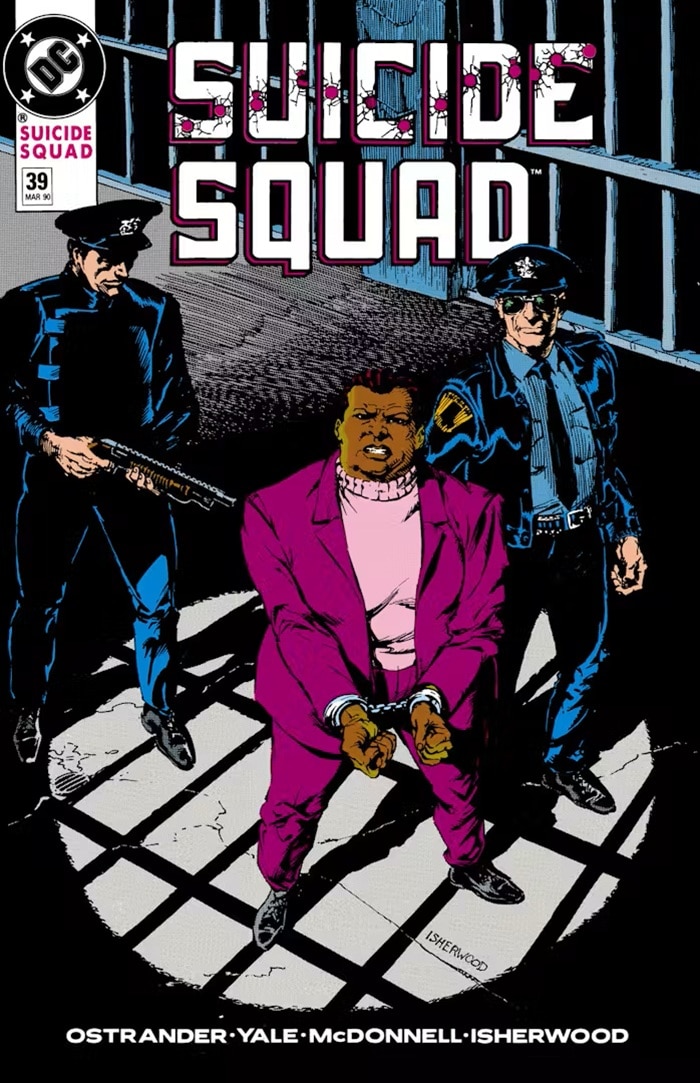

Suicide Squad (1987)
What makes John Ostrander and Kim Yale’s original Suicide Squad run the most beloved by fans to this day? Partially its nuanced exploration of its teammates, the complex morality of Amanda Waller and the sense of humor against politically charged storylines…but also its sense of space. Belle Reve Penitentiary, home to Task Force X’s prisoners awaiting the full commute of their sentence, has never felt more alive than in this series.
Belle Reve inhabits its hallways with administrative characters like Flo Crawley, Simon LaGrieve and John Economos (a name that should be familiar to Peacemaker fans) alongside Waller’s own commanding presence and the Squad themselves. As envisioned by Yale and Ostrander, the Squad was never really about casualties—that was always a pretense. It was about a space shared between an unlikely set of characters forced to live together, and how those relationships might grow.

52
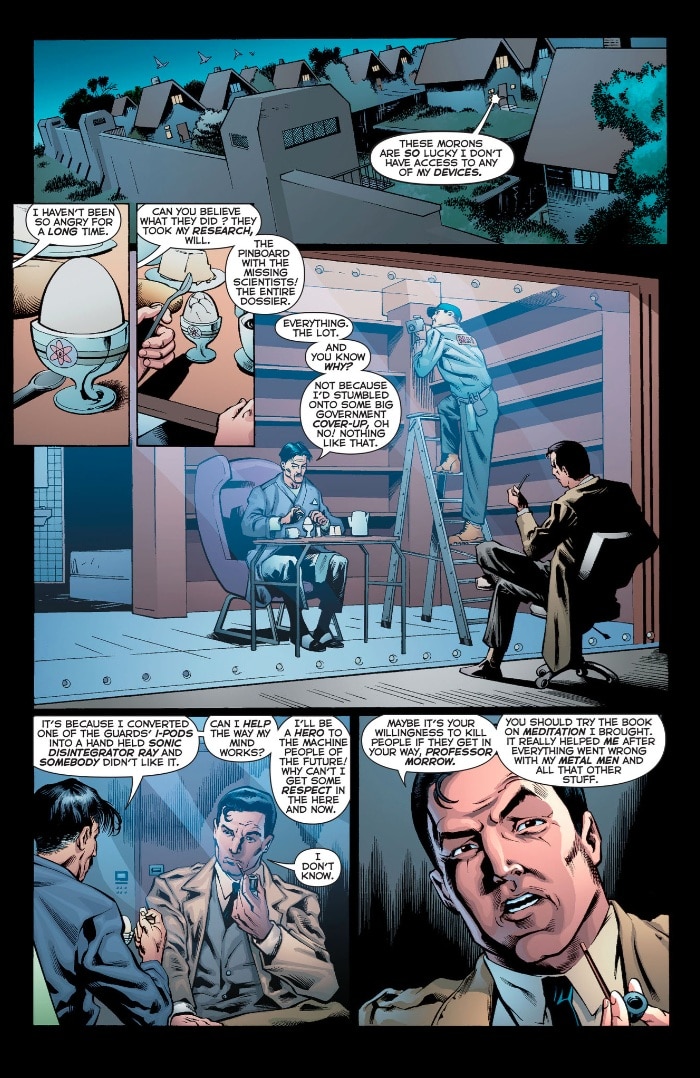
In a series heavy with some of the richest ideas by the most imaginative writers in comics at the top of their game, the weekly world-exploring 2006 series of 52 found new ways to incite the imaginations of readers every week of its run. One of the earliest enticing concepts was that of “The Haven,” a maximum security open air prison in the form of a pleasant suburban community, where the world’s most notorious mad scientists were kept in check. One such villain, T.O. Morrow, hosts regular visits from the Metal Men’s Will Magnus in the early weeks of the series. The pair trade theories on the developing circumstances of the world around them until both vanish to parts unknown (to Haven security, at least). Of all DC’s imaginative prison settings, this is the one we’d like to see a return to the most.


Arrow Season 7
The penultimate season of The CW’s Arrow saw Oliver Queen in Slabside Penitentiary for hundreds of counts of vigilantism as the Green Arrow, presenting viewers with a unique opportunity to look back on how far Oliver’s story had come since we were first introduced to him after his island rescue. Trapped in Slabside with some of the most memorable villains from throughout his superhero career, Arrow’s Slabside story, encompassing the first half of the season, allowed us to revisit key figures from Oliver’s past to highlight just how he had changed, or hadn’t, since they last saw each other as enemies. A terrific note to hit here, especially as your show is starting to wind itself down.

Harley Quinn, “There’s No Place to Go but Down”
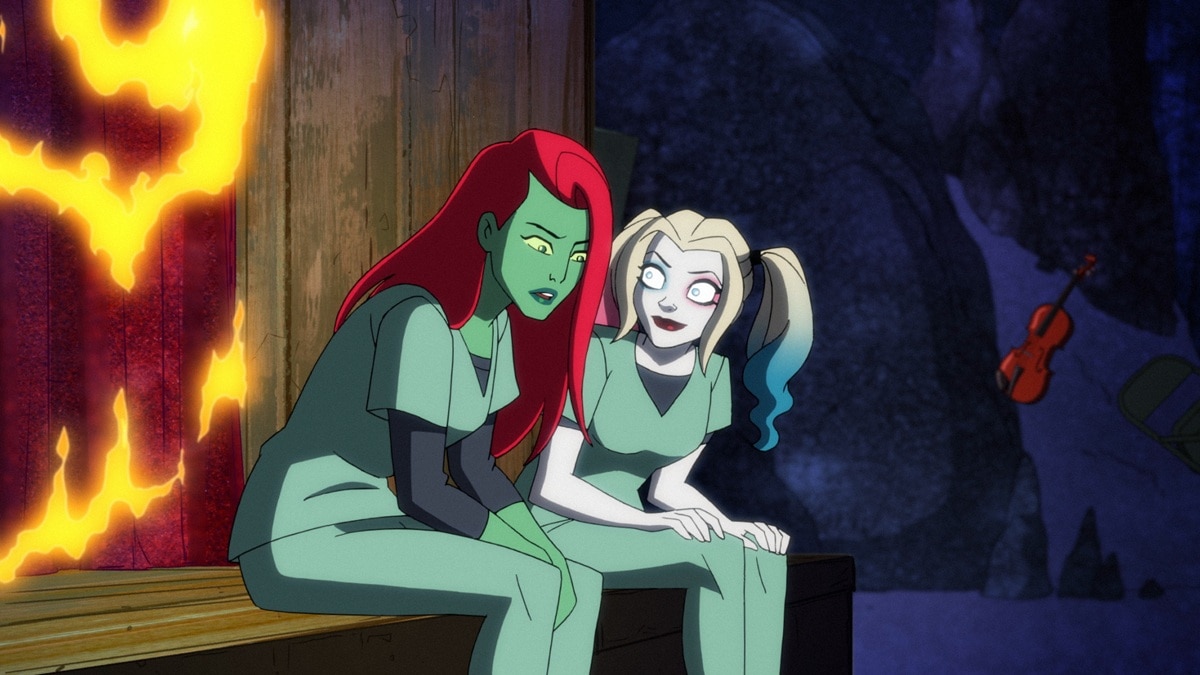
This season 2 episode of the Harley Quinn animated series gets our nomination not just for its hilarious depiction of Bane’s Peña Duro as a progressive rehabilitation center, but for its integral part in Harley Quinn’s history across media. Using her prison break with Poison Ivy as a metaphor for escaping the pits of their own despair and the confines of the expectations they have placed upon themselves, it’s here that Harley and Ivy shared, upon their mutual liberation, their most visible, passionate kiss to that date. After this one, all bets were off. And since then, nobody’s put Harley and Ivy’s true selves back in the cage again.


Batman: The Animated Series, “Dreams in Darkness”
If we wanted, we could populate this entire list with stories about Batman trapped in Arkham Asylum, from The Last Arkham to Arkham Asylum: A Serious House on Serious Earth to the Batman: Arkham Asylum video game. But as with so many essential concepts to Batman, the purest expression of the idea can be found in an episode of Batman: The Animated Series. Here, it’s the powerful visual as Batman succumbs to hallucinatory episodes while surrounded by his greatest foes, which really makes the episode a visual treat.

Batman: Arkham City
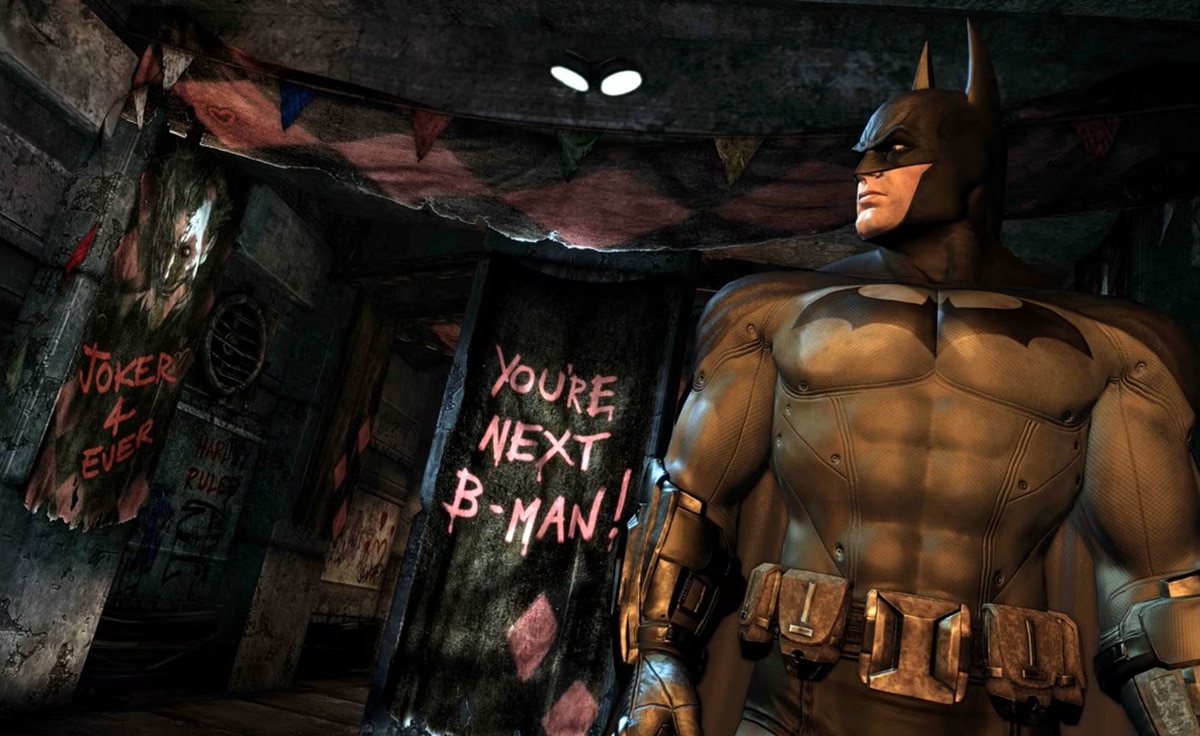
Regarded by some fans as the highlight of the Arkham video game series, Batman: Arkham City builds on its predecessor by relegating an entire borough of Gotham City to serve as a supervillain penal colony. Populated almost entirely by Batman’s enemies and their henchmen, the Dark Knight sets down in this neighborhood to find a cure for a disease he’s been subjected to by the Joker, all while protecting any innocents or political prisoners of the corrupt local government in a prison city far beyond anything that Snake Plissken had to contend with.

All-Star Superman #5, “The Gospel According to Lex Luthor”
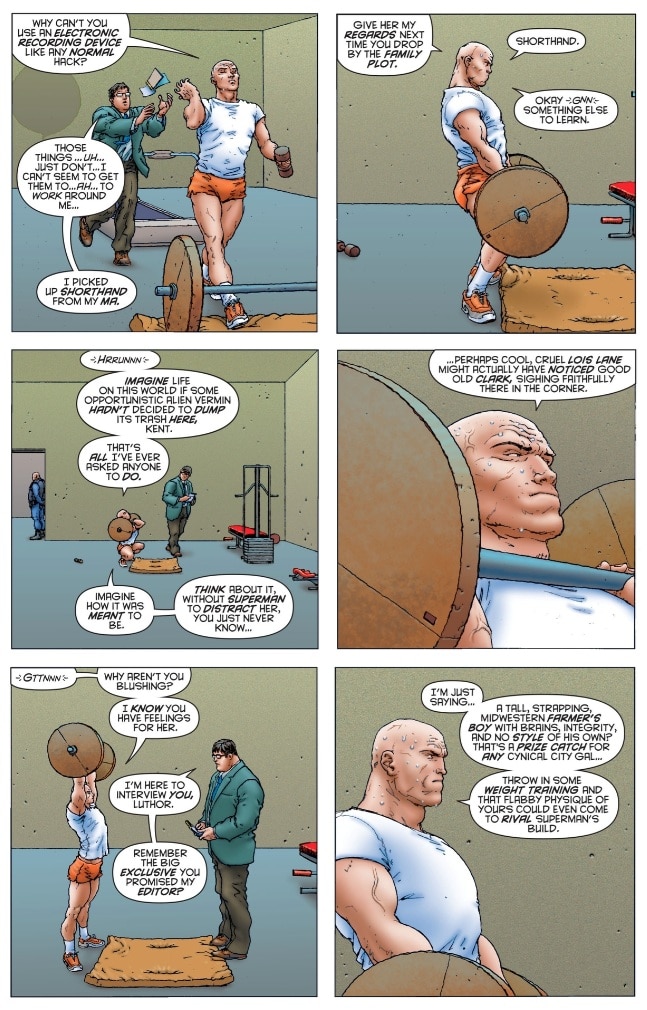
Our only Stryker’s Island story on this list is also arguably the highlight of All-Star Superman as a whole, and possibly the best single issue illustrating Lex Luthor’s character. Interviewed here in prison by Clark Kent, Luthor provides a bombastic, self-aggrandizing point of view on his own struggle with Superman as a philosophical representation of the limitless potential of the human spirit, casually escaping his confines through the events of the story as if he were simply going for a stroll outside his own home. Here, the prison setting is used to emphasize Luthor’s world view that there is nothing anyone can do to stop him from going anywhere or doing anything he wants.
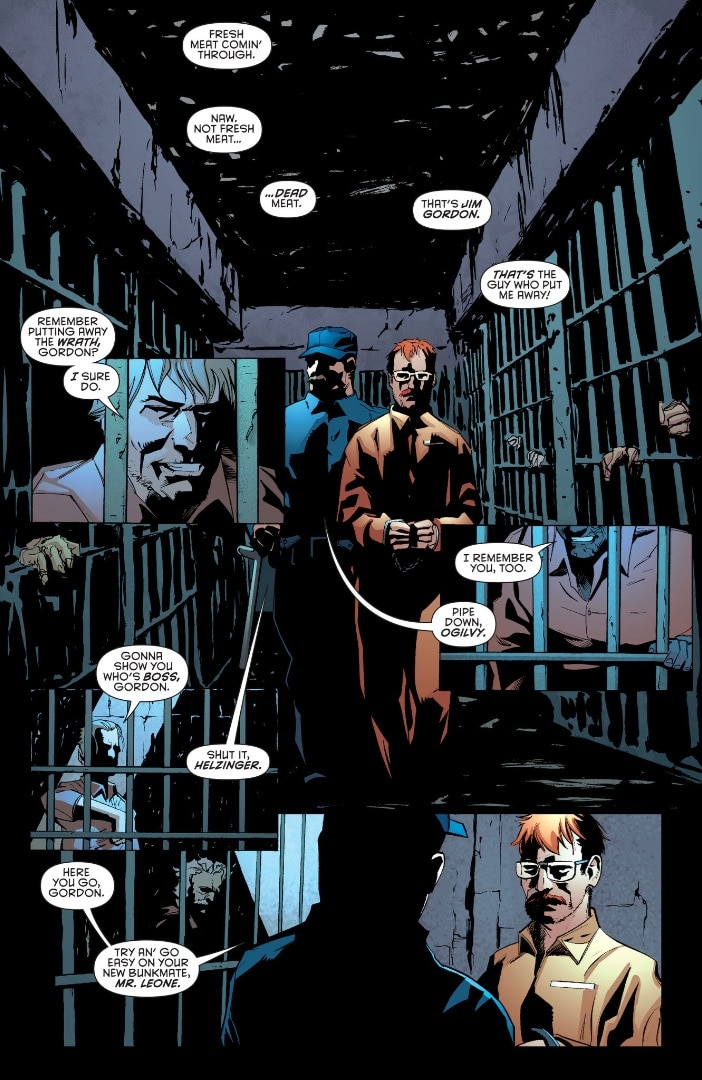

Batman Eternal
Barbara Gordon: Breakout isn’t the first comic we’ve seen about a Gordon in prison. For that, we have to go back to another weekly DC comic series. The inciting drama of 2014’s Batman Eternal was predicated on the conviction of Barbara’s father, Commissioner Jim Gordon, for the murder of an entire subway train full of passengers. As Batman and his allies worked to find the real culprit on the outside, Jim Gordon was forced to buy every day of life he could until his costumed allies showed up with the answers in an environment of men who would like nothing more than to see him suffer and die. At least Dad can provide Barbara with some tips on what it takes to survive on the inside.
The first three issues of Barbara Gordon: Breakout by Mariko Tamaki and Amancay Nahuelpan can be read on DC UNIVERSE INFINITE.
Alex Jaffe is the author of our monthly "Ask the Question" column and writes about TV, movies, comics and superhero history for DC.com. Follow him on Bluesky at @AlexJaffe and find him in the DC Official Discord server as HubCityQuestion.
NOTE: The views and opinions expressed in this feature are solely those of Alex Jaffe and do not necessarily reflect those of DC or Warner Bros. Discovery, nor should they be read as confirmation or denial of future DC plans.