
A lot of the hype surrounding Clayface is that it’s, well, gross. It’s bloody, it’s goopy. It’s got violent, inventive kills just as out there as any slasher.
That’s fun—and perfect for a Halloween release—but, at its core, Clayface’s origin story has always been body horror. And while we don’t often associate superhero fare with that specific subgenre, that’s often exactly what it is. In both types of stories, it’s common for a character to undergo some sort of physical alteration.
Take Peter Parker and Seth Brundle (that’s Jeff Goldblum’s character in David Cronenberg’s adaptation of The Fly, one of the most cited examples of body horror). Both men take on the qualities of an arthropod. Yet while Brundle’s transformation into a human-fly hybrid is perceived as both grotesque and tragic, Peter Parker uses his spider abilities to fight crime, becoming one of the comic world’s most beloved heroes. (One could argue Spider-Man: Brand New Day has elements of body horror similar to The Fly, as Parker does undergo some new physical and mental changes related to his arachnid powers.)
Now look at Poison Ivy. She’s part-plant, but her transformation only made her hotter. The zombies in The Last of Us are part-mushroom, but unless you’ve got some very specific kinks, they’re thought of as disgusting. G. Willow Wilson and Marcio Takara have acknowledged Ivy’s body horror connection, bringing some disturbing imagery to their acclaimed Poison Ivy comic series. But even there, it’s still hard to see Ivy as anything other than one of Gotham City’s more attractive citizens.
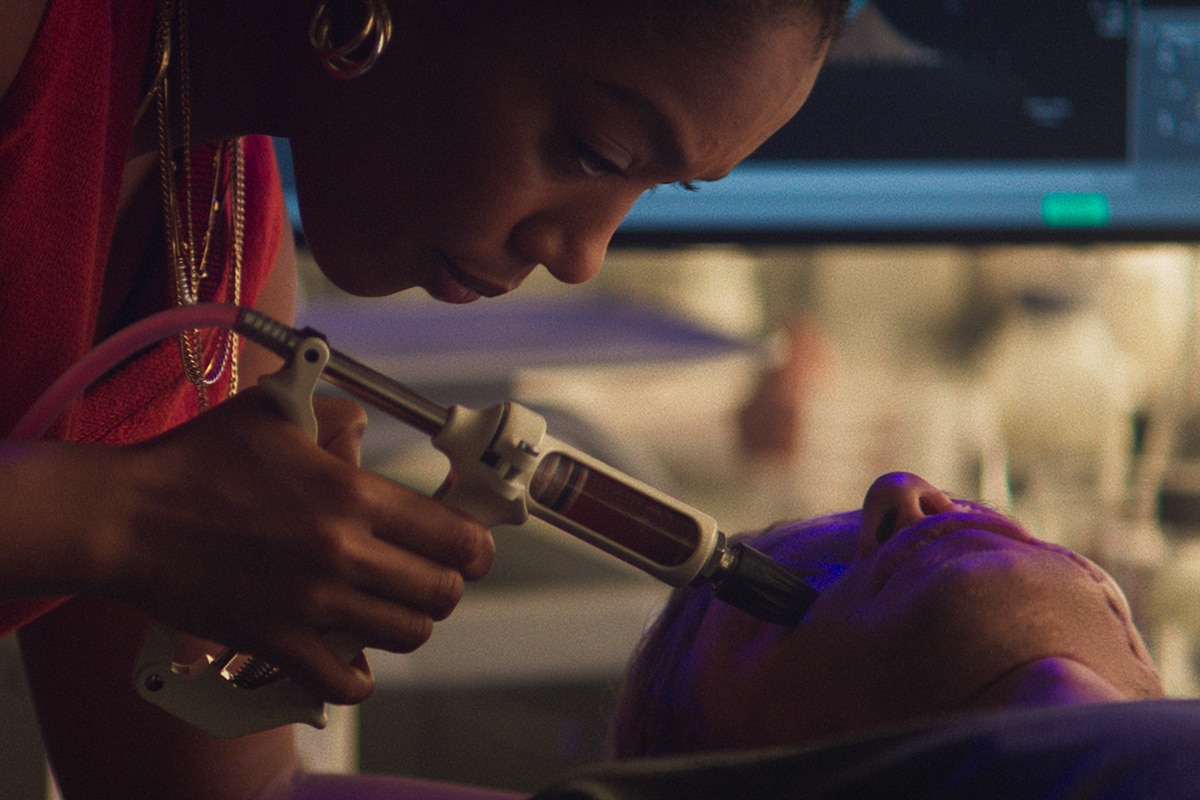
There are plenty of other examples we could look at, but where does Clayface fit into all this? Well, his origin is definitely body horror, and the new film leans hard into it, drawing inspiration from a Batman: The Animated Series two-parter called “Feat of Clay.”
These episodes introduce Matt Hagen (voiced by Ron Perlman), an actor whose handsome mug was disfigured in a car accident and who now relies on a face cream produced by a corrupt pharma exec named Roland Daggett. The cream makes his skin so malleable that Hagen can physically manipulate his face to look like it did before the accident, or to look like anyone else’s face. Daggett forces Matt to do jobs for him in which he impersonates others in exchange for more cream.
A desperate Hagen eventually breaks into Daggett’s facilities to steal a larger supply of cream, but he’s caught by two henchmen who pour a vat of it down his throat, transforming him into the Clayface we know today—someone who can shape himself into anything or anyone he wants using only his mind, but he can’t hold any disguise permanently. Without concentration, he’s just a huge, humanoid blob of clay with eyes and a handful of teeth.

Clayface follows this plot to a certain extent, though Hagen’s face is mutilated by a Gotham City gangster he offends and Hagen’s cream is replaced by an experimental injection a doctor hopes will one day cure damaged tissue.
His transformation is certainly the stuff of nightmares, and the movie does a fine job making us squirm. Hagen’s skin is unpredictable as he comes into his powers, sometimes sliding down his face. At one point, his eyelids fuse together, forcing him to snip them apart with a pair of cuticle scissors. His full transformation borrows heavily from the cartoon, but anyone who watched The Substance may find similarities there, too. Both are wet, squishy movies, often jarring to behold.
Perhaps most horrific, however, is Hagen’s psychological transformation. Batman: The Animated Series never really gave us a likeable Hagen. He was already in Daggett’s pocket, willing to impersonate others in schemes he knew would end in murder to preserve his face and his career. He was brash and vain, and talked down to his only friend. To imagine him as a monster wasn’t a stretch, no pun intended.

Clayface’s Hagen, played by Tom Rhys Harries, is a gentler character when we meet him. He’s a rising star just nominated for an Academy Award, still loyal to his childhood best friend and excited about his future. It’s easier to sympathize with him when it all goes wrong, making his inevitable heel turn even harder to stomach, especially when the DC Universe offers us heroes with similar bodily issues.
As an example, consider Rita “Elasti-Girl” Farr of Doom Patrol, also a former actor. After she gains her abilities, she mostly looks like herself, but has limited control over her powers. A scene in the TV series depicts Rita melting into a gigantic blob in a diner. Or think about Eel O’Brien, who’s a thief until an encounter with chemicals turns him into Plastic Man and he decides to use his newfound powers for good.
But Clayface is a villain. The horror here encompasses both his body and mind, and the movie delights in offering a sickening twist on what the iconic Batman: The Animated Series once gave us.
Clayface, directed by James Watkins and starring Tom Rhys Harries and Naomi Ackie, is now in theaters.
Juliet Bennett Rylah writes about horror, Vertigo and the dark side of superheroes for DC.com. Follow her on Bluesky at @JBRylah.
NOTE: The views and opinions expressed in this feature are solely those of Juliet Bennett Rylah and do not necessarily reflect those of DC, Warner Bros. or Skydance, nor should they be read as confirmation or denial of future DC plans.