Hello, I’m Alex Jaffe, better known in the official DC Community as HubCityQuestion—your steward and sentry of discovery on all the mysteries you need solved regarding the DC Universe. For two years now, I’ve been holding court on the DC Official Discord server to take your questions every day, spinning your inquiries into heavily researched answers. This month, as every month, I’d like to present you with a selection of some of our findings. Let’s all take a look at some of the questions you asked and answers I was able to dig up.
Dragon Moth asks:
Have the Superman comics introduced a new LL character over the last couple of decades?
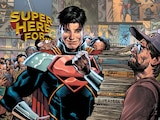
The generational tradition of adding characters with “LL” initials into Superman’s life is alive and well in the recent past. Here are just a few of the latest qualifying characters to enter his orbit:
- Lisa Lasalle, model and Clark’s romantic interest in the Superman: Earth One graphic novels (2012)
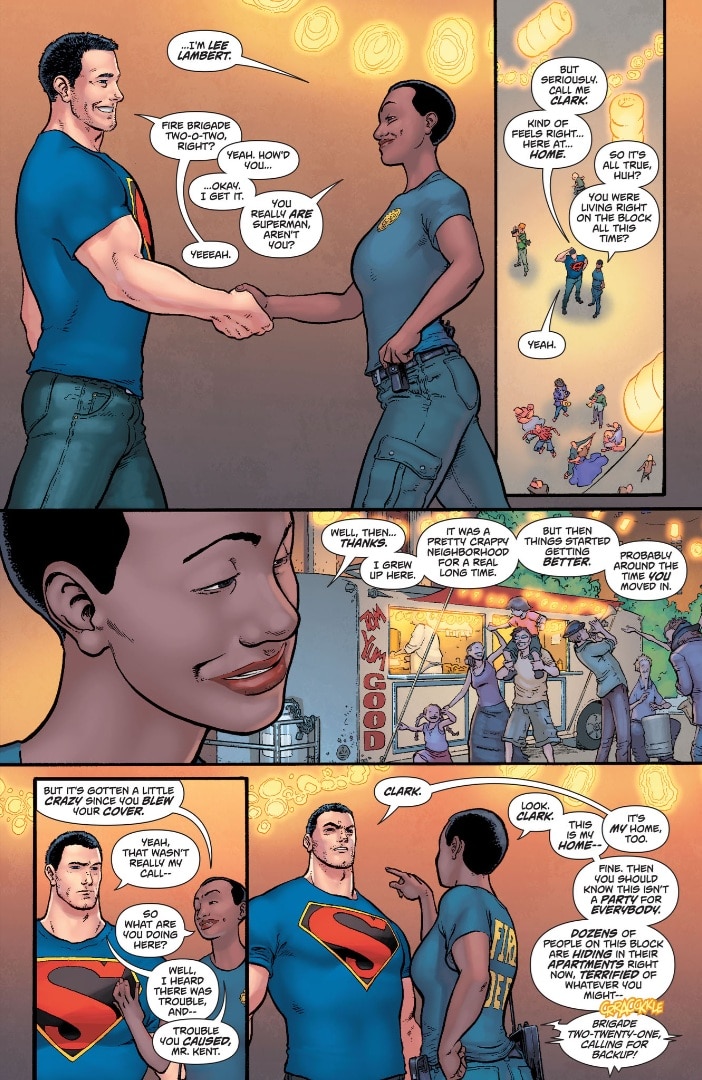
- Lee Lambert, Clark’s neighbor and Metropolis firefighter, introduced in Action Comics #41 (2015)
- Laney Lan, Shanghai-based reporter and romantic interest to Kenan Kong in New Super-Man (2016)
- Lan-shin Lee, aspiring kid reporter and secondary protagonist of Superman Smashes the Klan (2020)
- Leo Lane, aka “Daemon Rose,” Lois Lane’s long-lost brother introduced in Brian Michael Bendis’s Checkmate (2021)
- Lisa Lombard, Steve Lombard’s sister and tech reporter for The Daily Planet, first appearing in Philip Kennedy Johnson’s Action Comics (2023)
- Lan-Lar and Lora-Lar, Kandorian parents of Supergirl frenemy Lesla-Lar, in the ongoing Supergirl series (2025)
- Luna Lustrum, Kara’s psychic pal, also found in the ongoing Supergirl
Lastly, we’ll grant an honorable mention to “Lulu,” Lex Luthor’s experimental guinea pig and central antagonist of the 2022 animated film DC League of Super-Pets.
Matthew asks:
DC is broken down by Golden Age, Silver Age and Bronze Age. Then I’m not sure what’s after that. It’s just the early 2000s era and then Flashpoint created the New 52. Then we get Rebirth somehow, and after that is All In and then Next Level, right?
I’m asked to explain the various ages and eras of DC Comics often enough that I felt like we should take some space here for a quick crash course in continuity, branding and what all these terms you hear thrown around actually mean. As a beginner coming into the 90-year history of DC Comics, here’s what you need to know.
The Golden Age represents the first wave of DC titles, starting in 1935. This was the era the Justice Society of America was originally active in.
The Silver Age was the first time we see a reset of continuity, with many characters being reinvented for the 1950s—including Barry Allen as the Flash and Hal Jordan as Green Lantern. The previous incarnations are established as having been active on "Earth-Two," and the two worlds enjoy frequent crossovers.
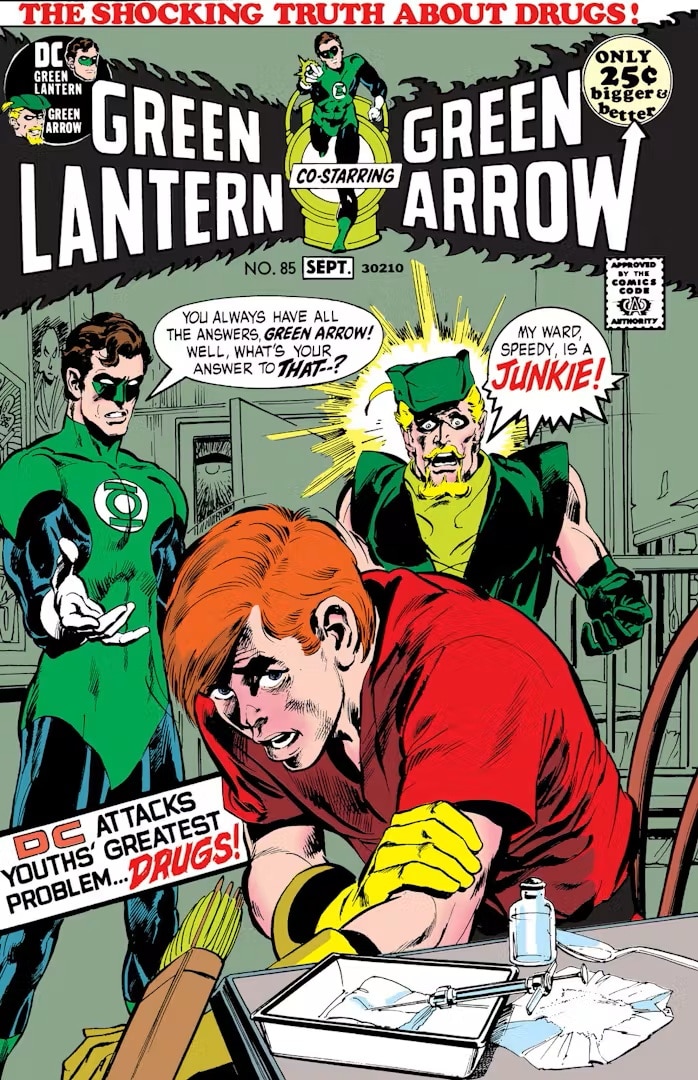
The Bronze Age, starting in the ’70s, is less about continuity and more of an attitude shift, as many of these rebrands are. This is where many of DC's heroes began to develop emotional depth and start tackling real world problems.
In 1985, we had Crisis on Infinite Earths, which provided a reset on some (but not all) characters to modernize them for new audiences. This period from 1986-2011 is often called the "Post-Crisis" or "Pre-Flashpoint" era. It's bisected by 1994's Zero Hour, an event which streamlined some of DC's timeline to account for some of the early dysfunction in Post-Crisis continuity.
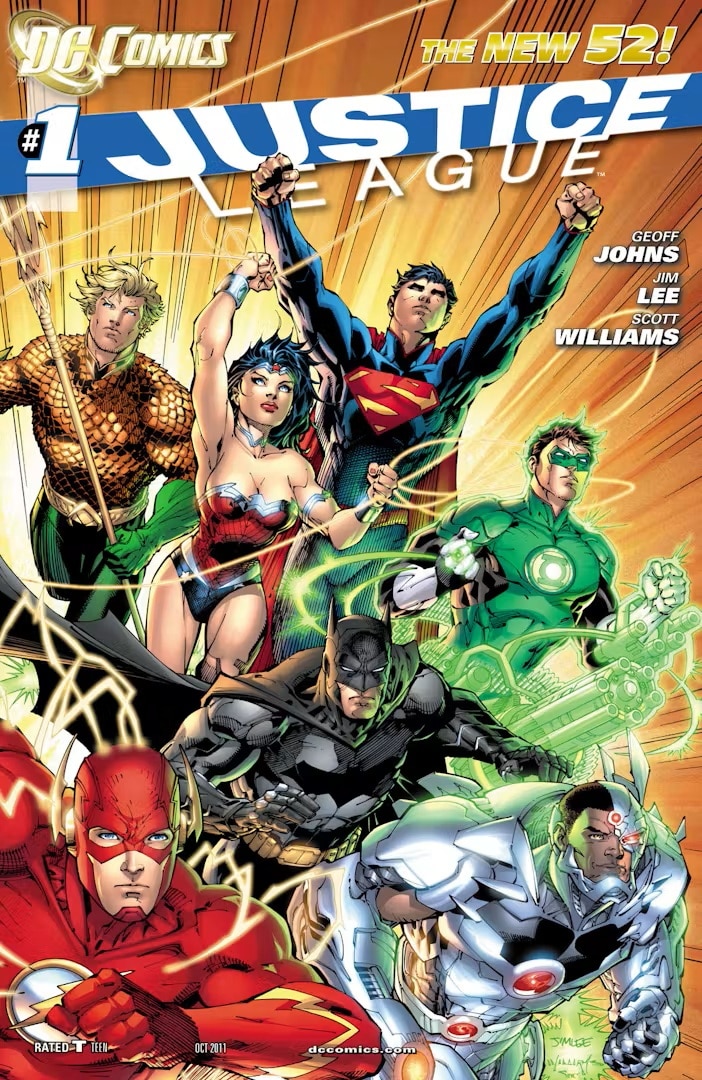
After 2011's Flashpoint event, we have "The New 52," named for its 52 titles which all launched at once at issue #1, with a seemingly brand-new continuity in its own right (though, as with the Post-Crisis era, there were some exceptions). That lasted until 2015, where we had the short-lived "DCYOU" rebrand—like the Bronze Age, this wasn’t a continuity shift, but just a change in attitude, seeking to align new titles more closely with a diverse readership's interests.
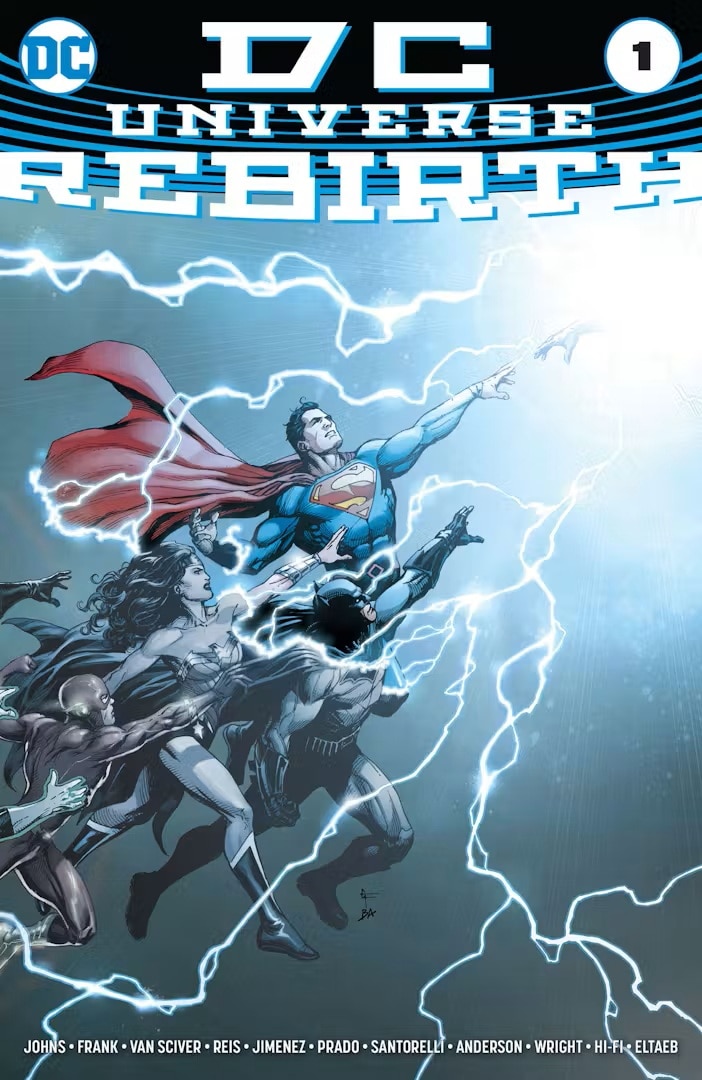
In 2016, we saw "DC Rebirth," which started to undo many of the changes made to continuity with the New 52, reincorporating every iteration of prior continuity into the mainstream. From this point on, continuity has practically taken on a “pick and choose” philosophy. Anything that the creators, and the readers, choose to interpret as "canon," more or less is.
Since then, we've had many more named "eras," including "Infinite Frontier," "Dawn of DC," "All In" and "Next Level." These initiatives don’t signify a new continuity, but rather a safe jumping on point for new readers interested in coming aboard a title without being overwhelmed by the baggage of generational continuity. That understanding of additional context will come with time.
Souron1 asks:
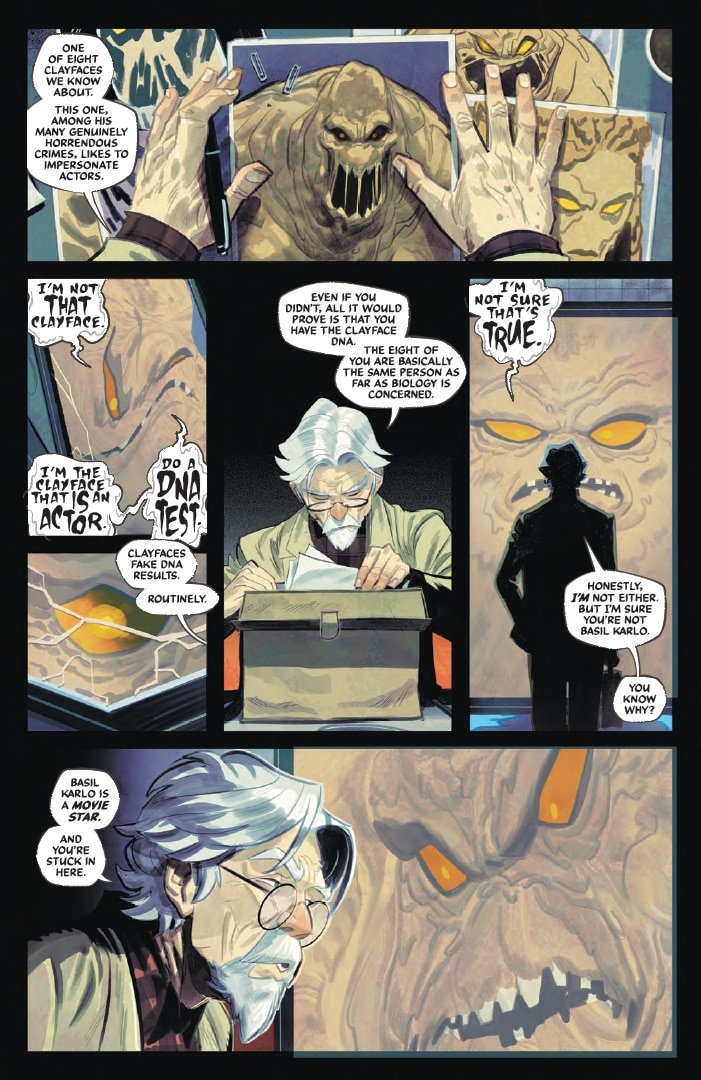
In Clayface: Celebrity Dirt #1, an Arkham doctor says there are eight Clayfaces. I can only list Basil Karlo, Matt Hagen, Preston Payne, Sondra Fuller and Cassius Payne. The book also lists Todd Russell and I’ve also seen references to Peter Malley (who appeared in and then died in Batman #550). That’s seven if they’re all included. I wanted to ask, do you know how Jude Ellison S. Doyle could have gotten to eight?
If we’d like to count Elseworlds, impersonators and offshoots, there have truthfully been well over a dozen Clayfaces. At first, I tried starting to do the math on who the most obvious missing Clayface from your accounting might be…until I realized I could just ask Jude.
According to Doyle, his account of the eight main Clayfaces is as follows:
1. Basil Karlo
2. Matt Hagen
3. Preston Payne
4. Sondra Fuller
5. Cassius Payne
6. Peter Malley
7. Todd Russell
8. The one you’re missing, Johnny Williams—a former firefighter who was manipulated by Hush after his transformation, active from about 2003 to 2006. This is the Clayface we see impersonating Jason Todd in Batman: Hush.
TheManTheMyth asks:
Does Alfred have any known family? Or is he the only one left?
The subject of Alfred’s extended family is actually quite relevant to the ongoing Batman series at this moment. But historically, Alfred has had a few notable living relatives. In 1969’s Batman #216, we met Alfred’s older brother, Wilfred Pennyworth, an accomplished stage actor. That issue also introduced us to his daughter Daphne, who followed her father into acting but dabbled briefly in burglary before finding redemption, and even entertained a potential romantic connection to Dick Grayson over a few issues until disappearing the following year.
Later, in 1981’s Detective Comics #501, we get our first introduction to Julia Remarque, Alfred’s long lost daughter from a forgotten romance during his years as a British secret agent with French spy Mademoiselle Marie. Since then, Julia has gone on to play supporting roles to the Bat-Family in more recent titles like 2014’s Batman Eternal and 2017’s Batwoman, and has more recently taken her father’s place as a British intelligence agent.
While not a traditional relative, an evil clone of Alfred in his prime known as the “Dark Knight” was introduced as a major antagonist in 2017’s All-Star Batman #11, although we haven’t seen him again since.
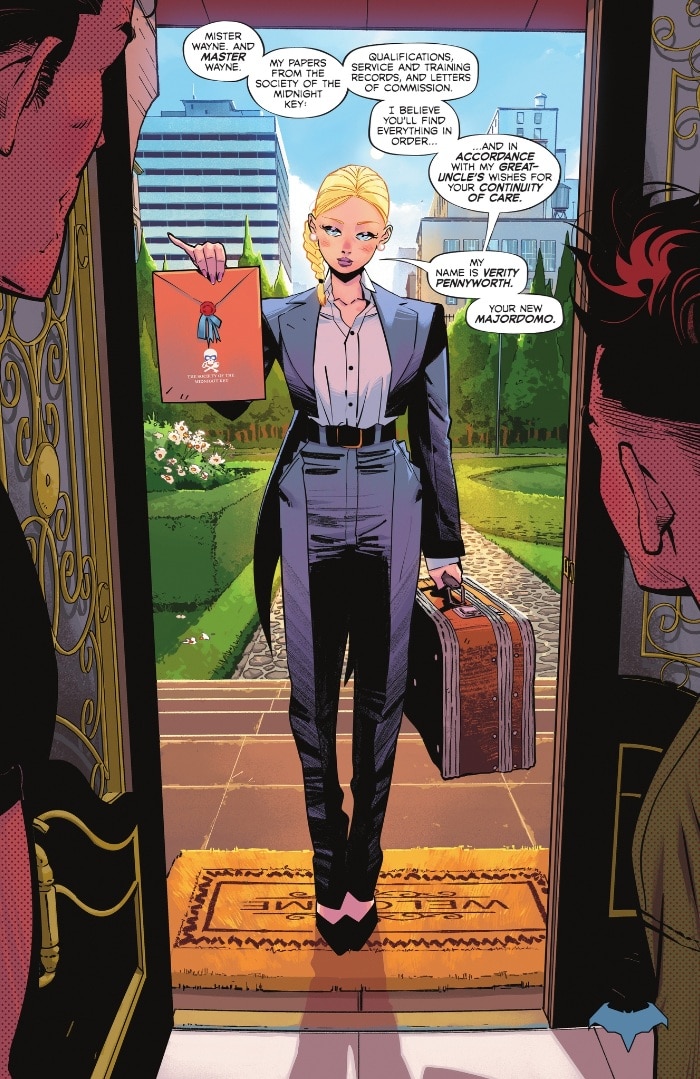
Which brings us to our most recent claim to the Pennyworth name, Verity Pennyworth—Alfred’s purported grandniece who just recently showed up on Bruce Wayne’s doorstep in Batman #11 to replace her great uncle in his services as Batman’s butler, with his letter of posthumous recommendation. How that plays out all remains to be seen.
Wonder Phoebe asks:
Was “The Night Begins to Shine” created for Teen Titans Go!, or did it exist before?
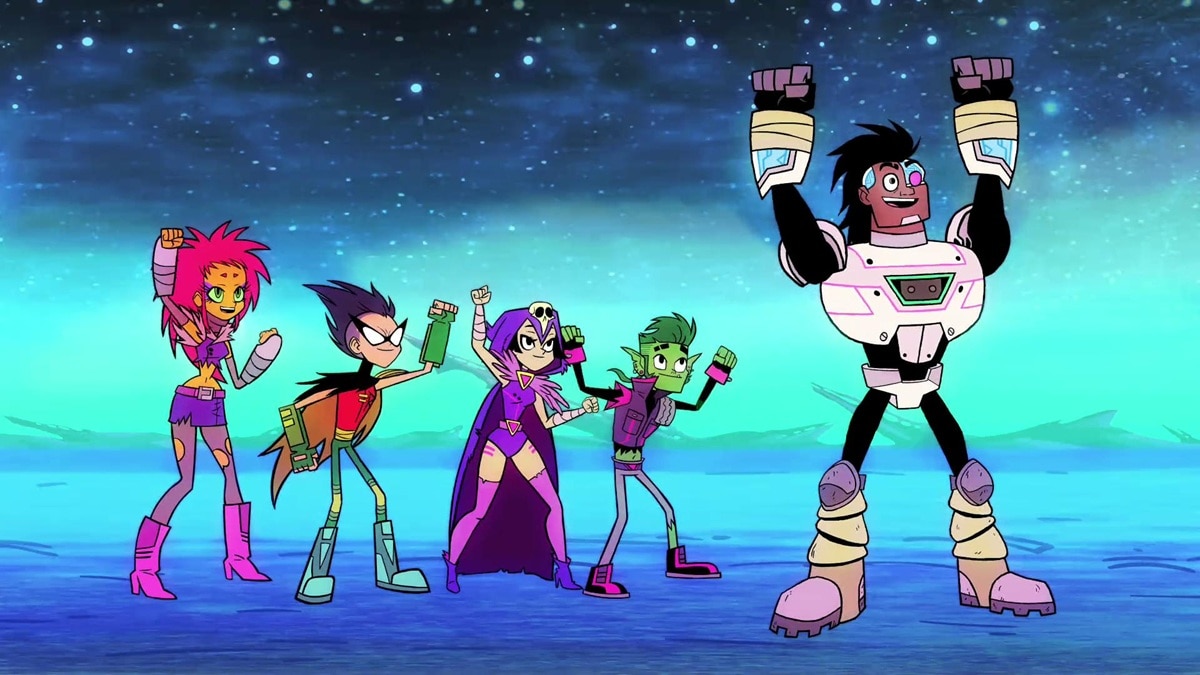
Cyborg’s favorite song in the Teen Titans Go! series which has, since its first appearance in Season 2’s “Slumber Party,” become a cornerstone of the show’s mythology, didn’t actually originate in the show itself. The song was originally recorded by studio band B.E.R. in 2005, as part of an offering for a licensable music catalog. The way a lot of music rights work in the modern era is that television and productions often license broad catalogs in order to access a bank of music they can use for their project, as an alternative to the otherwise costly route of getting a bespoke soundtrack written directly for the show, or buying the rights to more expensive songs piecemeal. So in 2014, when the Teen Titans Go! production team needed to pull a poppy, upbeat song for Cyborg to lip sync in their second season, they reached into their available song catalog and came up with “The Night Begins to Shine.” The rest is legend.
ANACRA asks:
Besides yellow suns that power Kryptonians, red suns that make Kryptonians regular people, and green suns that weaken Kryptonians, are there any other suns that have effects on Kryptonians? And do Kryptonians still retain their powers in space away from the influence of any stars? Or do they eventually get weaker?
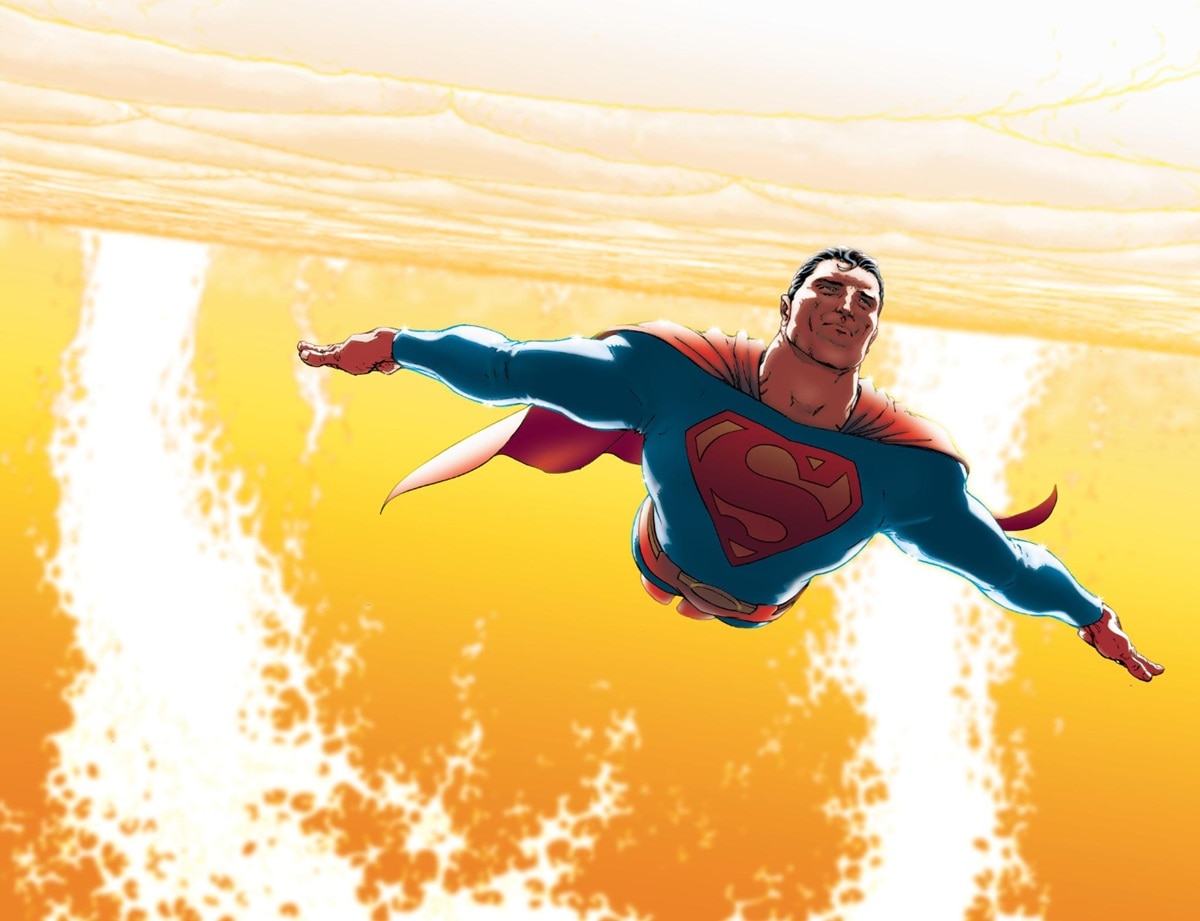
Kryptonians do rely on general proximity to a star to maintain their power. The longer and farther out from our yellow sun Superman gets, the weaker he becomes. His body works like a solar battery, which is charged by the sun’s proximity, but can only power him for so long before he needs another dose of solar energy.
As for other colored suns, it’s a subject that rarely comes up, but we have seen it happen on occasion. In Super Friends and Brian Michael Bendis’s Superman run, we’ve seen that an orange sun works like a semi-potent yellow sun, powering Kryptonians to a fraction of their power under yellow solar light. In Geoff Johns, Richard Donner and Eric Powell’s Escape from Bizarro World, we see that a blue sun gives Superman the additional power of “Superman Vision”—a power which allows him to bestow onto someone else the powers of a Kryptonian under a yellow sun with a projectile beam from his eyes. On one occasion in 1982’s Superman #371, we saw that exposure to a violet sun erupting in a supernova temporarily gave Superman powerful mental abilities, allowing him to reshape the world around him with a thought. And in Philip Kennedy Johnson’s Action Comics, we saw that exposure to a white sun exponentially magnified the potency of Superman’s existing powers under a yellow sun, in addition to unlocking new temporary powers like teleportation and the ability to generate Lantern-like hard light constructs.
Government mandated pigeon asks:
Is it true that Batman canonically is a Sailor Moon fan?
This is another question I get a lot, and it involves a funny story. The answer is…that is sort of an accidental implication, yes, but not the intention of the author.
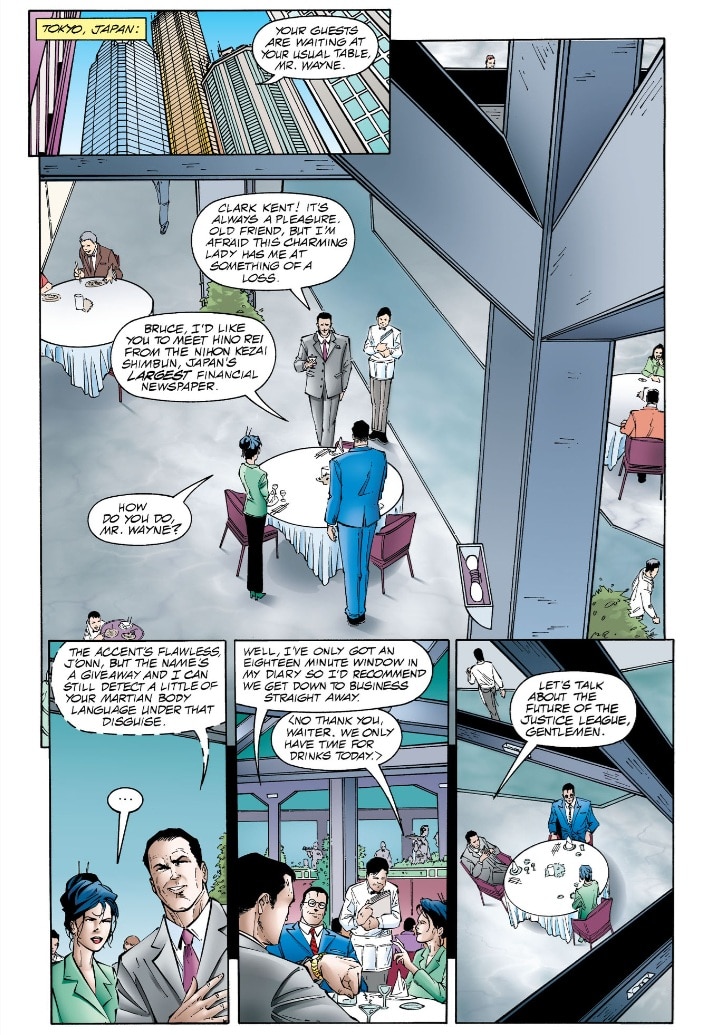
In 1999’s JLA #27, we find Martian Manhunter operating under the guise of a Japanese woman named Hino Rei. Demonstrating Batman’s ability for deduction, Bruce Wayne is easily able to identify her as J’onn J’onzz’s alter ego. “The name’s a giveaway,” he whispers as an aside to his colleague.
Any Sailor Moon fan reading this scene would pick up on the obvious allusion: in the Sailor Moon manga and anime franchise, Rei Hino is the alter ego of Sailor Mars. A dead giveaway indeed, but one that Batman would only be able to pick up on if he were at least nominally aware of the main characters in the Sailor Moon franchise.
However, according to author Mark Millar, this was entirely an accident—and the result of a prank played on him by a friend. Searching for a Japanese name that might clue a savvy reader to his Japanese mystery woman’s secret identity, Millar asked his unidentified friend for something that might tip Batman off. Millar says that his friend told him that Hino Rei meant “poet of Mars.” Taking his friend’s word for it, Millar used it the comic, accidentally making two founding members of the Justice League seem fluent in ’90s shoujo manga.
So really, the truth depends on whether you value authorial intent or the word in print. If the former, it’s all kind of a hilarious, embarrassing accident. If the latter, then you’re free to imagine that Batman knows the full details on all of the Sailor Scouts by heart.
That all wraps it up for this month. But you can catch far, far more on the DC Official Discord, where I’m available every day to take your questions about the history of the DCU. All you need to do is ASK…THE QUESTION.
Alex Jaffe is the author of our monthly "Ask the Question" column and writes about TV, movies, comics and superhero history for DC.com. Follow him on Bluesky at @AlexJaffe and find him in the DC Official Discord server as HubCityQuestion.
NOTE: The views and opinions expressed in this feature are solely those of Alex Jaffe and do not necessarily reflect those of DC or Warner Bros. Discovery, nor should they be read as confirmation or denial of future DC plans.