It’s that time again! I’m Alex Jaffe, better known within our DC Official Discord server as HubCityQuestion—resident expert on the comings and goings of the DC Universe. Day in and day out, I field questions on our Discord server to help everyone on their journey toward DC enlightenment. Then, I round up a few of my favorite questions from the #ask-the-question channel each month and present them here to the public. This just so happens to be one of those very presentations. Enjoy, and I hope you learn something!
Peter S. Svensson asks:
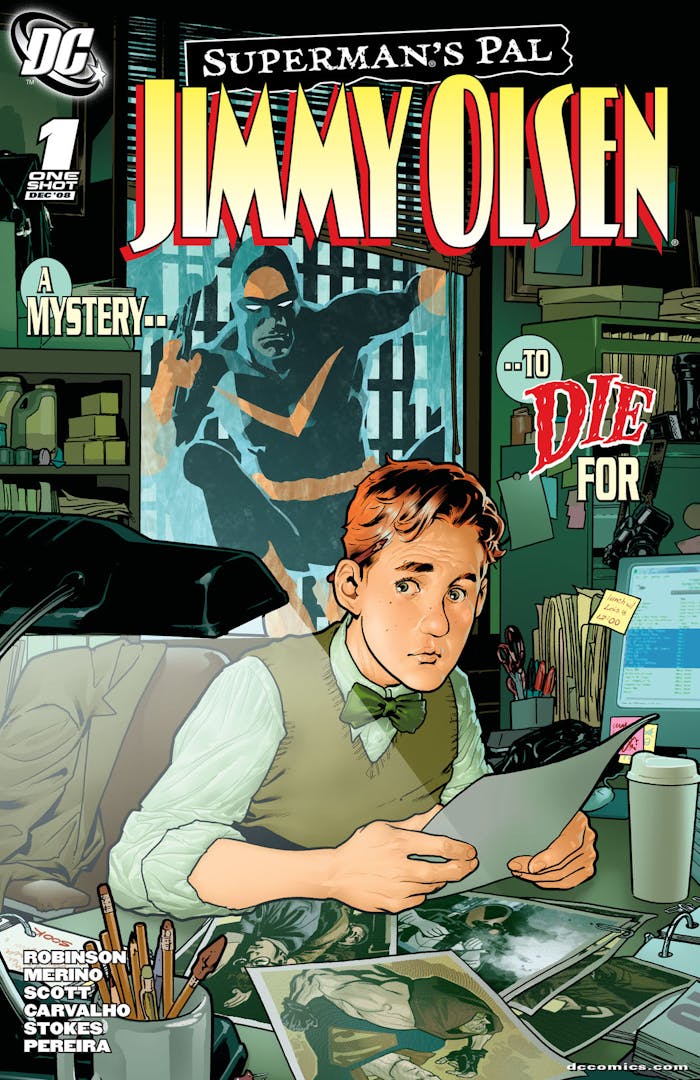
Who is the character with the longest solo title who has never been part of the Justice League in any form?
“In any form” makes that pretty restrictive, especially with the massive roster expansion we’ve seen in the current period of Justice League Unlimited. Up until October 2024, I would have told you the answer was Tim Drake, with a 185-issue solo ongoing from 1993 to 2009, and no League card. But I can’t say that anymore—we’ve seen him on the Watchtower as of JLU #1. So, we have to go with my runner-up here: Superman’s Pal, Jimmy Olsen. Jimmy’s initial solo series ran for 163 issues, from 1954 to 1974. A pretty respectable run, I’d say, for a character you couldn’t strictly call a superhero. Should Jimmy ever be enlisted in the League though, I have a backup for us to award the title to. That would be Scooby-Doo, with a solo series that ran for 159 issues from 1997 to 2010.
Green Loontern asks:
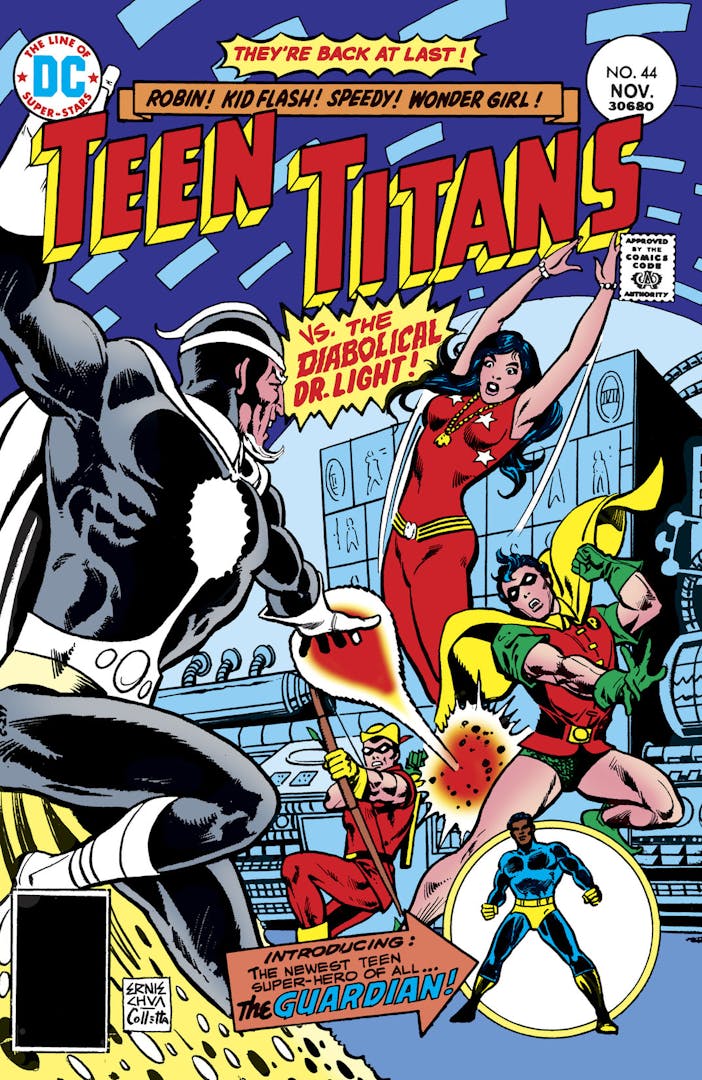
I just acquired a 1982 trade paperback reprint of The New Teen Titans. According to the introduction by Marv Wolfman, there was a second incarnation of the Teen Titans that only lasted a few issues before The New Teen Titans, which now is referred to as the third incarnation.
I always thought The New Teen Titans was the second version of the Teen Titans. What is this other short lived version Marv Wolfman mentioned?
Marv here is referring to the fact that Bob Haney’s original Teen Titans run was canceled in 1973, after issue #43. The book then went on a three-year hiatus until Bob Rozakis revived it in 1976, picking up at the last series’ numbering. Under Rozakis’s run, Mal Duncan became Guardian, Bumblebee and Joker’s Daughter joined the main roster, and the Titans West were established as their own spinoff team. It continued for twelve more issues before it was canceled again. Despite the continuous numbering of the first two creative teams on that book, that would make Marv and George’s Titans the team’s third incarnation.
EMIRP SUGAM asks:
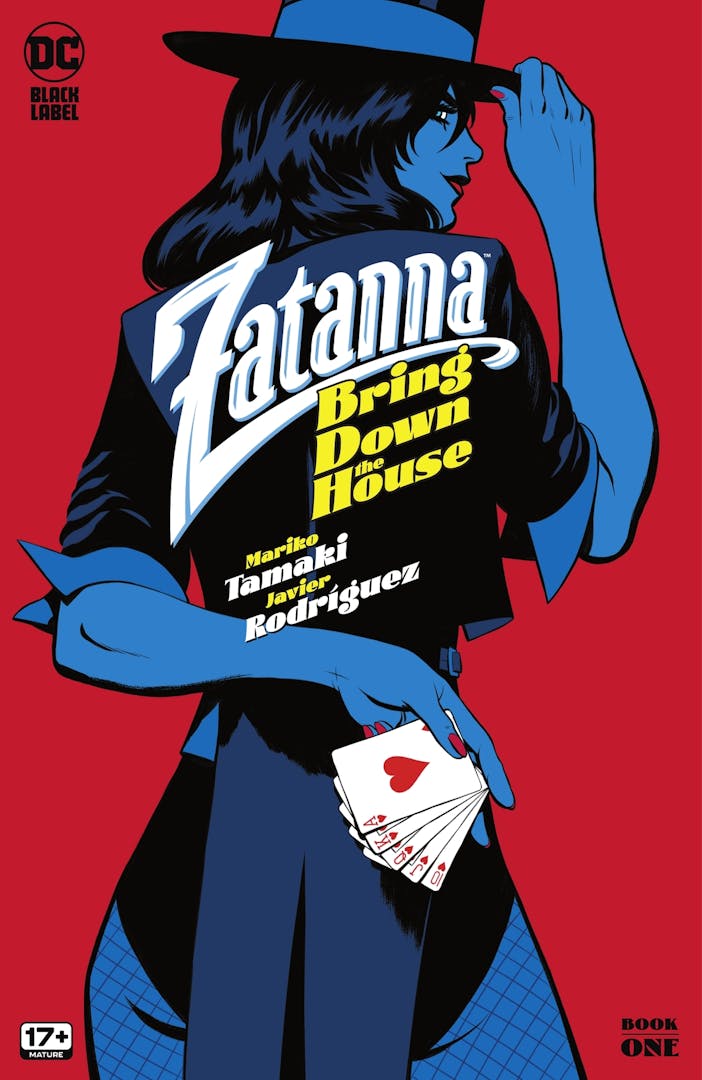
Why was Zatanna: Bring Down the House given a 17+ rating if there isn’t anything too adult?
This is a question I get rather frequently with titles like this under the DC Black Label banner, often in respect to the similarly unobjectionable Superman: The Kryptonite Spectrum. The rating on the cover here is representative not of the book’s specific contents, but of DC Black Label as an imprint overall. Under the Black Label, creators are given the freedom to explore mature themes and imagery. But how much they choose to exercise that freedom is up to them. Sometimes, it’s enough to be freed from the bounds of continuity to tell the story you want, another opportunity which DC Black Label provides, without getting particularly lurid or graphic in the telling.
chell asks:
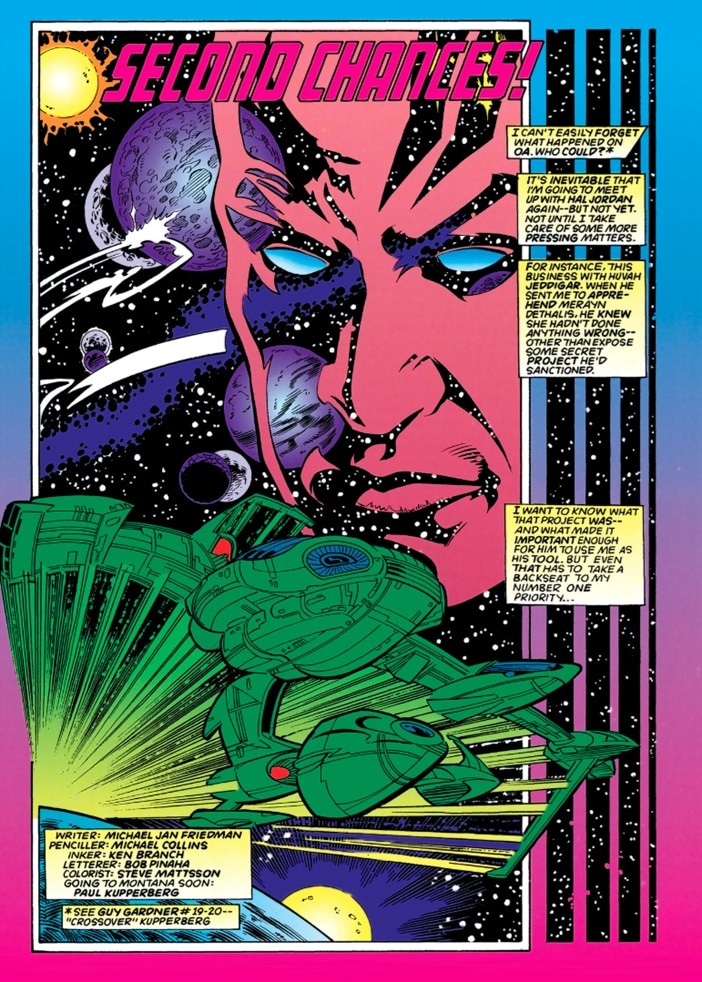
This is such a random question and I doubt you can even find the answer, but do you have any idea of why Paul Kupperberg was credited as 'Going to Montana Soon' instead of editor in The Darkstars #21? Were they just joking around about him on a trip and him getting notes in late or something?
Issues of Darkstars at the time tended to give Paul a cute nickname relating to something in the issue as an in-joke. In issue #20, he was credited as “Controller in Training.” In #22, he was credited as “Brooding Presence.”
“Going to Montana Soon” is a reference to the song “Montana,” written and performed by Frank Zappa in the 1970s about considering a drastic change in life and career paths, having exhausted his tolerance for the status quo. Similarly, both John Stewart and Donna Troy find themselves in those circumstances in their own lives in this issue.
(I did check with Paul after getting this question. He confirmed he is, in fact, a Zappa fan.)
JayJay asks:
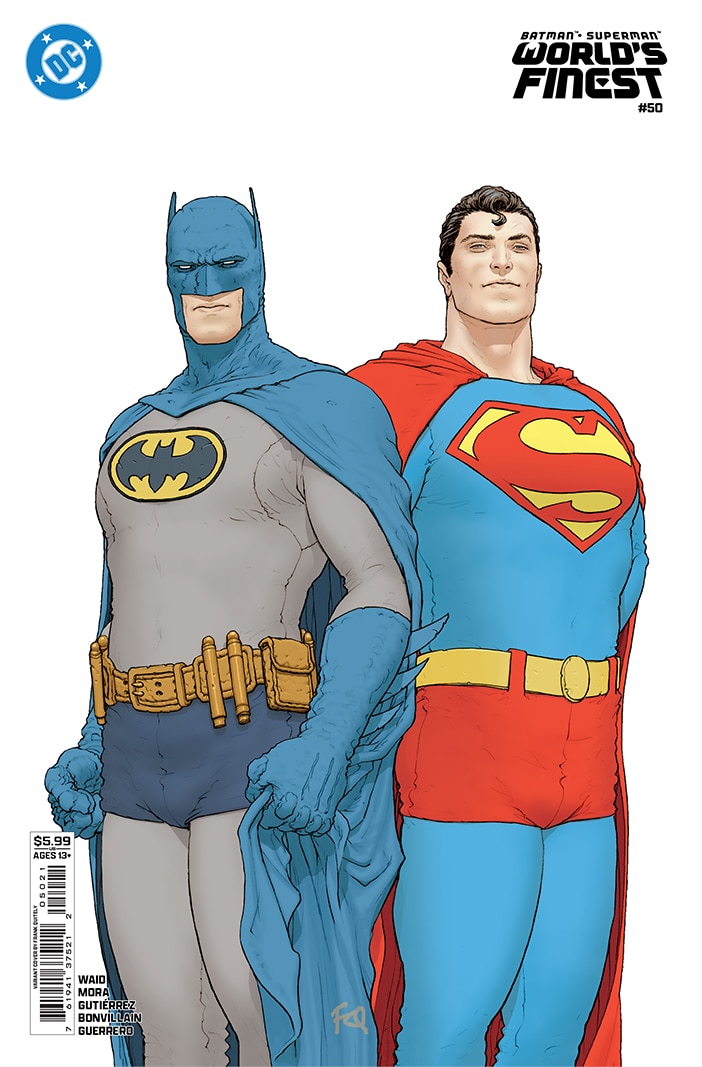
I know that initially in Rebirth, Superman and Batman didn’t wear trunks, as I think the designs from the New 52 were carried over. When was this change reversed? Or rather, when did Superman and Batman get their trunks back respectively?
Both made the change back to the trunks in 2018, a couple years into the Rebirth era following the New 52. First was Superman in Action Comics #1000, a landmark issue marking the start of Brian Michael Bendis’ tenure running the show on the Superman titles. According to Bendis, one of his conditions for coming on to do Superman was that Superman had to get his trunks back. DC agreed.
Later that year, following Batman’s infamous abandoned wedding to Catwoman in Batman #50, Batman changed back to a more traditional costume as a visual marker that he was reverting to an earlier version of himself before he got caught up in a potential future outside the idea of Batman. In Batman #53, the end of the 2018 “Cold Days” storyline, that entailed switching back to a suit with trunks.
Cybernex007 asks:
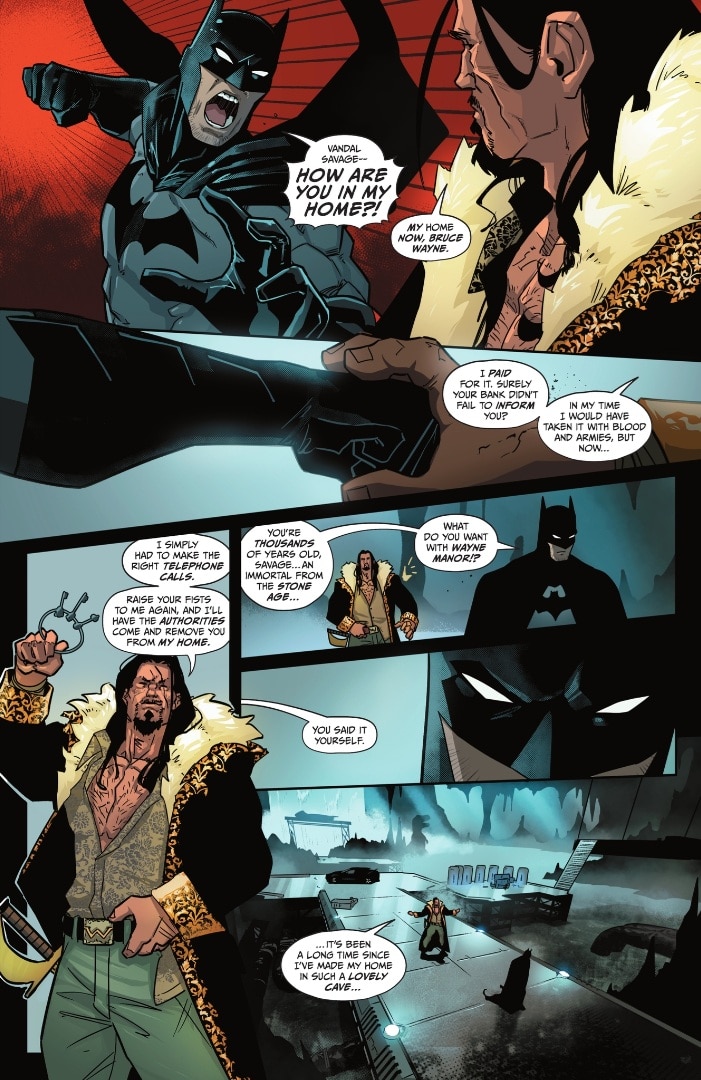
After reading the most recent Fraction Batman issue, I was wondering who currently owns Wayne Manor? I honestly figured it was destroyed previously with all of the Pennyworth manor use recently.
You’re not going to believe this if you missed Chip Zdarsky’s Batman run, but the man currently living in Wayne Manor is the current Gotham City Police Commissioner, immortal caveman Vandal Savage. After Batman lost his fortune during the Joker War incident, Vandal took advantage of Bruce’s destitution to buy out Wayne Manor and move into the Batcave. Why? Mainly because Vandal knew it would annoy him, really. Around here, that’s the kind of haterism we love to see in a supervillain.
Dragon Moth asks:
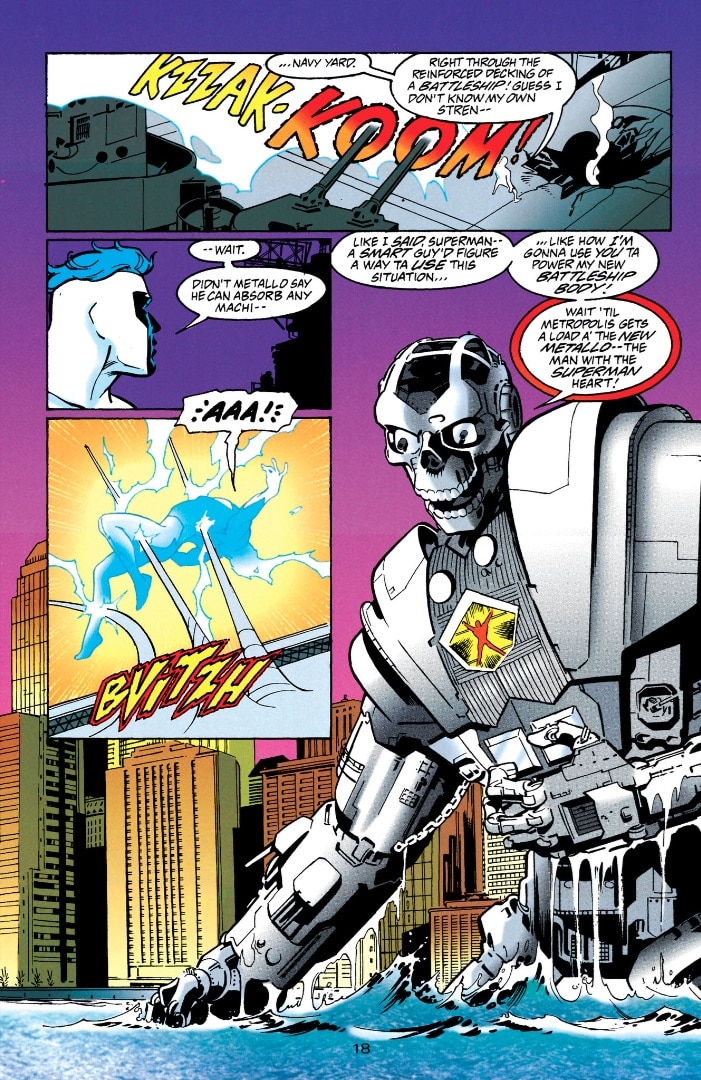
I recently got the Superman Blue trade paperback and Metallo is portrayed as capable of absorbing machinery to upgrade himself. That's an awesome superpower that would elevate him to a much bigger threat than his usual role as a monster of the week. How did he acquire this power and why doesn't he have it anymore?
What you’re seeing here is the aftermath of Metallo's Neron upgrade, where many of the villains of the DC Universe sold their souls to the demon lord Neron in exchange for enhanced abilities in the 1995 event crossover Underworld Unleashed. Just a little while later, Brainiac-13, antagonist of the “Superman Y2K” storyline, would arrive to upgrade Metallo’s powers even further, until Superman destroyed his new body. The next time Metallo appeared, he was back to his standard issue power set.
TheManTheMyth asks:
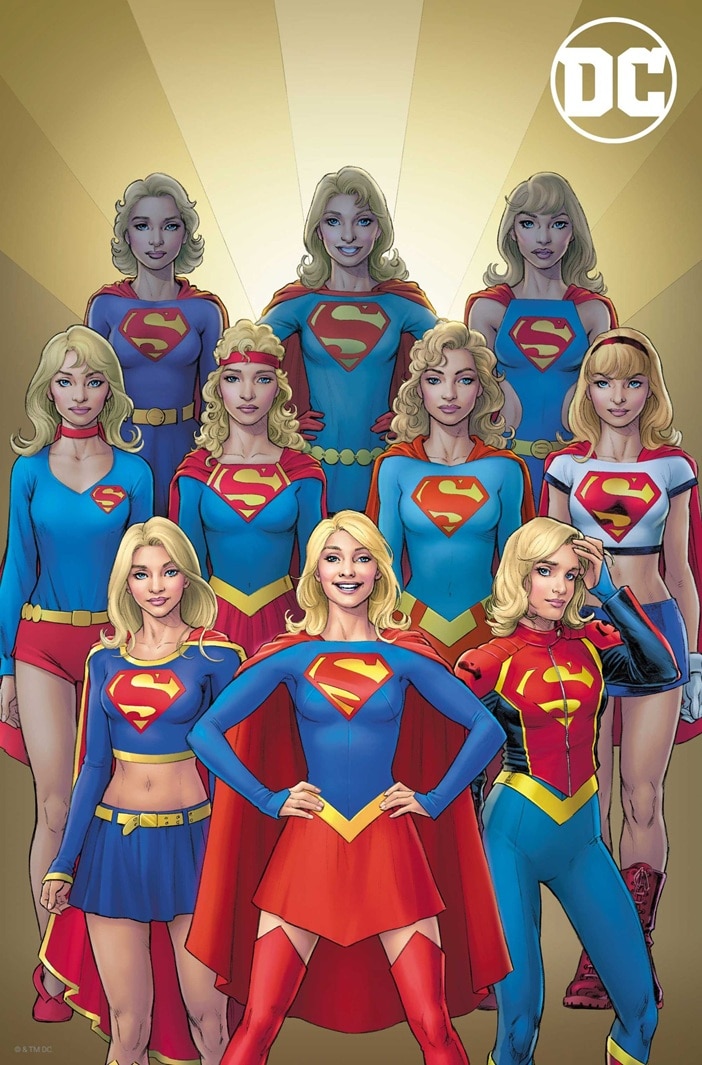
Why did Supergirl go through so many costume changes over the decades unlike Superman, who has stayed the same?
"Why" is always a hard question to answer, especially when we're talking about decades of decision making. But I think there are historically three major factors at play. The first, which must be acknowledged, is simply a historic gender disparity across all forms of media. Women both real and fictitious have been expected to adhere to changing aesthetic standards over time more so than their male peers. This is in part due to a largely male gaze that expects even fictional women to appear appealing before all other factors.
The second major factor, specific to Supergirl, is that Superman came first. There's been a back and forth throughout Supergirl's history about how closely to affiliate her to her cousin, and how much to differentiate her from him as a character in her own right. The costume changes reflect this, over years of attempts to establish her own visual identity.
Finally, and perhaps most importantly, is the idea of brand identity. Superman's brand is so strong and so recognizable that you don't want to mess with it too much. As a secondary character to Superman, artists have more freedom to establish variations on Supergirl’s look than the standard bearer for the brand.
Well, I’m getting the signal that it’s time to dismount my soapbox. But you can catch me every day in the DC Official Discord server—now 83,000+ members strong—and right here every month in this column. Nothing rouses me to action faster than your arrival at my virtual doorstep to ASK…THE QUESTION.
Alex Jaffe is the author of our monthly "Ask the Question" column and writes about TV, movies, comics and superhero history for DC.com. Follow him on Bluesky at @AlexJaffe and find him in the DC Official Discord server as HubCityQuestion.
NOTE: The views and opinions expressed in this feature are solely those of Alex Jaffe and do not necessarily reflect those of DC or Warner Bros. Discovery, nor should they be read as confirmation or denial of future DC plans.