It’s a great time for Superman fans, with the Man of Steel soaring into movies, TV, animation and comics. To help us stay on top of it, writer Tim Beedle shares what's grabbed his attention and why in this monthly Super-Family column.
The young adults of society decide they’re deeply unhappy with those in charge and take to the streets in opposition.
Why does that sound so familiar?
Since relaunching DC’s ongoing Supergirl title nearly a year ago, Sophie Campbell has been writing and drawing some of the most imaginative, emotional and unique superhero stories currently on the stands. She’s reinvented Kara Zor-El by largely reviving her colorful Silver and Bronze Age past, telling the sort of lighter and sillier stories you would have seen Supergirl in during that era.
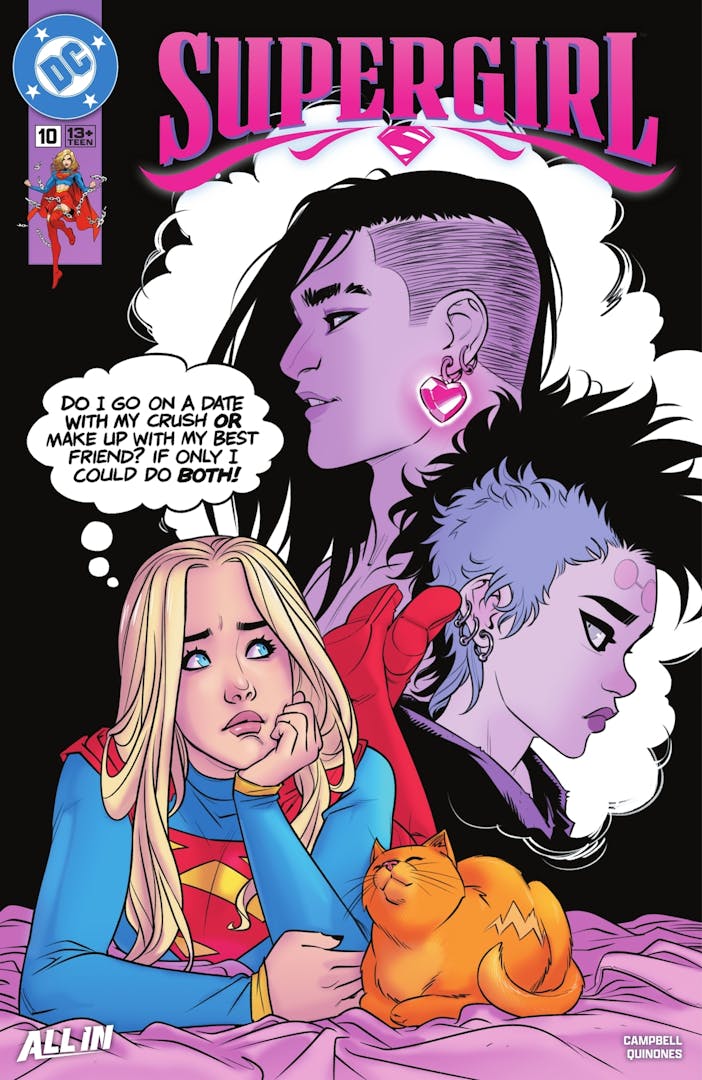
Or rather, that’s what it seems like on the surface, but dig a little deeper and you find that Campbell is making some pretty powerful points about Kara’s world and ours. Over her first twelve issues, Campbell’s Supergirl has touched on everything from the nuances of corrective rehabilitation, to the complex feelings and emotional struggles that often accompany popular holidays, to the quirks and challenges of modern dating, to the imperfections of even our most idealistic heroes. (It’s rare that I’ve seen a DC comic book so overtly question and even criticize Superman that wasn’t trying to deconstruct or subvert the genre.)
The only comic books that have consistently surprised me as often as Supergirl has this past year are all a part of the Absolute universe. But unlike DC’s Absolute comics, Supergirl has done all this under the radar. It doesn’t seem to generate the sort of buzz, acclaim and overall attention that books like Absolute Batman and Absolute Wonder Woman do, or that Kelly Thompson—who’s collaborated with Campbell in the past—stirred up with her recent Birds of Prey. Considering Supergirl is very much in the zeitgeist this year, that’s bizarre to me. I certainly hope it changes.
Maybe after the release of the Supergirl movie in June, it will. If that happens, Campbell’s most recent storyline, “Hero of Kandor,” which is a part of the current “Reign of the Superboys” event, will be a good one for them to jump into. While not technically a cosmic adventure the way that Supergirl: Woman of Tomorrow is, “Hero of Kandor” does seem to be one of the bigger, more action-driven stories Campbell has told so far. It’s also, like the movie, set in an exotic location, only in this case it’s within the Bottle City of Kandor. And yet, despite the higher stakes, it’s still very much in the spirit of Campbell’s previous issues.
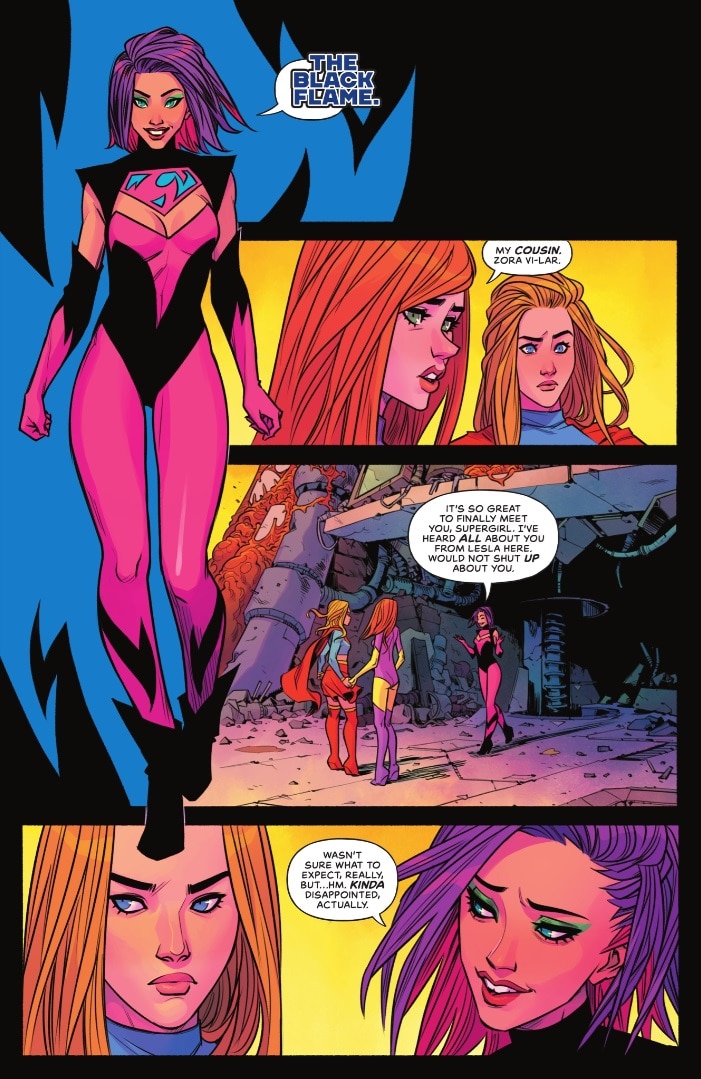
Tapped by her famous cousin to keep an eye on Kandor, Supergirl immediately intervenes when she discovers the city is in trouble—especially when evidence suggests that her former ward and estranged friend Lesla-Lar may be behind it. That proves to only be partially true, however. The real culprit is Lesla’s cousin, Zora Vi-Lar, the Black Flame, who has seemingly manipulated Lesla into helping her stage a coup against the ruling science council.
Here’s the thing, though. While Zora has acted violently, forcing the science council into hiding and terrorizing the citizens of Kandor who haven’t aligned themselves with her, she’s doing it for a valid cause. The Black Flame is reacting to the recent revelation that every individual born within Kandor after it was bottled possesses a genetic anomaly that prevents them from leaving Kandor. It’s forcing them to live within a prison. And while the science council didn’t create the anomaly—at least, as far as we know—they did keep it quiet and haven’t seemed all that interested in finding a cure for it. That’s because they view maintaining the cultural purity of Kandor as essential, especially since they’re the only Kryptonian society left.
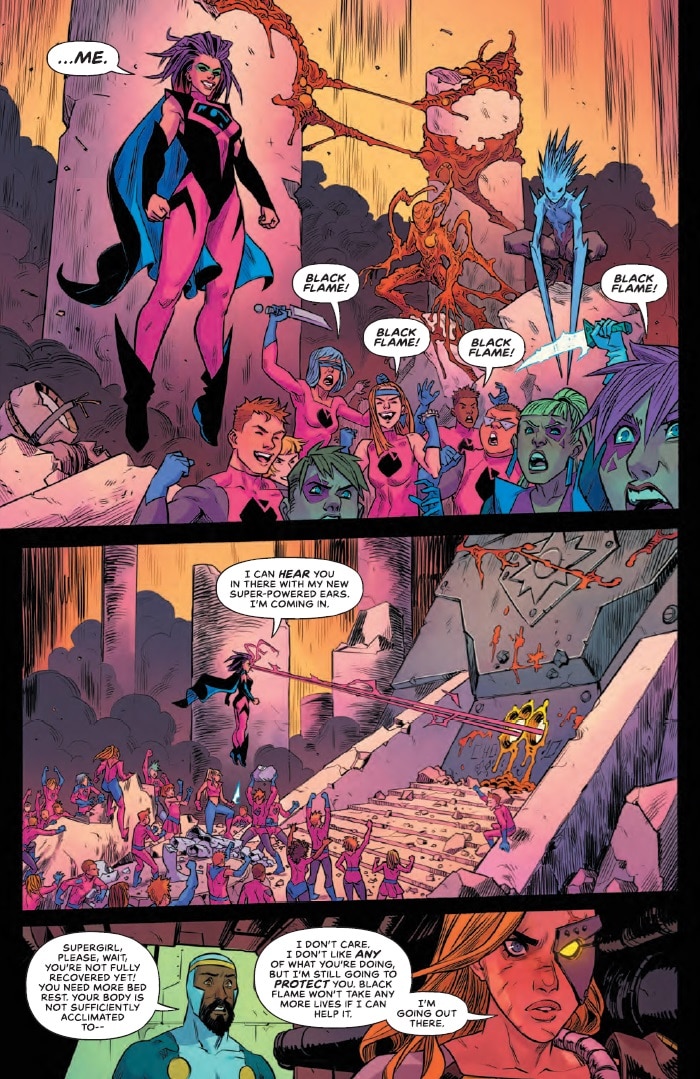
Adding further fuel to the flame is that no one on the science council is affected by the anomaly. They’re all free to leave Kandor if they want to. It’s only the youngest Kandorians who are affected, and they’re…well, pretty pissed off.
Can you blame them? Kara certainly can’t. After all, she’s not impacted by the genetic anomaly, but she’s the same age as those who are. She understands their anger and she soon finds herself as frustrated with the science council as the Black Flame and her followers are. However, she can’t support their violent methods, putting Supergirl in a difficult place as her heroic code compels her to fight against someone she doesn’t really disagree with to protect a group of leaders who have violated the trust their people put in them. Perhaps the fact that they’re preparing to defend themselves using methods that are seemingly as destructive as Zora’s may change the equation, but it certainly doesn’t make the situation any easier for Kara.
But then again, to make things black and white wouldn’t make such a powerful point, would it? Much like the young people of Kandor, the young generations of our world are furious, and for good reason. Over the past years, we’ve seen them take to the streets many times, often leading to violent confrontations. Many of us have frequently found ourselves struggling with Kara’s dilemma: what’s the best response when you agree with a cause but feel like violence isn’t the right way to enact change?
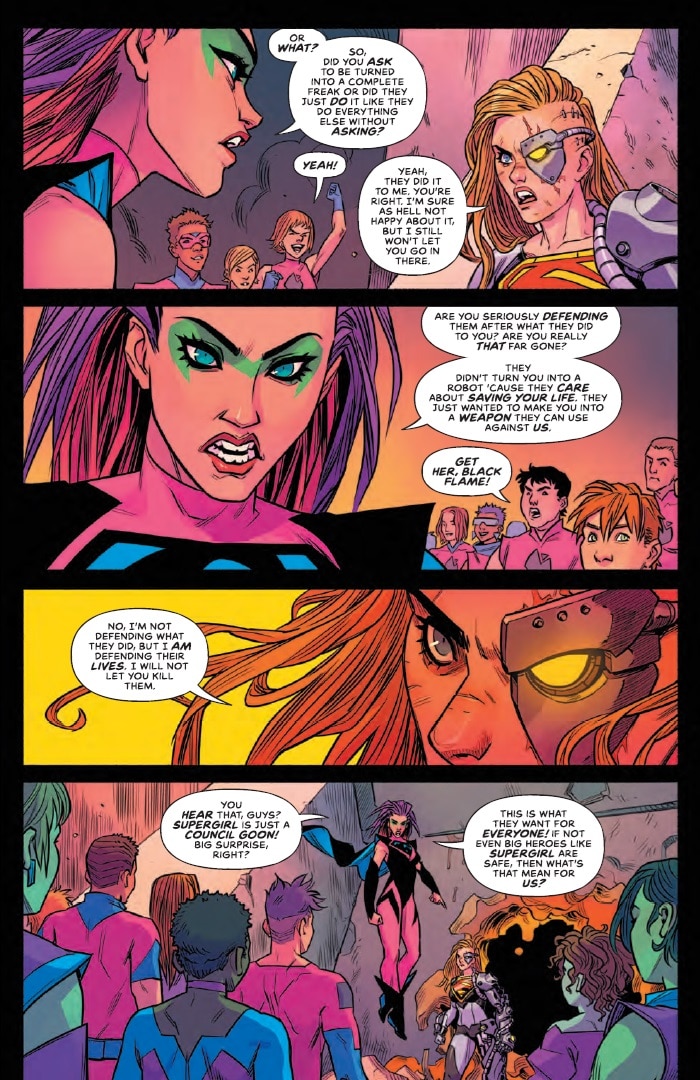
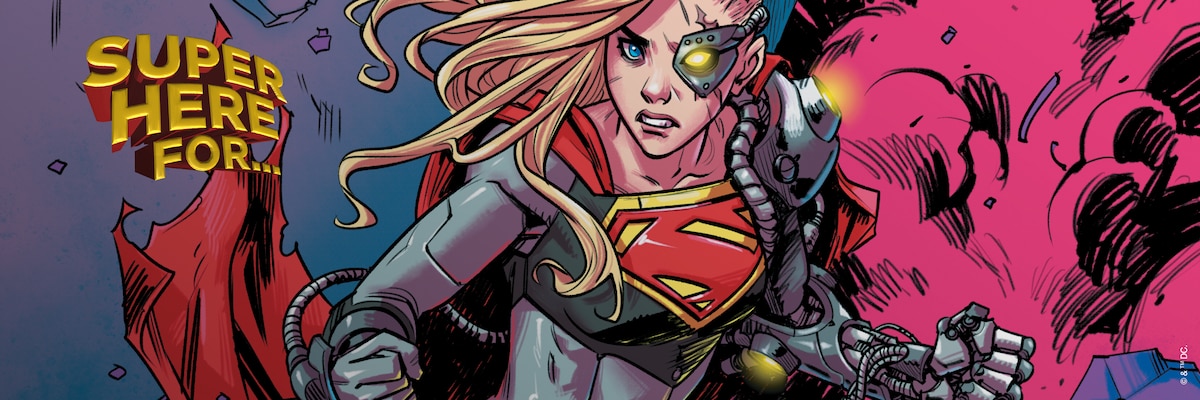
What’s so fun about Supergirl is that like all good science fiction, it addresses real world issues in a way that doesn’t come off heavy handed. For all of its potent points and difficult questions, it’s still a comic in which Kara’s life is saved by turning her into a Cyborg Supergirl. Why they couldn’t go with something less dramatic is never explained, and it wouldn’t feel much like Campbell’s Supergirl if it had been. I have to assume she’ll eventually be returned to normal without much difficulty.
But solving the situation in Kandor is likely to prove much greater of a challenge. I suspect that eventually, the two sides will find some sort of compromise, but this comic continually zigs when I expect it to zag, and for all I know, Campbell will choose to solve it by reintroducing some forgotten-by-all-but-Campbell Silver Age device that instantly reverses the anomaly and that will be that. But even an out-of-left-field resolution feels oddly appropriate to our current moment. Our world has been anything but predictable lately, why should Supergirl’s be any different? At least with Campbell at the helm, we know that Supergirl’s surprises will all be welcome ones.
Supergirl by Sophie Campbell and Tamra Bonvillain is available in print and digital. It can also be read in full on DC UNIVERSE INFINITE.
Tim Beedle covers movies, TV and comics for DC.com, writes our monthly Superman column, "Super Here For...", and is a regular contributor to the Couch Club, our recurring television column. Follow him on Instagram at @notabard and on Bluesky at @TimBeedle.
NOTE: The views and opinions expressed in this feature are solely those of Tim Beedle and do not necessarily reflect those of DC or Warner Bros. Discovery, nor should they be read as confirmation or denial of future DC plans.