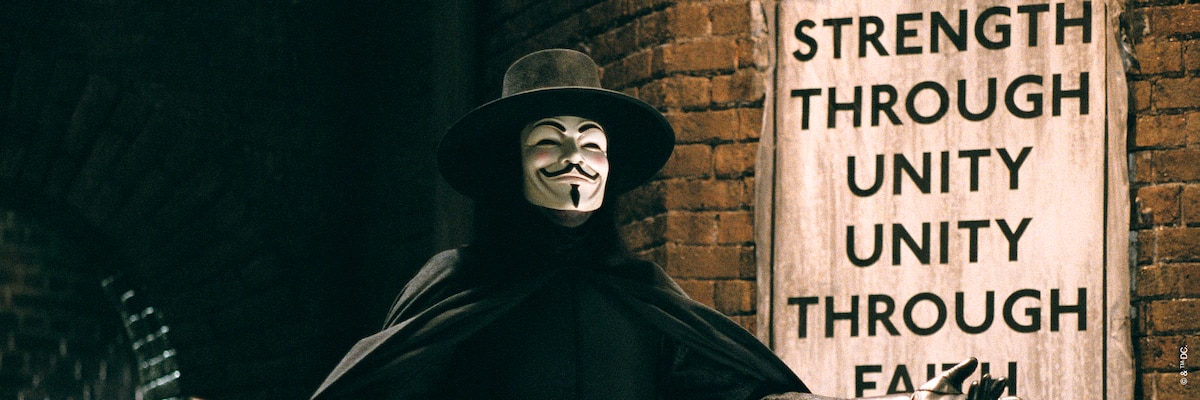
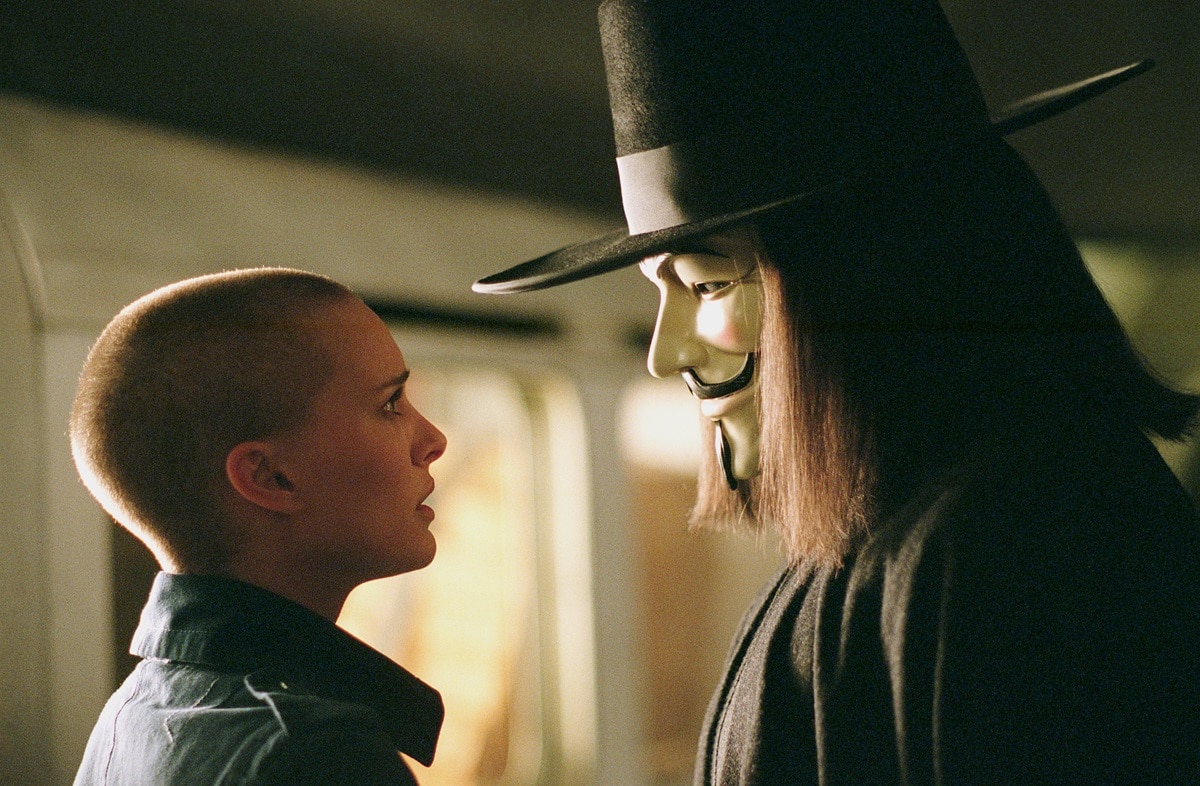
Alan Moore and David Lloyd’s dystopian graphic novel V for Vendetta has been a staple Vertigo comic for decades, exemplifying the tone and voice of DC's darker, more mature, imprint. In 2006, the Wachowskis (The Matrix) and director James McTeigue (The Matrix Resurrections) brought the book to the silver screen, creating a genre-defining movie that remains popular and relevant to this day. Starring Hugo Weaving (The Lord of the Rings) and Natalie Portman (Star Wars), V for Vendetta turns twenty this month!
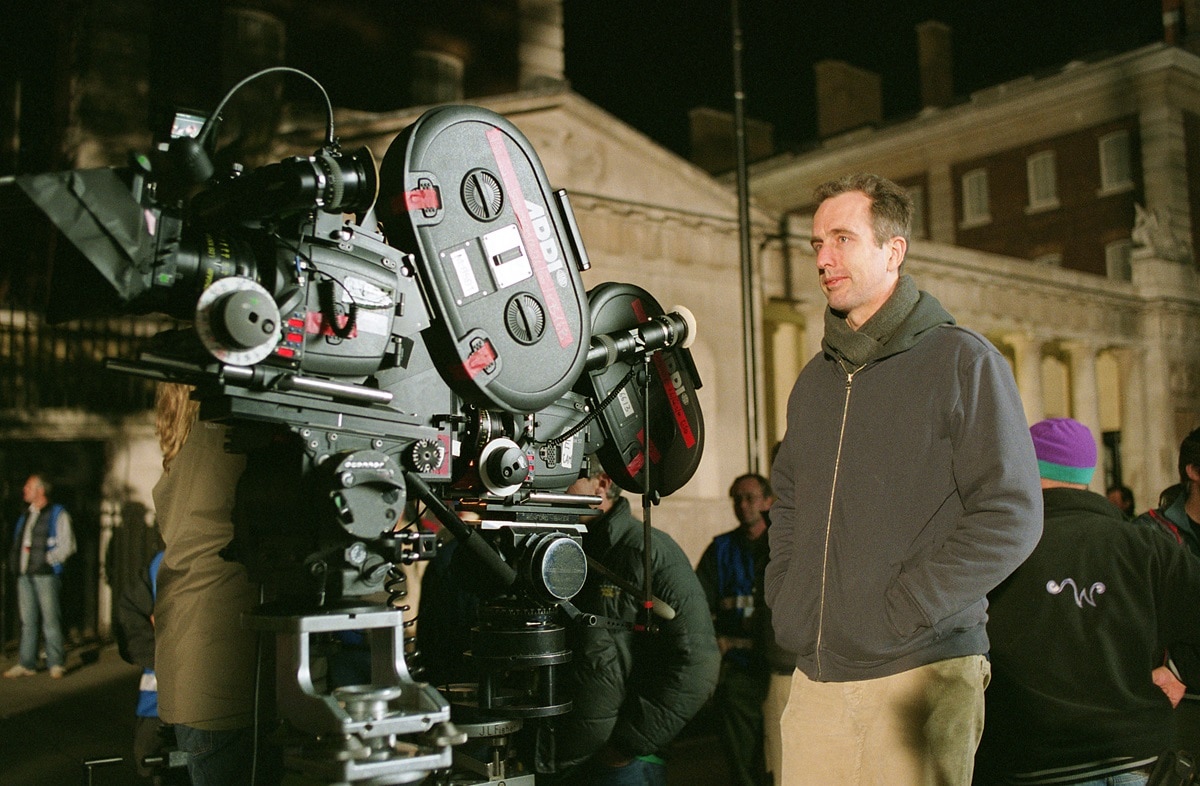
Two decades on, there’s a lot to love, and fear, about this thrilling and stylized anti-hero movie that has carved its mark on pop culture. I recently had the opportunity to pick James McTeigue’s brain about the film and his thoughts on the movie all these years later. V for Vendetta is a weighty film, so of course, I started out by asking the most hard-hitting of questions…
How’s your Thursday going so far?
My Thursday is going all right. I've done a couple of interviews. It's been nice. I really love talking about the movie, because I like it as a movie. So, it's nice to talk to other people like yourself about it.
I love that! Do you find yourself rewatching V for Vendetta a lot? Is it one of your go-tos?
*laughs*
No, not that much. But every now and then. I did the 4K restoration for it a few years ago, so I got to watch it a lot. I enjoy it when I see it. What I really like is other people's enjoyment of it. There is usually one film in your career that defines you—unless you’re like Spielberg or someone like that—and V is the film that defines my career and I'm happy for that.
When you get to talk to people about the movie and hear new perspectives, do you feel like you get to live vicariously through them, as if you were making the movie for the first time?
Yeah, one of the strengths of the film is that people bring their own interpretation to the events and the discussions we have in the movie. It's like a great piece of music or a film—it’s not just what your opinion is. It's what people bring to it. That's the same with V. Everyone takes something different away from the movie.
That's a testament to how powerful and relevant the film is! Comic book movies have continued to rise in popularity over the last two decades. What goes into adapting a comic book and crafting the world for live action?
What we tried to do back then, and what sort of Christopher Nolan did after us, was treat it as a serious adaptation. There were serious themes within the movie, both narratively and character based. It's hard. It's an anti-superhero movie. We tried to get the essence and authenticity of it and take what the original material was and be as true to the form as we could be without doing a page-turn of the graphic novel.
The world is so stylized and unique. What went into creating all the visuals?
It was the first film I ever directed. I’d been an assistant director for a long time, so I’d been in the presence of a lot of amazing filmmakers and films. I did the first Matrix movie, then the subsequent Matrix film. I’ve been on Star Wars and Moulin Rouge—we had visits from Francis Ford Coppola and I spoke to Spielberg. If you have your eyes and ears open and you watch films, and I’m a great lover of watching movies, then you take all that with you. You pour all of your life experience into it up until that time.
That's what I did with V. Politically, it really interested me. Stylistically, I brought a lot to it from the films that I liked. Also, I got to cast a great group of actors, which I really loved and respected.
What was it like working with all of the amazing creatives that brought V for Vendetta to live action, including the Wachowskis?
Great! I only have great memories about the movie. It was the first film we ever did in Berlin. I went on to help [the Wachowskis] with subsequent films and we based the Sense8 series that we did together out of there. It felt like we were breaking new ground. Not many films had shot at Babelsberg Studios.
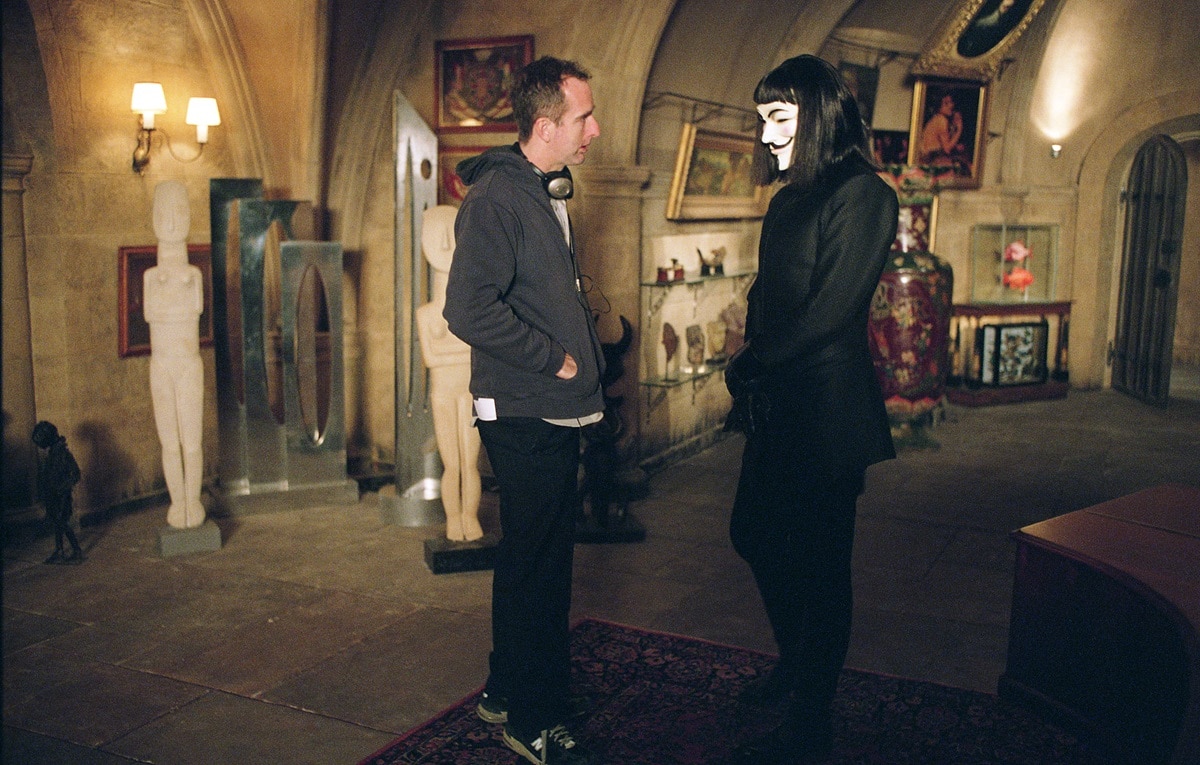
And I just loved the community around it. Chad Stahelski [Supervising Stunt Coordinator for V for Vendetta] and David Leitch [assistant stunt coordinator for V for Vendetta, as well as V's stunt double] went on to do the John Wick series and all these big action movies. I thought we had a really great group of people. Owen Paterson, the production designer, Sammy Sheldon, the costume designer—it was a great group of really creative minds that, at the time, were trying to uplift me into making this film.
You used the term “anti-superhero” to describe the film. How does V fall under that umbrella and, to you, what does he represent?
He, first and foremost, represents someone with a crazy vendetta. *laughs* Someone with a murderous vendetta!
It’s a bit of the age-old discussion: what's the morality of terrorism? What makes a terrorist? Is V a terrorist? Is he a freedom fighter? Is he someone rallying against the state? What he does ultimately is spark this populist uprising. So, although people recognize what he is doing is morally reprehensible, what they do get is the idea behind what he is trying to do.
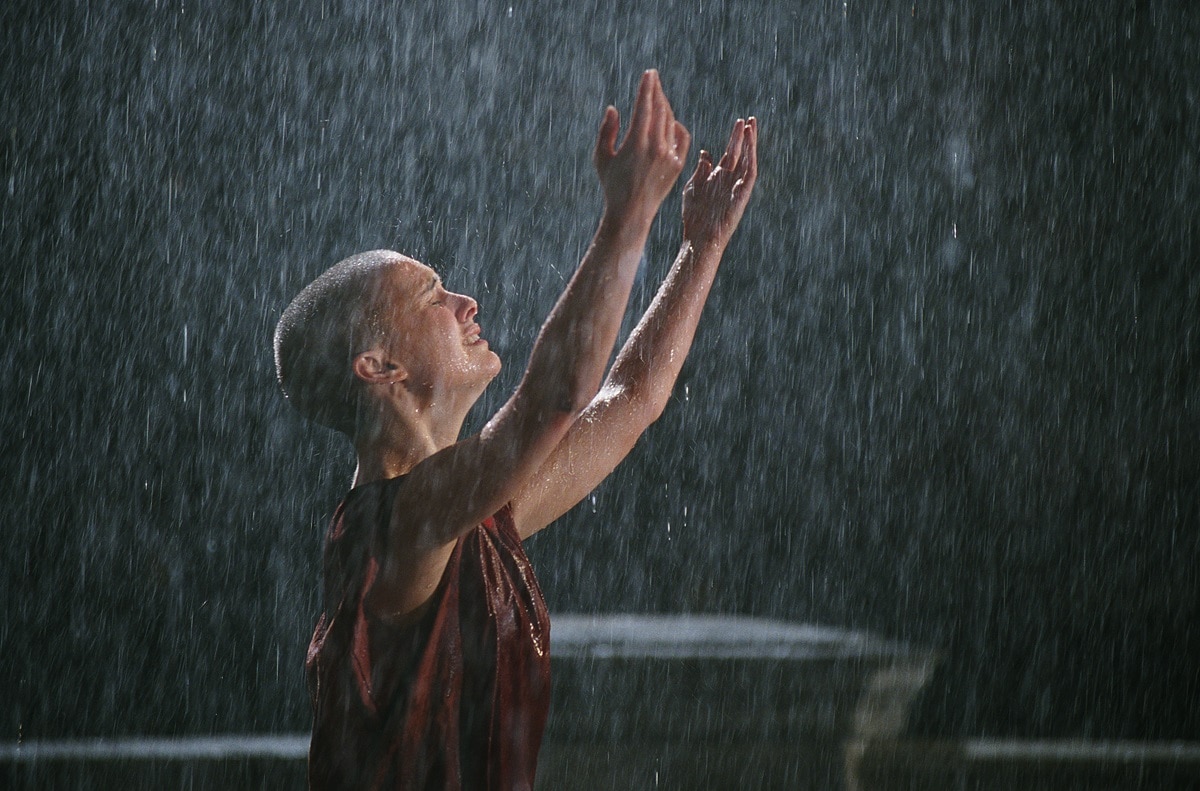
I think that's what gives the film its great legs. People really understand the movie. It's amazing! Audiences really understood what that character was in all of his theatricality and his crazy schemes. They also found a way into the movie through the Evey character, through Natalie Portman, who was always super empathetic.
The film has this discussion that is still relevant today. It was relevant when they wrote the graphic novel, it was relevant when I made the movie, and it's relevant if you watch the movie today.
In some ways, I’d say the movie is even more relevant today. Which is frightening!
Yes! A part of the thing I did in the movie was make some of those characters figures of fun. The character, Lewis Prothero, the Voice of London, I made him a Rush Limbaugh character from the time—this really crazy talkback radio guy, this bombastic kind of fool. And the same with Sutler. I took that leader of the Norsefire administration and pushed it as far as I could go—but obviously, I didn't push it far enough. It's more over the top now! In history, the system always throws up those kinds of people—it throws up Hitler. If you have ever watched someone like him doing a performance at a rally, you go, “Oh my god, how did anyone ever follow this guy into these crazy schemes?’
So, yes, I think the film definitely pointed towards the future. Not that I could see what the future was.
What kind of research went into making V for Vendetta, in addition to reading the graphic novel? What films did you draw inspiration from?
One I really loved at the time was The Battle of Algiers. I think that's an iconic movie about an uprising. That was the Algerians versus the French. It’s quite a famous film. A lot of the stuff in the Shadow Gallery—like the Gilbert & George stuff, the Francis Bacon stuff—if you look closely, were art, books, music and things I was interested in at the time, but also, they had a timeless quality.
I loved researching the movie. I loved delving into the history. I went on a deep dive about London itself because I wanted to make it feel authentic to London. I remember reading a Peter Ackroyd book. It was a good, fun research film.
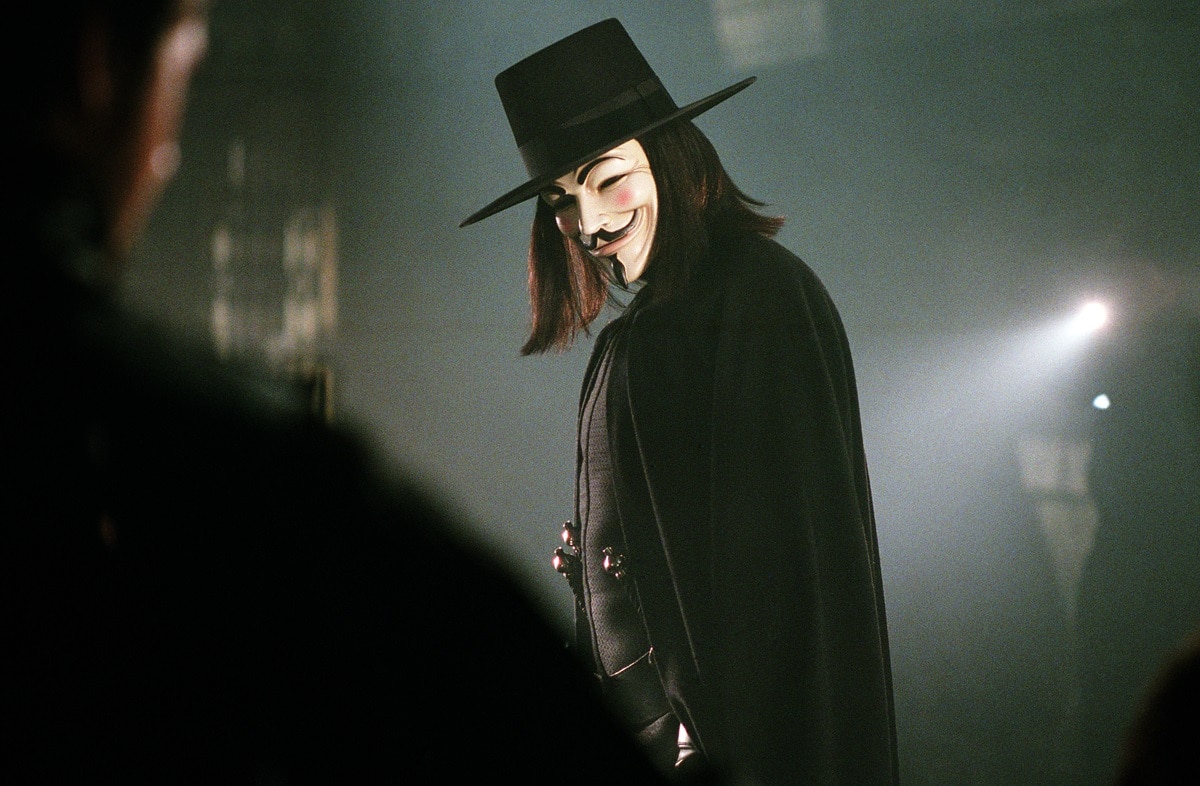
The movie perfectly holds up to this day. It is a frequent rewatch of mine. I love the practical effects!
Thanks! It was fun. No one does miniatures anymore. That was fun doing the miniatures—even though the miniatures, the Houses of Parliament and Big Ben, were 25-foot-tall miniatures with pyro effects. It was awesome to shoot!
Last question, are you a comic reader? If so, what would you like to adapt into a film in the future?
I always thought Swamp Thing would be interesting. [David] Fincher tried to adapt a graphic novel called Black Hole. I always thought that was interesting, that he was trying to do that. Hopefully someone will make it. Maybe I will try to make it one day!
V for Vendetta, directed by James McTeigue and starring Natalie Portman and Hugo Weaving, is now available on 4K UHD.