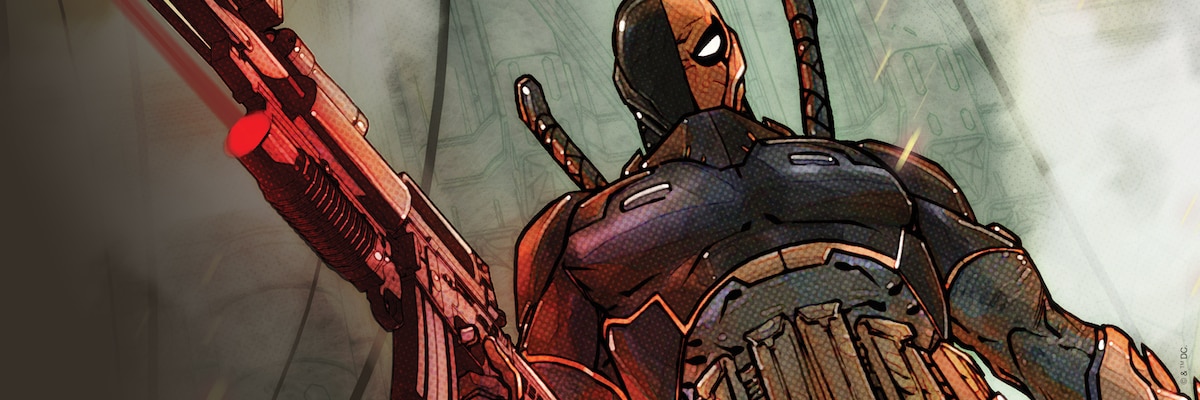
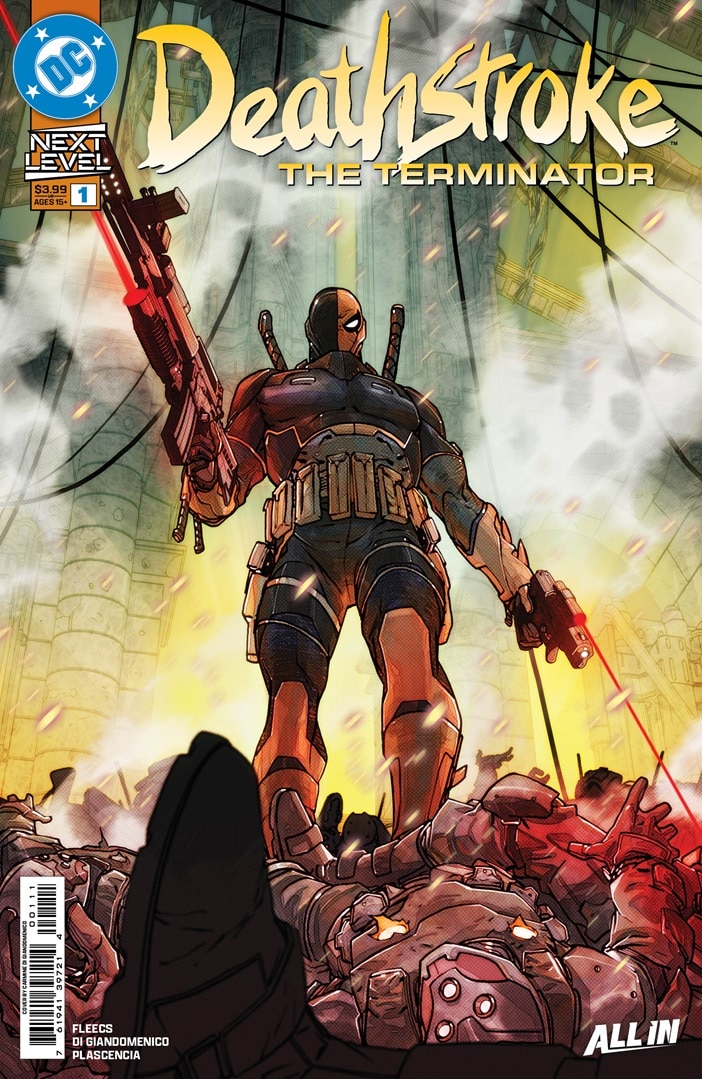
Slade Wilson is back! Everyone’s favorite killer-for-hire gets a new solo series with Deathstroke: The Terminator #1, which hits comic shops this week as a part of DC Next Level. Written by Tony Fleecs (Stray Dogs, Omega Kids) with art by Carmine Di Giandomenico (The Flash), this monthly title finds one of Slade’s many, many enemies out to make his life a living hell.
Fleecs is a multiple Eisner Award-nominated writer-artist who’s worked on everything from the Teenage Mutant Ninja Turtles to My Little Pony, but Deathstroke marks the first time he’s written an ongoing DC title. What can fans expect? We put the question to Fleecs himself when we sat down with him last month. Here’s what he had to tell us…
What approach are you taking with Slade Wilson in this Next Level title?
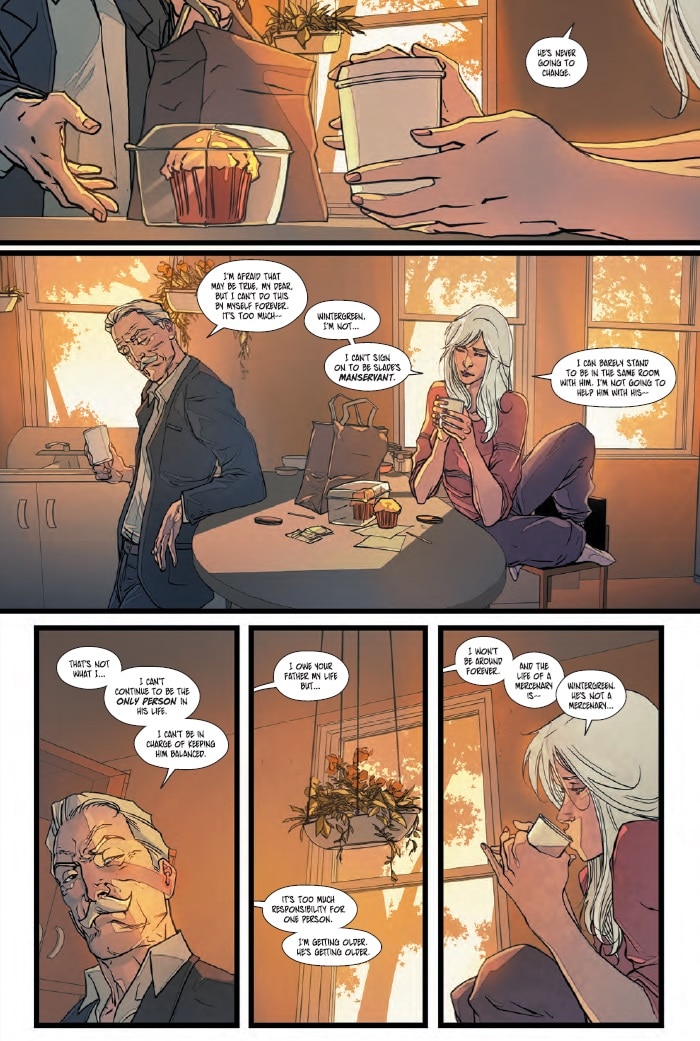
There's a tendency to take characters like this, who are killers, and sort of treat them like they’re a person who can be regular, who can be normal. I wanted to focus on this guy who dresses up like a superhero and he murders, and some people worship him like he's a good guy. I wanted to do a book about this person, for whom the perception is he's this action hero, this good guy, but he's actually empty on the inside and sort of falling apart.
Do you find Next Level allows for a more liberated approach to writing Slade?
Brittany [Holzherr], my editor, and [Next Level mastermind] Scott Snyder encouraged me to treat this like I was making an Image comic, like I was making my own series and it's called “Deathstroke” and it stars this guy who happens to have this long DC Comics history. So, yeah, that's the way we're treating it. I'm writing a first issue that you should be able to just pick up and read and not have to bring anything with you. But if you have all the stuff, if you've read every issue, if you've read all the crossovers and every appearance of Deathstroke, you should still get plenty out of this.
How far ahead are you planning?
I have a pretty solid idea what everything is in the first two arcs. We’ll do six issues in a row, and then we're going to do a one-shot with a different [artist] and then we'll do another six. I've had those two arcs pretty well figured out. Then, at this creative retreat this week, I had one of those eureka moments: “Oh, with everything that we set up, if I do this one thing, then I'm going to be able to run for another six issues this way…”
So, I've got about three arcs pretty well figured out.
You mentioned how Slade is viewed as a hero in the eyes of some people. Do you find that that ties in with this moment in our culture, where personality cults often develop around people who shouldn't have a cult of personality?
That's in the DNA of this thing. It's not what the story is about, but that's definitely something that I think about. Generally, when you're doing Big Two stuff, you're writing about heroes. So, you're digging into the parts of yourself that you feel are the best. I find something that I like about myself that I feel like I have in common with this guy, then I can use that as a seed to grow something out.
But in the case of Deathstroke, it's more about me thinking about the things that I don't like about myself. It’s growing out from there and having the story be about how this person moves in this world, but also how people around him view him.
What can you tell us about the antagonist Slade's facing in this series?
The antagonist is a mystery, but they're trying to take everything from Slade. They agree with my thesis that this guy's not a good guy. He's rich. He has cool toys. He's like a Batman who murders, right? These people, the antagonist, this thing, does not think that's all right. So, they're coming for him.
Through the course of this first arc, we'll break our guy down and then build him into something different—still Deathstroke, but showing a side of him that we haven't shown before. We’re putting him in positions and having motivations and situations that we haven't quite seen before, but that are still compelling and still action-packed.
What is Carmine Di Giandomenico bringing to this project?
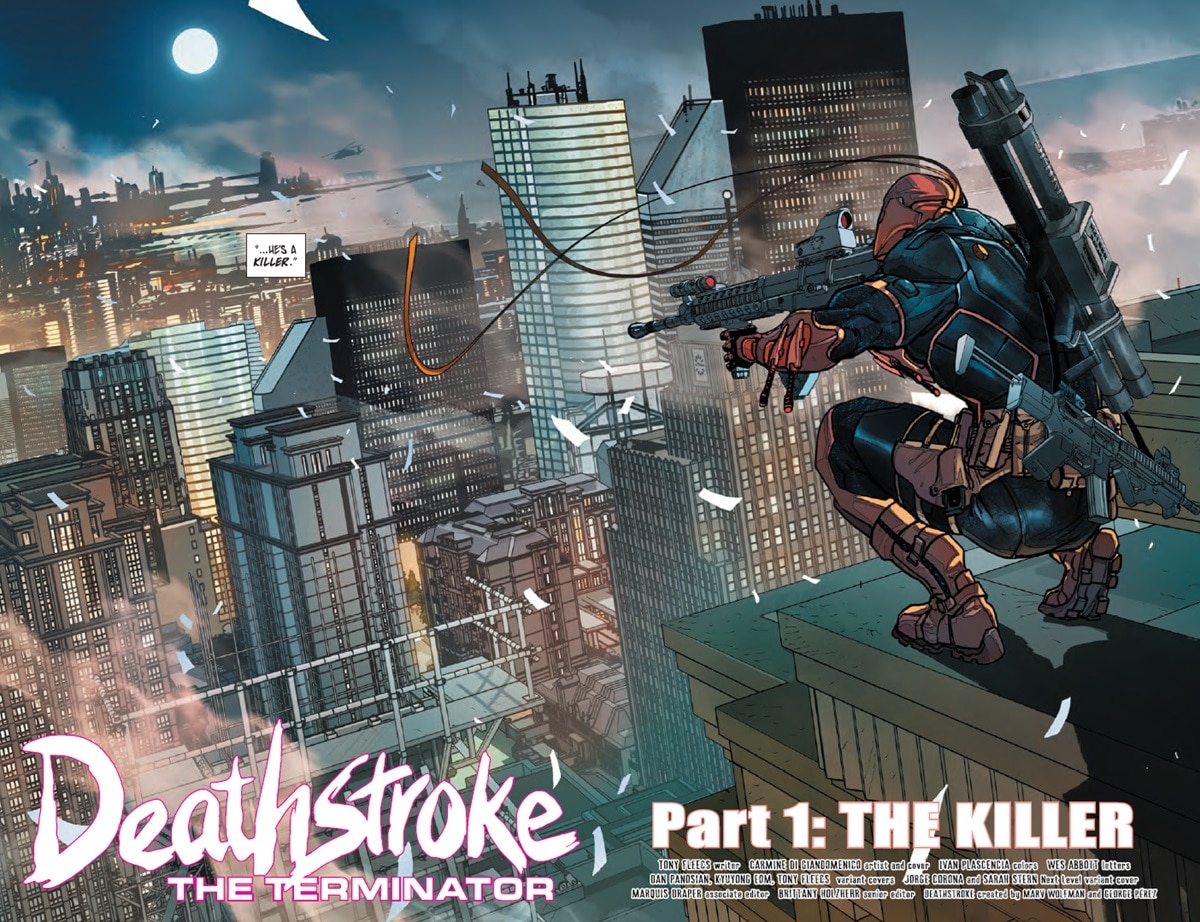
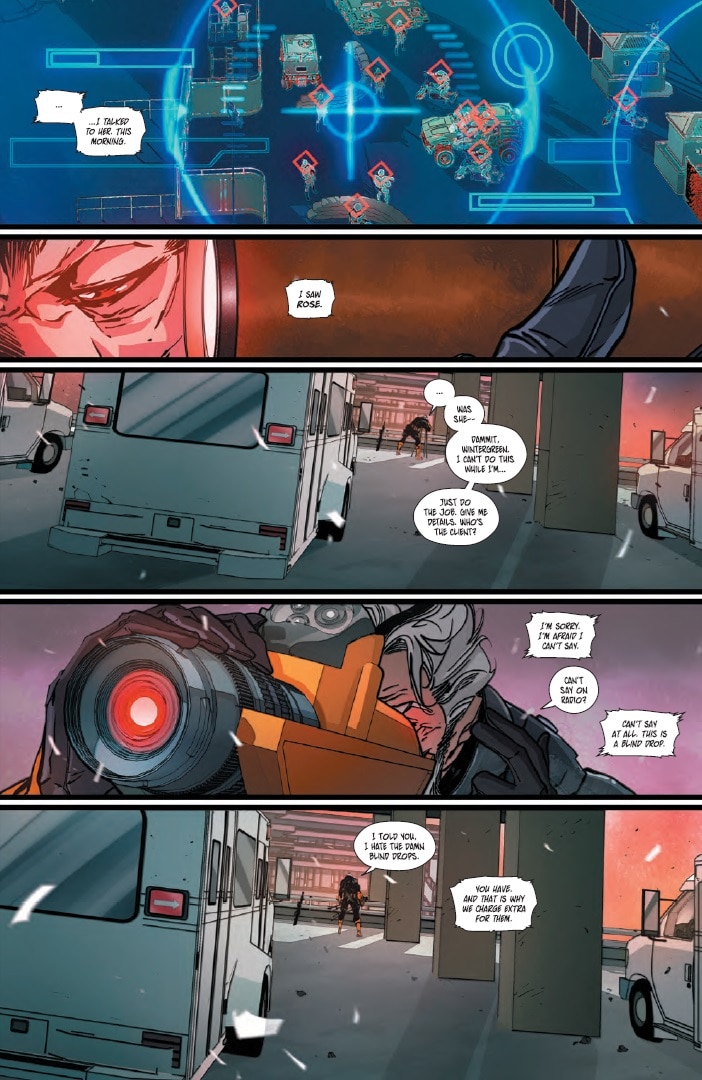
The most important thing about this book is that it's drawn by Carmine Di Giandomenico, who is this action cinematographer of an artist. He's a writer too—he wrote some of his early stuff at Marvel—and he's a great actor, he's a great cinematographer, he's a great action choreographer. [This is] my first big DC book, but I feel completely safe putting this book out after seeing how these first couple of issues are drawn, and the letters and the colors and everything put together.
Carmine just paints a picture on the page that is undeniable. You see it and you're like, “I don't care what's going on here. I want to see every page of this.” If you like action movies, if you like post-apocalyptic movies… I wrote early on that I wanted Slade to feel like a monster—like he's a Michael Myers, creeping through shadows and stomping through clouds of smoke, and you just see this white eye glowing. It should be terrifying, and Carmine draws that. It just looks cool and action-packed and intimidating.
As you mentioned, this is your first big DC project. How did you come to this series?
They gave me a couple of characters to choose from. Paul Kaminski was a fan of my work. Rob Levin is somebody that I've known for a long time. Together, they brought me in to kick some ideas around. When they said, “Who would you want to work on?”, my reaction was, “What do you think? Hit me with something and let me take a few characters and kick them around and see what I can come up with.”
When they said Slade, I was like, “Oh, yeah. That guy is amazing.” There's stuff that has been done in the Deathstroke comics that I love, but then I could see openings for me to do stuff that hasn't been done before. Batman is the number one character in DC Comics, and everybody respects Batman as if he is the number one character. The characters have a reverence for him. With Slade, when he shows up, they know it's going to be trouble. As far as murderers go, he's the one they're terrified of.
What were your favorite past iterations of Deathstroke?
I love most of them. I love the Wolfman/Perez stuff on New Teen Titans and “The Judas Contract.” The origin of Deathstroke is still really strong. The Christopher Priest run is great. I like Kyle Higgins' New 52 run a lot. I love when Tyler Kirkham draws Deathstroke. But with every Deathstroke run I read, I'm like, “Well, this has this great thing. I love when they do this…”
Do you keep that in your head when you're writing this book or do you find you have to push it aside in order to listen to your own voice?
I have a pretty healthy—I wouldn't call it self-confidence, but I know what my voice is in a way that I can trod similar ground that other Deathstroke stories have trod and not worry that I'm doing the exact same thing. The way that I'm presenting it, and the way that Carmine is drawing it, even if stuff has come before, I'm not too worried that I'm going to end up singing the same song.
Deathstroke: The Terminator #1 by Tony Fleecs, Carmine Di Giandomenico and Ivan Plascencia is available in print and as a digital comic book this week.