Batman is a lawman. Batman is an outlaw. Somehow both of these statements are true, thanks to Batman’s complicated relationship with law enforcement.
Every September, I try to explore the Dark Knight’s most complex relationships. In previous years, I’ve written about Batman’s relationship with marriage, fatherhood and of course, the Joker. However, Batman’s relationship with Gotham City’s boys in blue might be the most complicated and contradictory one. Depending on the era, the Dark Knight is either a friend to the Gotham City Police Department or their target.
The basic template was set in 1939’s Detective Comics #27, Batman’s first appearance. In fact, the very first panel of the story is Commissioner Gordon telling Bruce Wayne that he’s puzzled by Batman. Throughout the story, Gordon and his police department (the city wasn’t yet identified as Gotham) investigate a series of murders while Batman conducts his own investigation, staying a few steps ahead of the police.
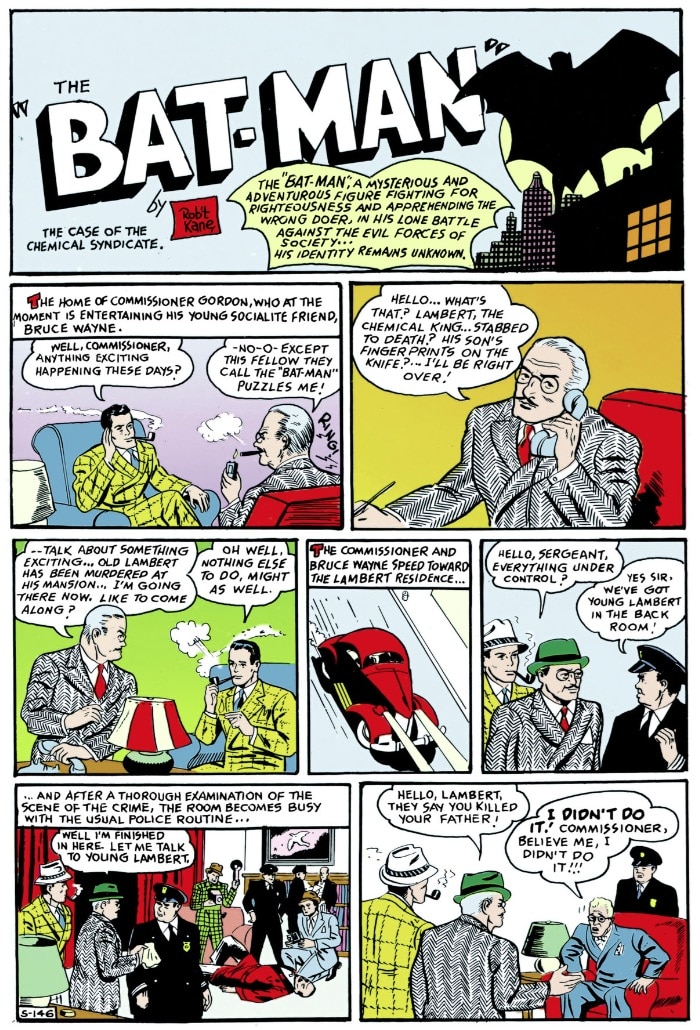
Essentially, this story sets up the status quo. We have law enforcement on one side, criminals on the other and Batman as a third entity, working for the side of justice, but as a free agent separate from the police. This early version of Batman didn’t have the vast resources he does now, so he would get his intel on police cases by visiting Gordon in his Bruce Wayne identity. Evidently, the Police Commissioner had no problem discussing sensitive investigation information with a civilian.
Batman’s early relationship with law enforcement was strained, and at times he was hunted by the cops, such as in Detective Comics #28—his second appearance. Batman wasn’t above attacking cops in order to escape, as seen in 1940’s Batman #1 and 1941’s Detective Comics #50. Things took a big shift in 1941’s Batman #7, when Commissioner Gordon defended Batman after the Dark Knight was falsely accused of murder and appointed the Caped Crusader an honorary member of the police department.
“From now on, you work hand in hand with the police,” Gordon says as he shakes Batman’s hand.
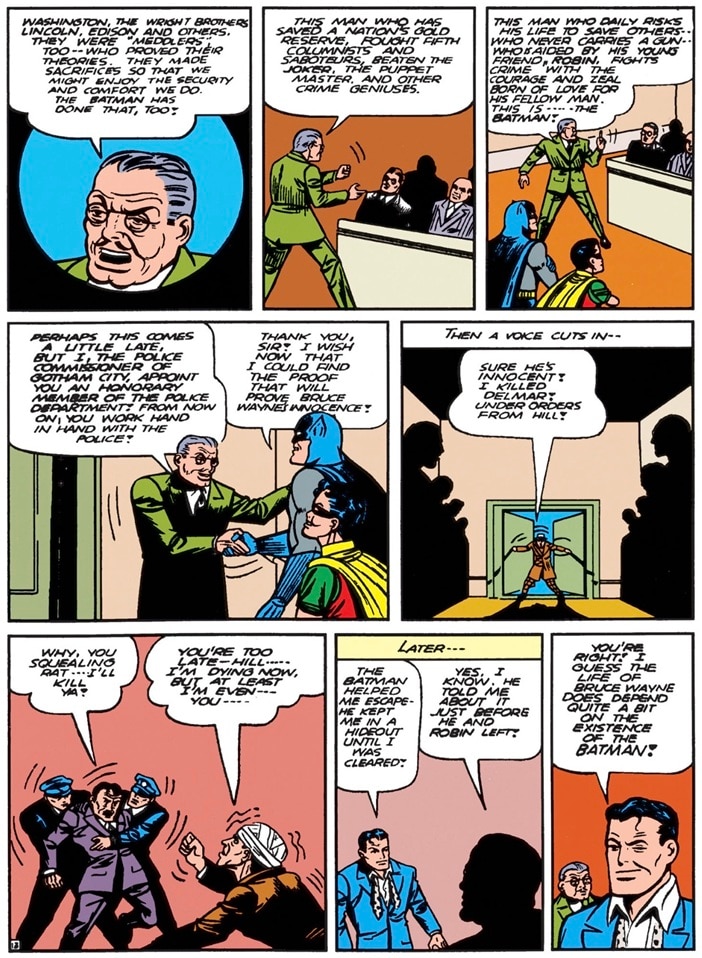
This recontextualized Batman’s relationship with law enforcement for decades. He was no longer a lawless vigilante, but a lawman acting as an extension of the police department. The Bat-Signal was introduced in 1942’s Detective Comics #60, and the 1966 Batman TV series took things a step farther by introducing the Batphone, giving the Caped Crusader a direct line to the GCPD.
Eventually, however, the line began to blur between Batman and the police department. Some stories depicted the Caped Crusader as if he were an unpaid employee of the GCPD. In 1952’s Batman #70, Gordon attempts to have a robot become Gotham’s new crimefighting champion and orders Batman to retire from active duty, reassigning him to a desk job at the department. Batman behaves as if this is an order he must obey, which is hard to imagine the modern Dark Knight doing.
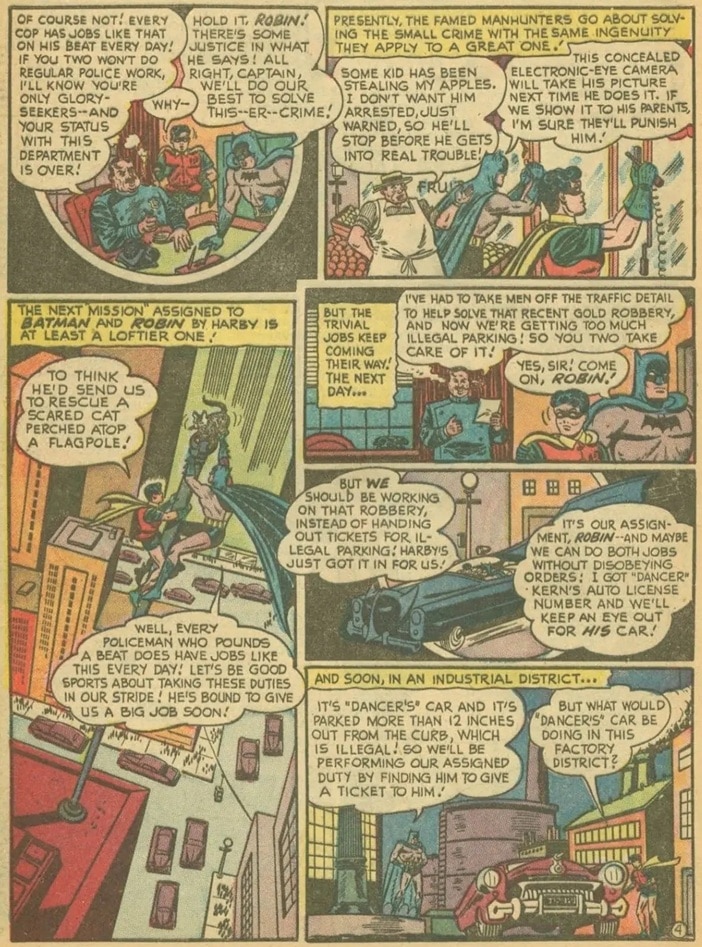
In 1953’s Batman #77, Gordon is temporarily replaced by an interim commissioner who orders Batman to rescue stuck cats and hand out parking tickets. Once again, the Dark Knight complies, behaving as if he has no other choice. This characterization was a product of the time period. In the years following World War II, comics faced growing public and political pressure to present heroes as wholesome, law-abiding models of civic virtue rather than shadowy vigilantes.
Public sentiment changed in the late 1960s, with younger generations rejecting authority and anything that was part of the establishment. 1969’s Detective Comics #387 played with this concept, depicting a rebellious teenager accusing Batman of being “Big Brother” and part of “the system.” Batman proves he’s still “with it” by referencing Robin’s Janis Joplin records.
Nevertheless, public sentiment among youth was becoming more anti-authority by the late ’60s, so Batman slowly evolved away from being an extension of the GCPD. He still worked alongside Commissioner Gordon, but he returned to his pulp roots and there were no more stories of him acting like a police employee. At times, Batman would even find himself hunted by the police, such as when he was framed for murder in 1970’s Batman #225, or when a new commissioner named Peter Pauling was installed in 1982’s Batman #346.
Frank Miller’s alternate future story The Dark Knight Returns returned Batman to his roots as an outlaw. Newly appointed Commissioner Yindel immediately issues an arrest warrant for the Dark Knight. As a result, Batman spends a large part of the story evading, and in some cases fighting, the GCPD. Yindel is depicted as well-meaning, but her efforts to stop Batman ultimately enable the Joker and the Mutants to commit more crimes amidst the chaos.
Miller continued to explore Batman’s relationship with law enforcement in 1987’s Batman: Year One, an in-continuity story that reimagined the early days of the Dark Knight’s career. The story established that Gotham’s police department was just as corrupt as the city’s underworld, with officers taking bribes, working alongside the mob and preying on the most vulnerable members of the population. The department hunted Batman throughout the story and the Caped Crusader barely escaped with his life.
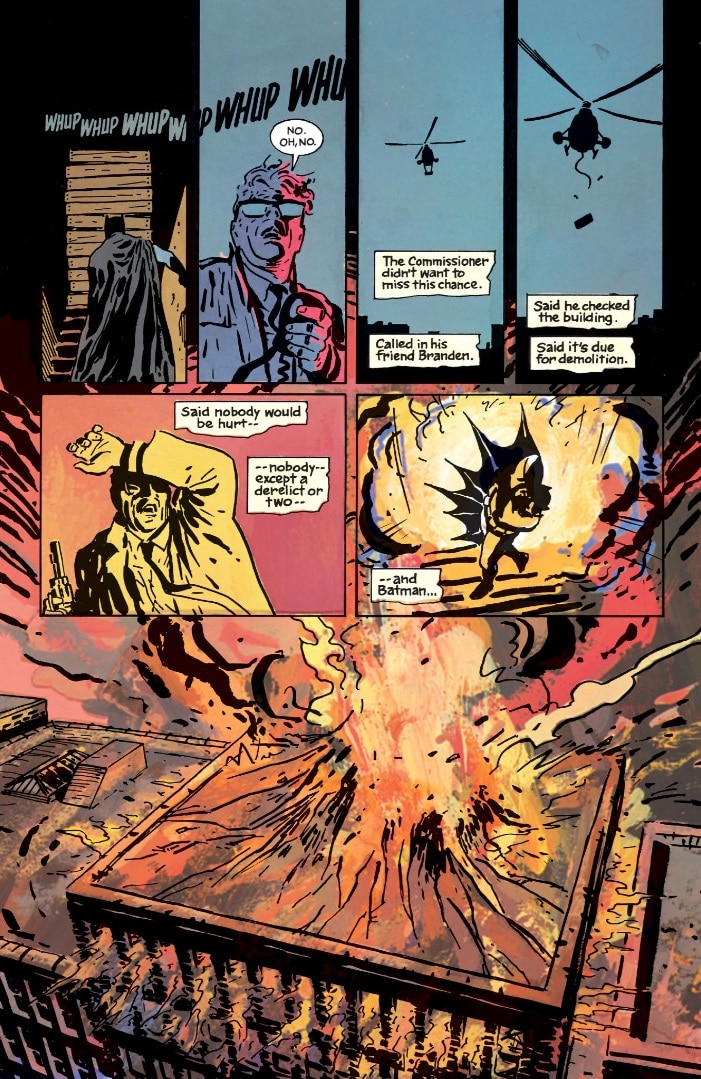
Year One also recontextualized Batman’s partnership with Jim Gordon, who was a lieutenant at this point in the chronology. Gordon was one of the few good cops on the force and hoped to change the department from within, but felt helpless to do anything due to how deep the corruption was. While Gordon initially saw Batman as a lawless vigilante, he came to realize the Dark Knight was a necessary force to battle the city’s corruption. Simply put, the future Commissioner realized he had to compromise some of his values in order to keep Gotham safe. The system failed the city profoundly, which serves as a justification for Batman and Gordon working together in a gray area outside the law. This would be further defined nearly ten years later in Batman: The Long Halloween and become the template for Batman and Gordon’s complicated relationship going forward.
This is a good time to mention that the state of Batman’s relationship with law enforcement usually depends on his relationship with Jim Gordon. There’s a lot that can be said about their friendship and alliance, and maybe I’ll delve into that in another article someday.
Gotham City’s current Commissioner is the immortal villain Vandal Savage, meaning the Dark Knight is once again a fugitive. While the GCPD may change, Batman’s mission remains consistent. He’s had the same quest for justice since his debut in 1939, whether the cops are on his side or not. Is he an outlaw or a lawman? It depends on who’s in charge, but the simple answer is he’s both. Batman and law enforcement have a codependent (and oftentimes toxic) relationship, but it’s never stopped Gotham’s Dark Knight from doing what needs to be done to protect the city.
Batman Day is September 19th! Learn more about the Caped Crusader and his comics, movies, games and more by visiting our Batman Day hub.
Joshua Lapin-Bertone writes about TV, movies and comics for DC.com, is a regular contributor to the Couch Club and writes our monthly Batman column, "Gotham Gazette." Follow him on Bluesky at @joshualapinbertone and on X at @TBUJosh.
NOTE: The views and opinions expressed in this feature are solely those of Joshua Lapin-Bertone and do not necessarily reflect those of DC or Warner Bros. Discovery, nor should they be read as confirmation or denial of future DC plans.